
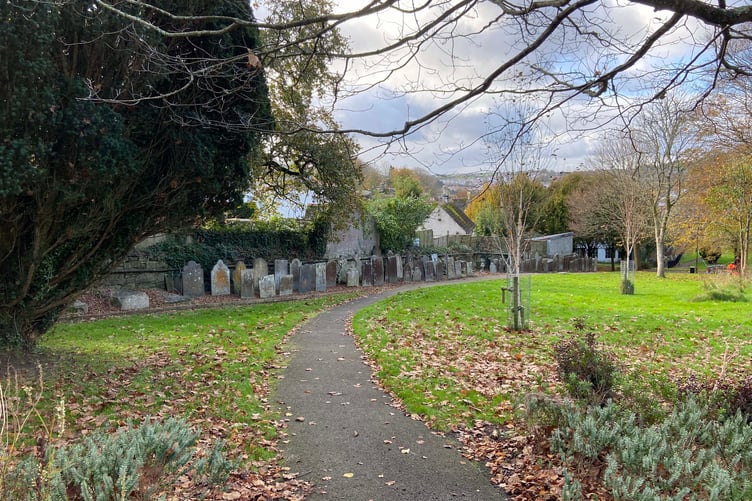
A RELUCTANCE to stop the current weed control measures carried out on St Austell Town Council land has been expressed by councillors following concerns from the public over the continued use of glyphosate.
The councillors, who are worried the appearance of the town would suffer without “the careful use of our weed control applications”, have, however, decided on a review of the use of the weedkiller chemical.
Three members of the public attended a council meeting to voice their fears over the use of glyphosate on council land.
Town councillors were then given an overview of the grounds maintenance service provided in the town, which included information on the council’s weed control activities.
Following this, the councillors had an in-depth discussion about weed control.
Councillors then resolved that the council would maintain its existing weed control measures with a review in six months’ time.
A council spokesperson said: “It is hoped that by the six-month review we will know the outcome of Cornwall Council’s review and the Government’s review of glyphosate – it is licenced until December 2026.
“In addition, council members have asked that we undertake a trial of a reduced strength of the glyphosate mix on an area of the town council’s land and research the weed control measures undertaken by other town and parish councils of a similar size. We will report these findings in three months’ time.
“The council members are very proud of how tidy and weed-free the town is, which, combined with our flower displays, makes it look well cared for and a pleasant environment to be in. The town council receives almost weekly comments on how well-kept the parks, gardens, footpaths and pavements are which is not only due to our diligent grounds maintenance regimes, but also through the careful use of our weed control applications.”
One member of the public at the meeting raised concerns about glyphosate’s possible detrimental effect on humans and the environment. A second asked that the town council reconsider its use of glyphosate and outlined some scientific research on its toxic properties. A third said that following Cornwall Council’s decision not to re-commence chemical weed treatment until further investigation, the public were unaware that some local councils were still using it
.jpeg?width=209&height=140&crop=209:145,smart&quality=75)


The town council’s operations manager, in his overview, said that the council’s grounds team uses glyphosate on hard services such as footpaths and walls in the parks and open spaces but not on flowerbeds, wildflowers and grass, nor inside play areas or near drains. Weeds in play areas and flower beds are controlled by hand weeding.
The manager explained that the council works with a weed control contractor who targets weeds by spot treating them where they are visibly present and said that products used for the council’s parks and the kerb line are fully licensed.
He said that without weed control weeds will quickly become established in cracks and joints creating an untidy and uncared for appearance and that, if left untreated long-term, pavements and kerbs can become severely damaged and a trip hazard.
Comments
We've recently changed our login process. If you have an account for commenting, you will need to re-register on the login window.
This article has no comments yet. Be the first to leave a comment.