
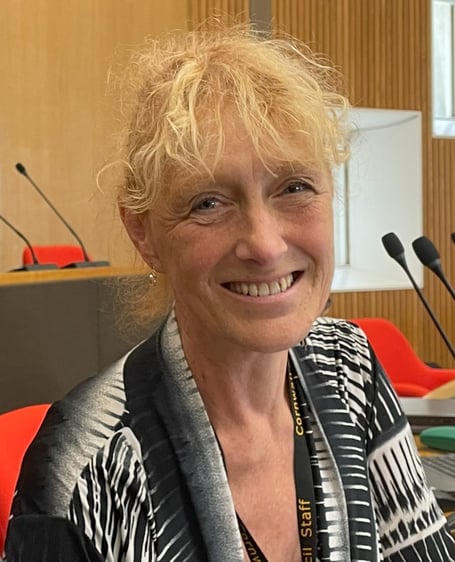
CORNWALL Council meetings are not usually known for emotion. Procedure, perhaps. Long reports, certainly. But our recent debate about mental health in schools was different.
Families came to speak about the impact school behaviour policies are having on their children. It was impossible not to hear the sincerity and pain behind what they were saying.
The debate led to Cornwall Council setting up a cabinet advisory group looking at mental health and emotional wellbeing in schools, which I will chair as cabinet member for children, families and schools. I see that as an opportunity to create space for open conversations and careful listening.
But I also came away thinking about the people working in our schools.



Teachers, teaching assistants, pastoral teams and school leaders across Cornwall are dealing with increasingly complex needs amongst children and young people. Many are holding together situations that would once have received specialist support somewhere else in the system. They are doing this with professionalism and enormous personal commitment.
Their voices need to help shape the debate, too.
The reality is that children’s mental health and emotional wellbeing are complicated. We are still living with the long shadow of the Covid years of disrupted routines and loneliness, and the anxiety that didn’t just disappear when lockdowns ended.
At the same time, many children are spending huge parts of their lives online, with families and schools trying to navigate challenges that hardly even existed a generation ago. Social pressures can now follow children everywhere through smartphones and social media, bringing the expectation of being ‘switched on’ all the time, even during the moments when children should be able to switch off and feel safe.
There are no easy answers.
That’s why I am keen for the advisory group to create something more useful than people retreating into fixed positions. It needs to be a constructive space where all experiences are listened to properly, where schools can speak openly about the challenges they face, and where we can share what is working well alongside areas where improvement may be needed.
At Cornwall Council, we have adopted the United Nations Convention on the Rights of the Child. Article 12 says that children have the right to express their views in matters that affect them. That principle matters here.
As chair of the advisory group, I intend to make sure its work gives us a deeper understanding of what children, families and schools are experiencing, and helps us respond with empathy as well as policy. We have got the opportunity to help shape the wider national conversation around behaviour policies and inclusion here, moving the conversation towards something calmer, more thoughtful and more focused on children themselves.
Liberal Democrats have always believed that good public service begins with listening. Not assuming. Not imposing. Listening.
And perhaps that is the most important thing of all. Children need to know that the adults making decisions about their lives are prepared to hear them.
Comments
We've recently changed our login process. If you have an account for commenting, you will need to re-register on the login window.
This article has no comments yet. Be the first to leave a comment.