
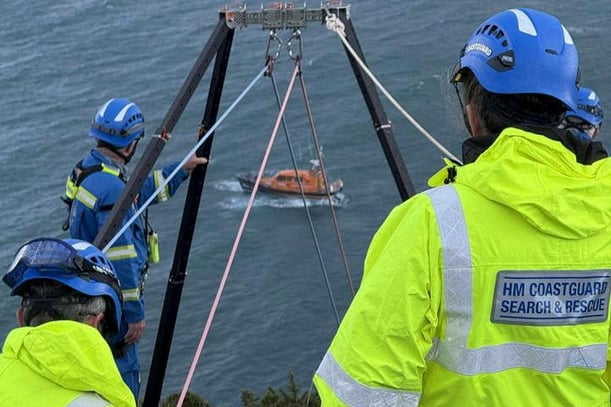
CORNISH MP Anna Gelderd has welcomed the government’s decision to abandon plans to remove payments for Coastguard Rescue Officers (CRO), saying it provides a vital opportunity to secure the future of the service.
The announcement means volunteer coastguards, including those serving communities across Cornwall, will continue receiving payments for training, call-outs and maintenance work beyond September while ministers consider a long-term solution.
Ms Gelderd, MP for South East Cornwall, said she had been calling for a pause to allow all options to be properly examined, particularly ahead of the busy summer season when CROs play a crucial role in keeping coastal communities and visitors safe.
She said: “I welcome the government’s decision to maintain the current arrangements for CROs while further work is undertaken.
“I have been calling for a pause so that all viable options can be properly considered, particularly ahead of the busy summer period when our CROs play such a vital role in keeping our communities and visitors safe.
“This is not the end of the process, but it is an important opportunity to get this right.”
The decision has been welcomed by coastguard volunteers in Cornwall, who had warned that scrapping the current payment system could affect recruitment, retention and the ability of teams to respond quickly to emergencies.
Sarah Walker, a CRO with the Tamar Coastguard Rescue Team in South East Cornwall, described the announcement as “absolutely” a step forward.
She said volunteers had been concerned the proposed changes could lead to experienced members leaving and make it harder for officers to attend incidents.




CROs are officially volunteers but can currently claim around £11 an hour for call-outs, training and maintenance work. A minimum payment of £33, equivalent to three hours, can be claimed even if an incident is resolved sooner.
The planned changes followed a Court of Appeal ruling in January 2026 in the case of Maritime and Coastguard Agency (MCA) versus Groom, which found that providing payments had created a worker relationship rather than a voluntary arrangement.
Maritime minister Keir Mather said the government had listened to concerns raised by CROs, MPs and unions before deciding to halt the move to an expenses-only volunteer model.
He said: “CROs must feel that their views have been heard and that they are valued, respected, and empowered to carry out their duties.”
Mr Mather added further engagement would now take place with officers, trade unions and MPs to better understand the impact of any future changes.
He said the government would also explore options for how CROs could continue to be “rightfully recognised and rewarded” while retaining the flexibility to serve their communities.
Ms Gelderd said she would continue working with local CROs, the minister and the MCA ahead of further discussions in September to ensure the best possible outcome for the volunteers who protect Cornwall’s coastline.
Comments
We've recently changed our login process. If you have an account for commenting, you will need to re-register on the login window.
This article has no comments yet. Be the first to leave a comment.