
CORNWALL has plenty of attractions to appeal to the visitor, hence its enduring popularity. Consider the beaches, or the modern majesty of the Eden Project, which celebrated its 25th birthday last week. But one should never rest on one’s laurels, which is why it’s always interesting to witness the arrival of new landmarks, and to track how they fare in the face of established must-sees.
The Story of Emily was launched in May 2024 to promote an unsung heroine hailing from rural South East Cornwall. Emily Hobhouse grew up in the rectory at St Ive, on the main road between Liskeard and Callington, her father an Anglican priest at the church directly opposite.
An ardent pacificist and feminist, Emily was incensed by the human tragedy of the Boer War (1899 - 1902), in particular the harsh treatment of women and children in concentration camps. She became a thorn in the side of the male political establishment at a time when colonialism ruled supreme and South Africa’s gold was too good a prospect to ignore.
Sadly, Emily’s role was written out of British history, and the Boer War disappeared from the school syllabus altogether in the wake of 20th-century wars that took place closer to home. However, she was not forgotten in South Africa, where her ashes were entombed in a monument to those whose cause she espoused.




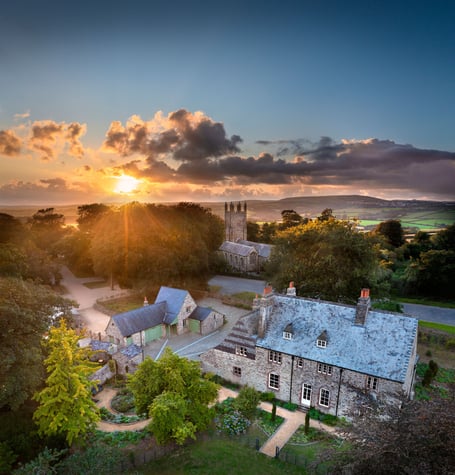
It was South African money that went into restoring the Grade II listed rectory; no expense was spared in researching fragments of soft furnishings to reproduce close replicas that reflected the surroundings of Emily’s childhood.
And in the grounds, a 21st-century immersive experience - dubbed The War Rooms - was built to lead visitors through a warts-and-all telling of the Boer War, from the male-dominated drawing rooms of London to the brutality of the “scorched earth policy” in the field that saw Boer families turfed out of their homes, their livestock shot and their resistance ultimately broken.
I first visited The Story of Emily in November 2024 with a friend. We arrived expecting National Trust rather than start-of-the-art museum, and were surprised to find the place pulling in visitors from as far away as the honeypot of St Ives, even on a midweek afternoon well out of season.
We were blown away by the loving refurbishment of the rectory, the sheer brilliance of the immersive history lesson, and the lip-smacking authentic South African food in the magnificent glass-fronted restaurant.
Having raved about the place to my family, we opted to return on Mothering Sunday. My mother-in-law (MIL) is a political activist in her own right, while the other half and daughter are both keen historians, so it seemed like an all-round winner. Others clearly agreed, the car park was full and the restaurant was staggering shifts to cope with demand.
We had great fun in the rectory – especially on the top floor - where the entire family got stuck into the superior dressing-up clothes (the sight of Grandad in a top hat will live long in the memory). After a delicious lunch including boerewors (South African sausage), we braced ourselves for the immersive experience – an hour and 45 minutes, led by audio guide.
A realistic depiction of life in Westminster and the veld is delivered via a combination of technology – audio tour, film and virtual reality (VR) - and sleight of hand, such as mirrors to amplify the size of the concentration camp. It all leads to an incredibly persuasive if unflinching encounter (daughter cowered with embarrassment as granny vocally took politicians to task: “I don’t like you!”). OH summed it up: “If only all history could be taught in this way.”
Our day ended by meeting Elsabe Brits, the South African historian who wrote a book about Emily Hobhouse (MIL bought it in the shop) and contributed in no small way to The Story of Emily. She must surely be thrilled to know 22,000 people have been through the doors since it opened almost two years ago.
Some words of advice: allow a whole day to complete the Emily experience comfortably - you can’t (and indeed shouldn’t) rush the immersive experience. I’d recommend secondary school upwards for The War Rooms, although there was a small child in our tour group (I’m sure much of the detail went over his head, and a staff member suggested he give the uncompromising VR a miss).
This year is the centenary of Emily’s death, with special events planned and permanent outreach exhibitions to spread the word of her contribution to history. At Liskeard and District Museum, you can now see “In Reflection – Photographs, Peacemakers and Pacifist Emily” (open Monday to Friday 10am to 4pm, Saturday 10am to 1pm, entry free).
At £25 for adult entry (£35 for an annual pass), The Story of Emily might not be cheap, but it is moving, educational and essential viewing.
Comments
This article has no comments yet. Be the first to leave a comment.