
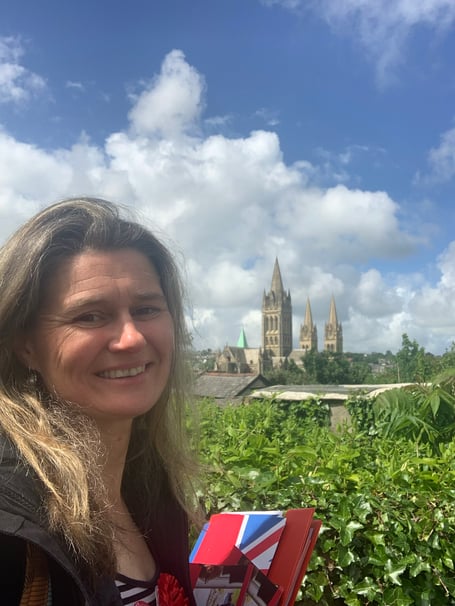
As well as being a Labour MP, I am proud to also represent the Co-operative Party – Labour’s sister party.
The first successful co-op was formed in 1844 in Rochdale, Lancashire. Living conditions in northern industrial towns were tough. Flour, sugar, butter and oats were expensive. Often, milk was watered down, and mill owners mixed their flour with sawdust to increase their profits.
A group of 28 working-class men decided to change this. They raised the funds to set up a co-operative shop that provided good quality products to the community at a fair price.
A co-op is a business owned and controlled by its members, who can be customers, employees, residents, or suppliers. Profits are shared among those with a stake and a say in how the co-op is run rather than distant investors or shareholders.



.jpeg?width=209&height=140&crop=209:145,smart&quality=75)
Today, 41 MPs represent both Labour and the Co-operative Party, and our Labour manifesto contained cooperative policies which are now being made law. One of these policies is community energy, where groups can set up local renewable energy assets, such as wind turbines, that they can all benefit from. Money from the new public energy company, GB Energy, will be invested in energy schemes for communities and local councils. Another is community ownership; the upcoming Devolution and Communities Bill will give communities the right of first refusal to collectively purchase and manage assets such as halls, churches, or pubs when they come up for sale. This is already happening in Cornwall. I recently attended a meeting in Ponsanooth where residents are working to buy their local pub, which would otherwise be closed.
I have asked the Secretary of State for DEFRA if the government would consider running the water industry on a co-operative, mutual or municipal model, as seen in Germany where water is owned and run by hundreds of local municipally owned companies. There are other options beyond state ownership and purely private ownership.
For the first time in a generation, co-operatives were mentioned in a Chancellor’s Budget speech. The government made the commitment to double the size of the co-operative sector. The government is committing £1-billion in investment over the next year. Co-op has matched this ambition with its “Backing Britain” plan, pledging £1-billion of support for customers, businesses and high streets, over the next 12 months. This includes price reductions, continued investment in British farmers and suppliers, and measures to keep high streets vibrant and safe.
I also met with the Cornwall and Isles of Scilly Growth Hub, which is launching an engagement project to support Cornwall’s thriving co-ops and help communities access development funding, including up to £15,000 for expert advice to kick-start community projects like buying a pub.
At the recent Co-operative Party Conference, themed “Community Britain”, we focused on the idea that communities thrive when people have power, ownership and a real say over their future. In an ever more fragmented and polarised world, the co-operative model is one of the things that can bring us back together. Ownership and control over the places, spaces and businesses that shape our lives gives people a real stake in their community and how it operates.
Comments
We've recently changed our login process. If you have an account for commenting, you will need to re-register on the login window.
This article has no comments yet. Be the first to leave a comment.