
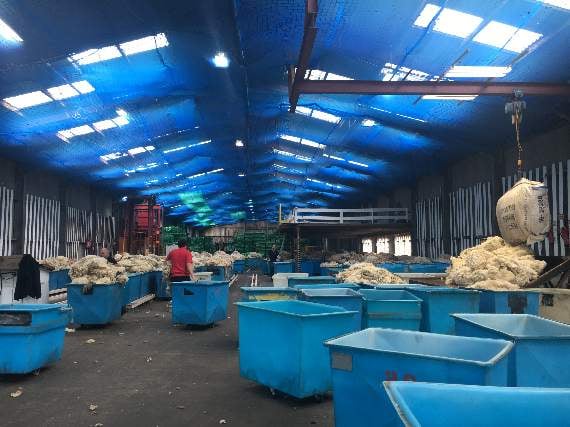
THE British Wool depot at Lamellion, Liskeard is set to shut in mid-February, bringing to an end a long history of wool processing at the site.
The closure is part of a nationwide restructuring of the organisation in response to a “very challenging year”.
British Wool says the changes are being made in order to protect the value of producers’ wool.
Seven people work at the depot and while there will be job losses, said British Wool, it would look to redeploy some staff elsewhere within the business.




The Lamellion depot handles around one million kilos of wool from some 1500 producers around Devon and Cornwall. Last year, a new intermediate depot for wool collection was opened at Launceston.
Farmers will be still be able to deliver their wool to Lamellion until the middle of next month, after which alternative arrangements will be put in place ahead of the new shearing season.
This will allow farmers to deliver their wool to a local collection point with no onward carriage charge, from where it will be transported to the South Molton depot for the grading and packing process. British Wool said it was “exploring options” and no new venue had yet been identified.
Currently, the British Wool depot in Liskeard receives wool from farmers, grades the wool, packs it into consistent types and gets it ready for auction.
It will be one of four grading depots in the UK to shut, the others being Irvine, Porthmadog and Stamford.
British Wool says that the COVID-19 pandemic has had a significant detrimental impact on the global wool market. It has cleared the 11million kg of unsold wool it had at the end of April 2020, but the market remains “extremely challenging”.
Andrew Hogley, acting CEO, said: “British Wool has managed to sell wool in decent volumes since August which has allowed us to clear last season’s unsold stock but prices are still severely depressed.
“The global market faces an oversupply of cross-bred wool, this is mainly from New Zealand but also from other European markets.
“Although we have seen some more positive signs in recent auctions on some wool types, carpet wools remain under a great deal of pressure. The contract carpet market which serves hotels, offices, cinemas, restaurants, airports, cruise ships, and the like, remains extremely depressed due to the closure of the hospitality trade.”
In order to ensure producers receive maximum value for their wool in these unprecedented times, British Wool has launched a major restructuring programme.
“It is critical that we re-shape the business in line with current market conditions,” said Mr Hogley.
“Next season we will be reducing the number of grading depots that we operate from 12 to eight, and the wool from these areas will be reallocated to other grading depots within our network. The annual savings from these measures are estimated to be £1.5 million per year. Based on our current level of wool intake, this equates to a saving of 6p to 7p per kg.”
“I want to stress that we will not be changing our service levels to producers,” he continued.
“Where we close a grading depot we intend to replace this with a new intermediate depot in the nearby area.
“This will ensure producers still have a local drop point for their wool with no onward haulage charges. We will contact all affected producers ahead of next season to let them know where the new drop-off points will be. We will also continue to take all types of wool from any producer.
“The sites we are closing are still open for producers to deliver this season’s wool and will remain so until the middle of February.”
British Wool is owned by around 35,000 sheep farmers. The organisation works to maintain the value of wool and promote the product to the international textile industry.
“Rest assured, things will improve and British Wool will be working hard to support the recovery of the wool trade in order to maximise the value of your wool,” added Mr Hogley.