

Photographer Ray Roberts describes the various uses for plants and flowers spotted during a walk on the Rame Peninsula.....
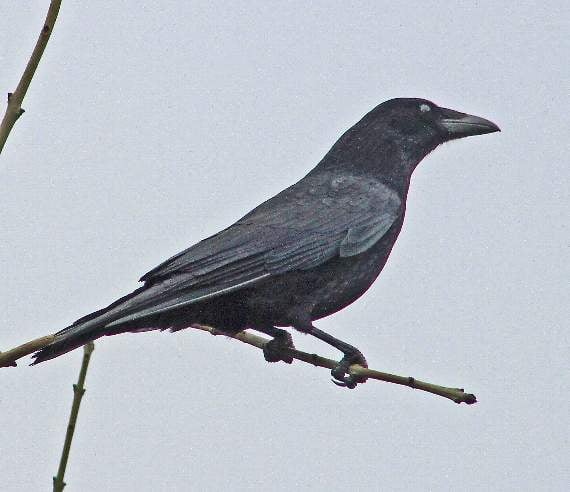
After our visit to Wacker Quay, we decided to drive up to Tregantle Fort where we knew there would be an ice cream van parked alongside the wide road. Sure enough the vendor was there and whilst we were enjoying our iced treats, we saw a crow flying from fence post to fence post alongside the road. Then it flew across the road and settled briefly on the top of a telegraph pole and then came back to the fence post.
There were several cars beside the ice cream van and the crow was obviously waiting for an item of food to be thrown out for it. We noticed that some of the cars’ occupants threw out what must have been crusts of bread or cake from their lunch and these were quickly pounced upon and devoured.
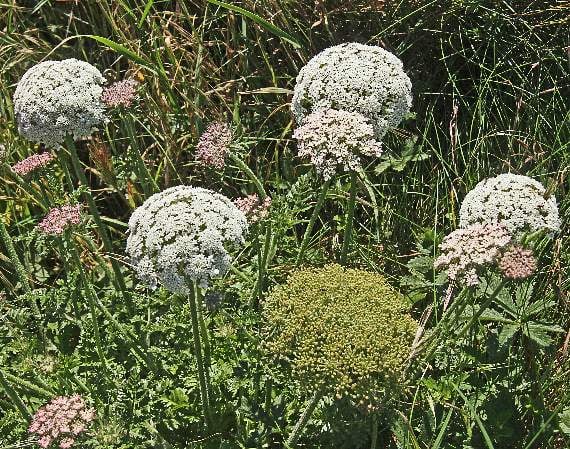
We drove on along the cliff top road towards Rame Church and as there were lots of flowers on the south facing hedgerow we pulled into a wide space and got out to look at these blooms. Wild carrot – Daucus carota - was the most prominent with their half-round clusters of white umbels of tiny flowers. Although some of these carrots tops had reddish/pink flowers.

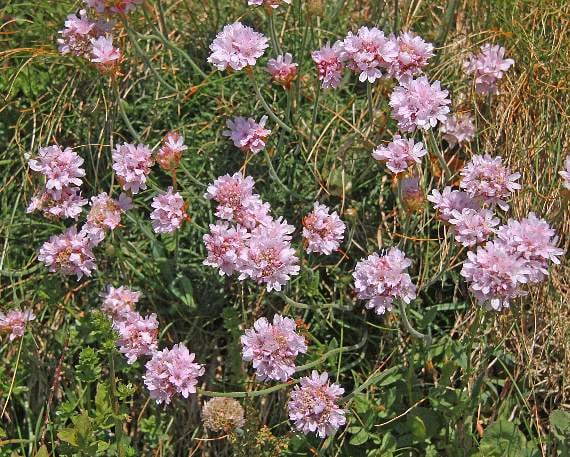
There were several groups of pink flowered thrift – Armeria maritima – or sea pink as it was also called, growing alongside the road on the hedge and this flower has the distinction of appearing on a coin. Some of us will remember the old brass, twelve sided threepenny bit back in the days of pennies and shillings and when school children were encouraged to save them up for a rainy day, thereby ‘being thrifty’.
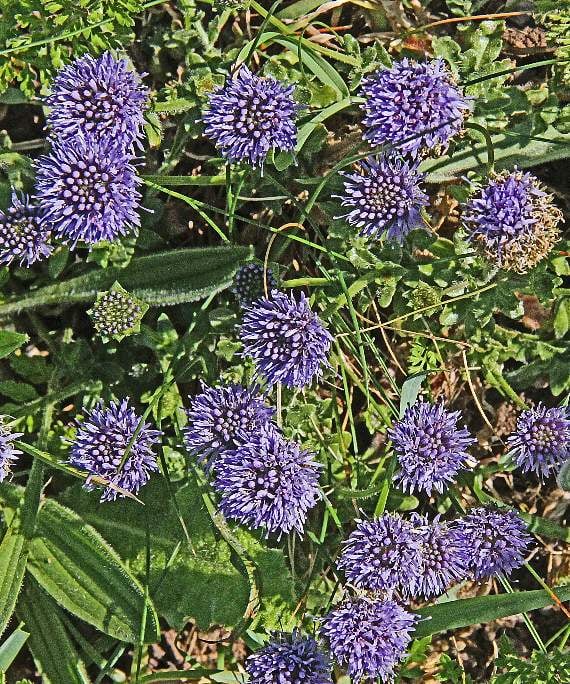
Also along the grassy hedge were lots of clumps of blue flowered field scabious – Knautia arvensis. The juice from this plant was once used in a drink to cure scabies which is an itchy rash on the skin caused by a tiny mite that burrows beneath the skin where it lays its eggs. These mites are picked up on hands, arms and uncovered legs whilst walking through vegetation.
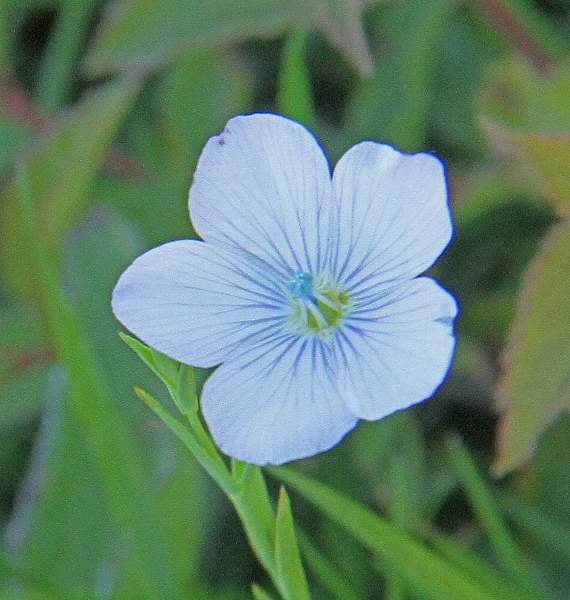
I found a single pale blue flower that could only be that of pale flax – Linum bienne – growing amongst the grass. Very similar to cultivated flax – Linum usitatissimum – which some farmers occasionally grow, turning the whole field blue for a short while. This flax was used to produce linen for clothes making and it is said that Egyptian mummies were wrapped in linen before being buried. The seeds were also a source of food and linseed oil.
As we drove back towards Crafthole I noticed some pink dog roses – Rosa canina – so we pulled into a layby to photograph them. Not really a nice name for a rose that was adopted by Henry V11 as his official emblem and has been the symbol of British monarchy ever since.