

REGULAR Cornish Times columnist and photographer Ray Roberts describes more of South East Cornwall’s flora and fauna in another of his Nature Watch walks.
I WAS walking past a holly bush on the roadside and noticed that some of the evergreen leaves had yellow patches on them.
I checked it out in my old encyclopaedia and found the patches are due to the tiny holly leaf mining beetle. This insect lays its eggs on the leaves of the holly tree and when the larvae hatch out, they burrow into the leaf where they live and eat between the top and bottom of it.
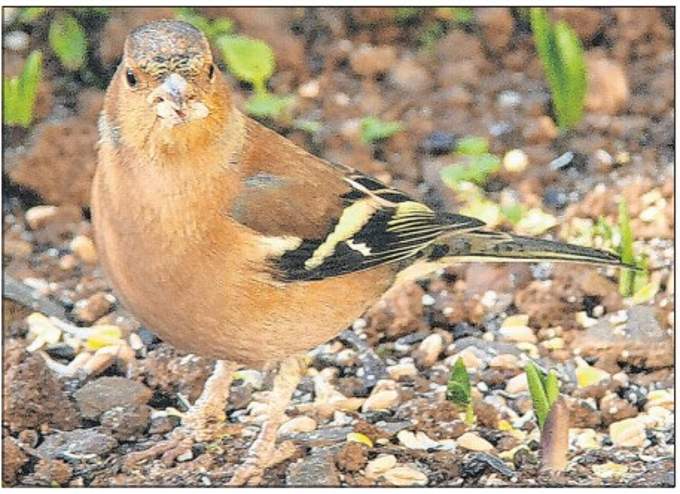
A male chaffinch visited the garden and was picking up sunflower seeds that the goldfinches had knocked out from the feeders. Although chaffinches are a common winter visitor, they don’t appear on our plot very often.


-Liam-Westpfel-(Man-Down).jpg?width=209&height=140&crop=209:145,smart&quality=75)
They acquired the first part of their name many years ago when they were often spotted picking among the chaff for wasted grain, after corn had been threshed in the farmyard.
Threshing day on the farm involved several men including the two or three that worked for the farmer, plus a few men from nearby farms that would come for the day.
The threshing machine visited all the farms in turn and was pulled there and then driven by a steam engine – later replaced by a single cylinder, diesel-driven Field Marshall tractors.
When the thresher left the farm there was always a large pile of chaff or corn husks that obviously contained a fair amount of perfectly edible grain.
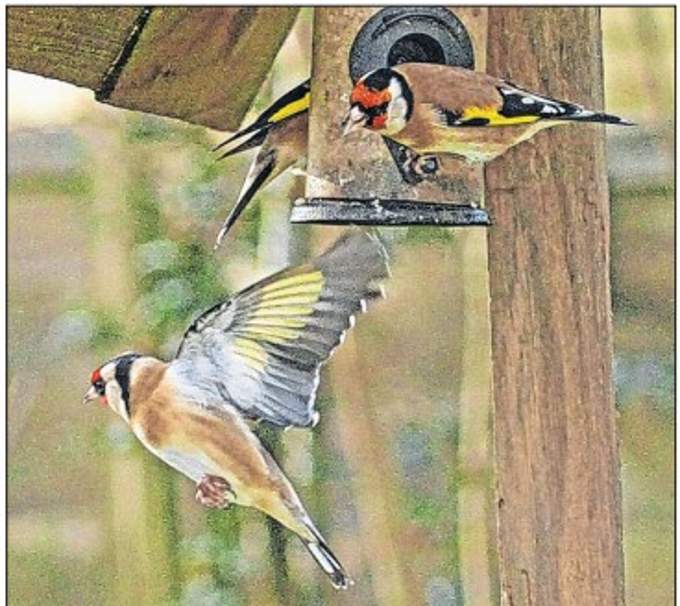
On a good day there could be more than a dozen goldfinches trying to feed in the garden and, of course, they cannot all get to the feeders at once, so occasionally there are minor scuffles. Beautiful they may be but when they all try to get to the feeder at once there are bound to be upsets. During the autumn, goldfinches can be seen feeding on the seeds of thistles and on the tall, prickly teasels. In fact goldfinches are the only birds I have seen on teasels.
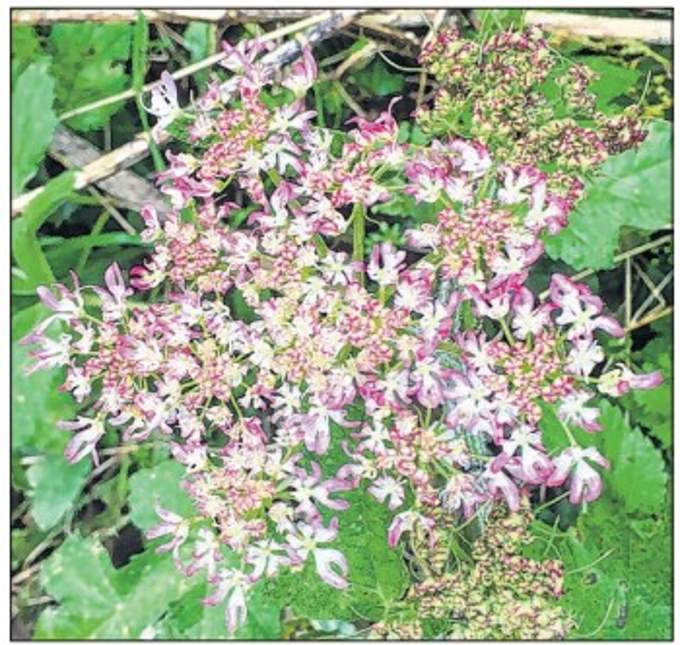
I know I have mentioned hogweed flowers before, several times, but every time I see some fresh ones with hundreds of tiny white blooms that are tinged with pink on a large flat flower-head, I can’t resist another picture.
This flowerhead is the mating ground for several insects, including the yellow dung fly and the orange-red common soldier beetles from late March onward.
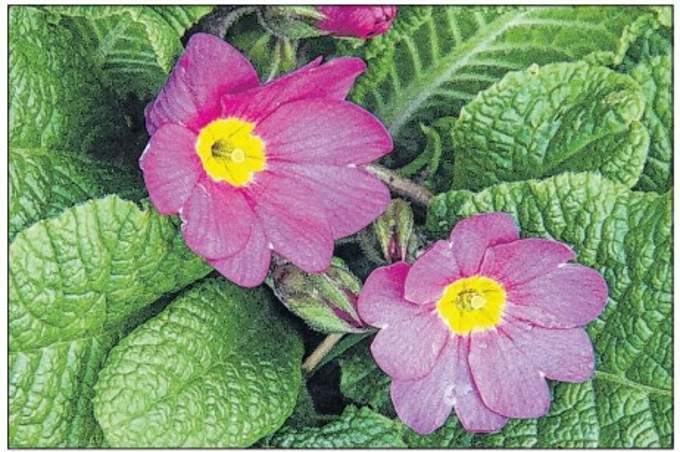
Nor can I walk past the bright red and yellow primroses that are on the road hedge.
At some time in the past somebody took the trouble to remove what was probably an unwanted primula from their garden and then planted it in the hedgerow.
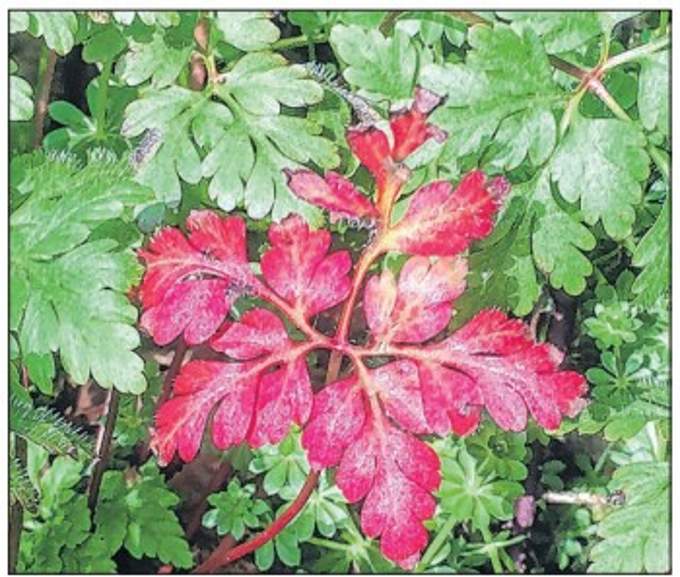
Although they look beautiful, I still prefer the cream-coloured Primula vulgaris – the native common primrose. I spotted what I thought was a large red flower among some green leaves, but when I had a closer look, I could see that it was a red leaf on the herb Robert plant.
This is one of the things that geranium leaves will do during the winter months and this one really stood out among the plant’s other leaves.