
THERE is much more to the village of Par than initially meets the eye. Many just touch its outskirts, as they walk the Saints Way, while others head for its beach - a favourite for dog walkers, windsurfers, and those wishing to exercise their horse along the shoreline.
Others, if they stay longer, eventually appreciate that for a small village, set in the heart of Cornwall, it is very busy. It is also a place of work. There are a surprising number of shops and businesses within it, a main centre of activity being the port, owned by Imerys (formerly English China Clays International) and used for exporting kaolin. The huge Par Stack which was based at the harbour and used to dominate the skyline has now been demolished, but china clay is still dried at the port, and steam from the dries can be seen for miles.
Not only was Par once near the sea - much of it was also under water. In the Middle Ages it was a tidal estuary, a survey in the l800s revealing a depth of silt, mainly from china clay, and a layer of tin, washed down over the centuries from local mines. A plaque on a former bakery in the village, and now very much on dry land, shows a vessel foundered there in l777. The eastern arm of the old estuary reached into the marshy area near Polpey Lane, this resplendent in yellow irises during summer. The Imerys-owned Haul Road, used by lorries between Par docks and Fowey, was a mineral railway and was converted in l968.
The cliff walk from Par beach to Polkerris - from which the extent of the bay across to Mevagissey can be viewed - is extremely popular. It takes in the deep chasm known as Little Hell, once rumoured to be a smugglers' haven. Rather than taking to the cliffs at low tide walkers can stroll across the sands to Little Hell from Par beach.


.jpg?width=209&height=140&crop=209:145,smart&quality=75)
Par Sands Holiday Park, tucked in behind the sand dunes, has been vastly improved over the last 11 years, since being owned by Nigel Duckworth. It was once ungraded but now the caravans are fully serviced and palatial. They are 12' wide, and include a microwave and colour television. On site there is also now a swimming pool, games room, play areas and pitch and putt etc. As a result of that, and other work, the park boasts a four star English Tourism Council award, and a gold Bellamy award for conservation. Many of the caravans border a lake well known for the wildlife it attracts, such as wintering birds and herons. Occasionally, when an unexpected feathered visitor arrives, twitchers also appear in numbers.
The park, with a full time staff of seven and another 30 on a seasonal/ part time basis, is open between April 1 and the end of October. Mr Duckworth stressed in his business no-one can afford to stand still, and the park is improved year upon year.
A short stroll from the park takes holidaymakers to the village itself, and a variety of shops, including the Costcutter grocery store, managed for the past 18 months by 'Ros' and Roy Beddow. They originate from the West Midlands, but ran a shop in Newquay before moving to Par. They stock a large range of items, and also bake bread and other delicious foods and snacks on the premises - the smell of fresh baking making the shop's atmosphere especially pleasant and welcoming.
In fact Par is home to more shops and businesses than most villages in the county. Among these are two newsagents, one run by Garth Netherton since l960. Garth, 73, who was born in Par and was a pupil at Tywardreath primary, was a founder member of Tywardreath parish and Restormel borough councils, and was borough mayor in l994. He remains on the parish, but came off Restormel council last year. He says his childhood, spent on the beach, was full of fun and sunshine. He was part of the school orchestra and even visited Western Germany on a youth exchange. He said he was never bored - children could join the Scouts, the Air Corps, the very good youth club at Tywardreath, and play at Spit beach and Polkerris when Par beach was closed during the war.
The village also has four pubs - the Par Inn, the Welcome Home, The Royal Inn and the recently refurbished Ship Inn at Polmear which hosts well attended band concerts in its garden during summer. Added to this is the friendly post office which stocks an impressive number of other goods, a hardware store, fish and chip shop, a Chinese takeaway, a restaurant, a beach cafe, greengrocers, butchers, an auto spares outlet, hairdressers, a chemists shop, a library, a jewellers, mobile phone outlets, estate agents, insurance companies and much more.
The much more serves to include Phillips Auctioneers, which has offices in London and abroad - and in Par. The company was founded in l796 by Harry Phillips, and is now one of the world's largest international auction houses, owned by leading luxury goods group, LVMH Moet Hennessy Louis Vuitton. Last year alone Phillips acted for over 80,000 vendors, ranging from private individuals to large institutions. Branch manager at the Par office - which used to house May, Whetter and Grose estate agency offices - is auctioneer Roger Tappin, who also makes home visits to customers, and frequently gives his advice at charity events. Very well attended auctions regularly take place in their extensive Cornubia Hall at Par, but often items are 'sent down the line' to be entered into sales in London. Disaster struck at the firm's London premises at 73 Bond Street in l939, when they went up in flames, but undeterred Edwin and Robert Hawkings, who headed up Phillips at the time, moved to premises across the road without missing a single sale.
On November 9 and l0 Phillips will hold a two day sale at Par, to include the Peter Gardiner collection, Peter Gardiner being a Lostwithiel man who wished his collection to be auctioned in Cornwall. This will feature fine l8th, l9th century and later English, Continental and Oriental ceramics as well as paintings, silver, jewellery and furniture.
Par is on the main railway line, giving it links with London and the north - its small, country railway station a honeypot for trainspotters. The station is sited next to football fields, and an athletics track recently updated to a tartan track due to a Sports Council grant. This where Newquay/Par Athletics club train - while the football fields are home to a number of teams from junior to senior ranks.
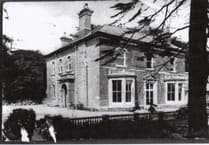
Roselyon school, an independent co-educational school founded in l952, is also located in Par. It is set in a Victorian Manor House in five acres of beautiful woodland, with a new multi-purpose hall now added to the facilities. The school takes pupils in its full-time nursery from the age of two and a half, and in the main school from five until 11. Pupils pass each year to a variety of local independent and state schools, regularly at scholarship level.
Stuart Bradley has been school head since January, having moved with his family from Cheshire. Ann, his wife, teaches at Mount Charles school about four miles away, son Huw attends Fowey community college, and a daughter Kate is a Roselyon school pupil where there are currently about 80 children on roll. Mr Bradley spoke of the friendliness of the school, which attracts many pupils from South East Cornwall, and the variety of sports it provides, as well as 'wide experiences in drama, music and art'. He said its friendly, family atmosphere is maintained by an enthusiastic team 'of highly committed staff'.
The school is very aware it is part of the community, a group of its youngsters currently involved in a piloting a new workshop at the Eden project. One recent school project was the production of a Millennium quilt in which every pupil drew a coat of arms for his or her family name. These were then incorporated into a communal quilt.
The main house was once owned by the Varcoe family - the links still remaining as a member of the family, Merryn, currently works in the nursery. Nursery head is Sally Loosley who said in the mornings up to 20 children attend, with usually a smaller number present in the afternoons.
However, she stressed how flexible the nursery is to accommodating parents' requirements. She added that it provides both play and fun, and assimilates children into a school atmosphere in the best way possible.
Par is one of the few villages in the country probably boasting a one-way system. The local carnival procession follows this route every July. Those entering usually include the lst Par-St Blazey scout group, whose headquarters is based on the one-way system itself.
Churches include the Church of the Good Shepherd also on the one-way system, the Methodist church at the back of the old Post Office building, and St Austell Bay community church.