

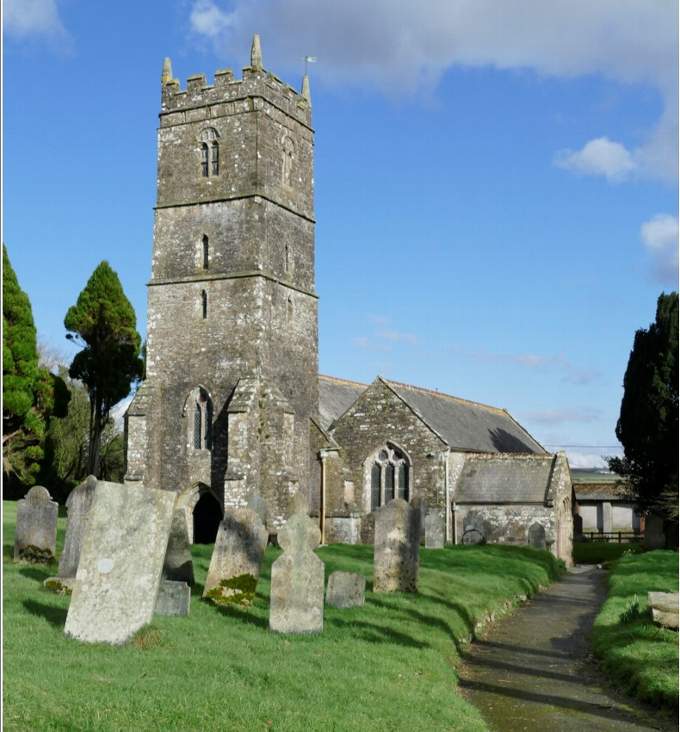
JUDITH AYRES, who with Miranda Lawrance-Owen is St Sampson’s Unlocked Joint project co-ordinator, here explains why restoring a historic South East Cornwall parish church has become so important to her, and why she believes such buildings should be safeguarded to benefit the communities around them.
“EVERYONE should be involved in a church restoration project at some time in their life.”
Those words were said to me by someone who made a donation a few years ago and is now immersed in St Sampson’s Unlocked, the half a million-pound restoration project at St Sampson’s Church, South Hill, near Callington. The more I thought about his words the more I realised what a profound statement this was.
A church restoration makes you realise the importance of things, temporal and spiritual. It makes you think about the faith of others and your own faith. It draws you into something deeper than bricks and mortar. It gives a sense of your place in history. It provides a timeless stabilising effect on the fast pace of modern life. It makes you see the scope and size of a project which sounds so simple but is complicated and involves layers of expertise. It’s a slow process. It demands working with others.
.jpg?width=209&height=140&crop=209:145,smart&quality=75)
.jpg?width=209&height=140&crop=209:145,smart&quality=75)

Being involved in a restoration project brings many opportunities, joys and challenges. It quite literally can change your life! There are discoveries to be made, skills to be learnt, people to get to know and never-ending excitement. Churches are so much more than places of worship and give far more than they take. I have been surprised by the passion of the many skilled craftspeople who care deeply about their skill, be it windows, bells or monuments.
I have been inspired by the advice and help from other churches and professionals. I have made good friends as we work, laugh and sometimes cry together. The community values what is often one of the few remaining public places in a rural situation and can become wonderful advocates of ‘their’ church. Environmental and conservation groups have an interest in church sites too.
Ideas
Church restoration often starts with the faith community wanting to ‘fix’ their building. For us this has had an amazing knock-on effect. We needed to think what we could do with the building and community consultation came up with over 100 ideas. First we needed to make the building warm, dry and draught free, with works to the roof, ceiling, windows, floor and heating – and we needed to put in a toilet and kitchen. From the start it was not a building project but an outreach project, opening the church for all to use and experience the awesome place which is St Sampson’s Church.
If you have an interest in history, churches have so much to discover. The research on our windows and the families they mention took me all over the world via Facebook and e-mail. Our remote rural church now has contacts in Australia, Canada and the USA.
There are so many links to past people to be discovered. Starting with St Sampson in the 5th-6th century, we are connected to Trelawney, William Wilberforce, Sir Francis Drake and the Armada, the Knights of the Garter, Daphne Du Maurier and noble families!
When our bells were taken down for restoration it was an opportunity for volunteers from the community to help and local bell enthusiasts to become involved. We were delighted by the number of people who came to help or watch and by the strength of feeling our 1698 bells evoked in us. These bells had rung out at many important events down the years but haven’t been fully heard for over 50 years. The community now feels strongly about restoring them.
Like many churches, we have bats, including regionally rare ones. Ours began as a problem but have become a blessing. They have brought us inspiring enthusiasts and new people getting involved. Without churches a high percentage of bats lose their homes.
Communities need public spaces – where better that a church? Churchyards can be wildlife havens and places of peace for humans. Church buildings are spacious but beautiful places for of events and activities, and hubs of social engagement bringing people together. Who wouldn’t want this, rather than an unused ruin, in their midst?
Close a church and you don’t lose a worshipping faith community – you lose your shared heritage, links with history, a piece of your community, a chance to thrive and grow together, a shared space, an undisturbed habitat and haven for wildlife.
Being part of a team or community restoring a precious church is life-enhancing. It is fixing a special building but it is more than that: it is about the people that use it and support each other. There is a sense of preserving something for the future, a continuation of what those who have gone before have done. It gives an enormous sense of well-being, working together, making new friends, getting through the challenges together, fundraising and having fun, honouring past generations, and leaving something for the future.
At St Sampson’s we are slowly fulfilling our vision. It’s a long journey, with many twists and turns but restoring a church is achieving something great. To find out more, help our project or donate visit https://www.justgiving.com/campaign/StSampsons-Church-SouthHill-Cornwall
So who was St Sampson?
ST Sampson was from South Wales, son of Amon of Dyfed and Anna of Gwent.
He was placed under the care of Illtud, Abbot of Llantwit Fawr (also known as Llantwit Major, near Bridgend) and became abbot of Caldey Island, off Tenby.
Later he travelled to Ireland, but in 521AD was ordained a bishop in Ergyng (roughly Herefordshire). He and followers then travelled to Cornwall, first to a monastery at St Kew but then founding their own at either South Hill or Golant. He is said to have slain a huge serpent living in a cave after it terrorised the neighbourhood.
He later moved on to the Isles of Scilly, where Samson is named after him, and then Guernsey, hence its parish of Sampson. He ended his days in Brittany, where he founded an important monastery at Dol. See https://south-hill.co.uk/who-was-st-sampson/