

IT’S time to catch up with Nature Watch writer and photographer RAY ROBERTS’ recent walks around the area as featured each week in the Cornish Times. In this one he was weathering those named storms earlier this month which now, with the improving weather, seem but a memory:
THANKS to the rain and strong winds brought by the very unwelcome storms Dudley and Eunice, I confined my walks for a few days to just around the village, to see what was growing on the hedges and walls.
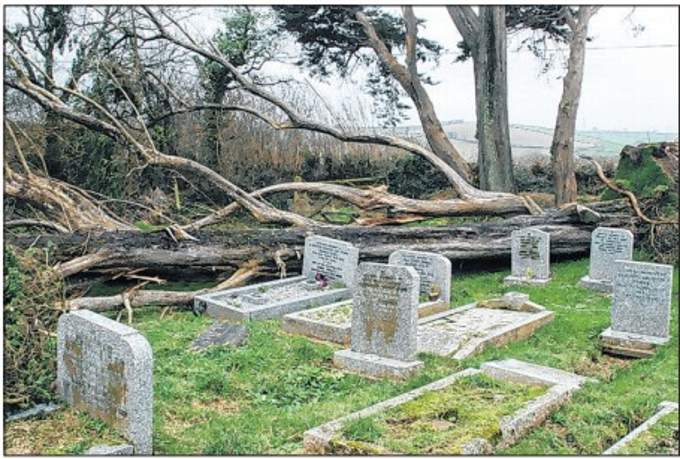
But I did go as far as the cemetery, where I found that the tall macrocarpa tree beneath which I found a bunch of seeds recently, was sadly lying on its side among the gravestones.
This tree must have been over 20 metres tall but its roots, which are now on show, only went around one metre into the ground. I think this is the same with all of what we call ‘fir’ trees.



I can remember back in 1987 when we had gales, nearly a whole wooded area of fir trees near the Looe river was practically flattened as their roots were only about 30cm deep.
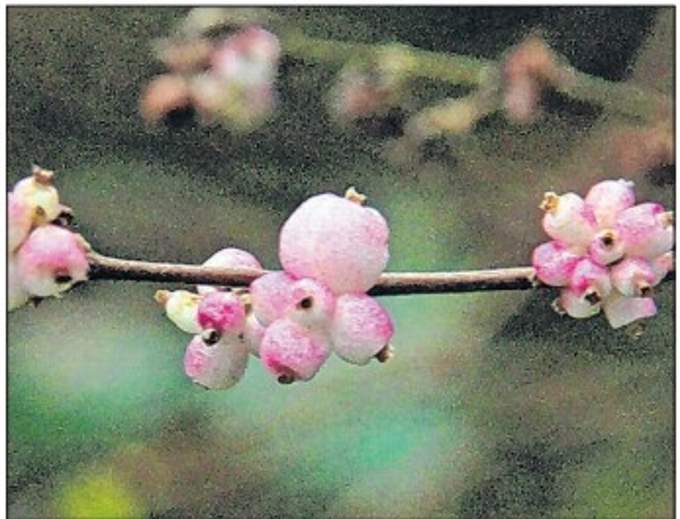
On a brighter note, I spotted some small pink berries on a trailing shrub over at the eastern end of the village which I am sure were new snowberries that develop from the tiny pink flowers.
These will enlarge to become the marble-sized white berries 10-15mm that are seen during the winter months.
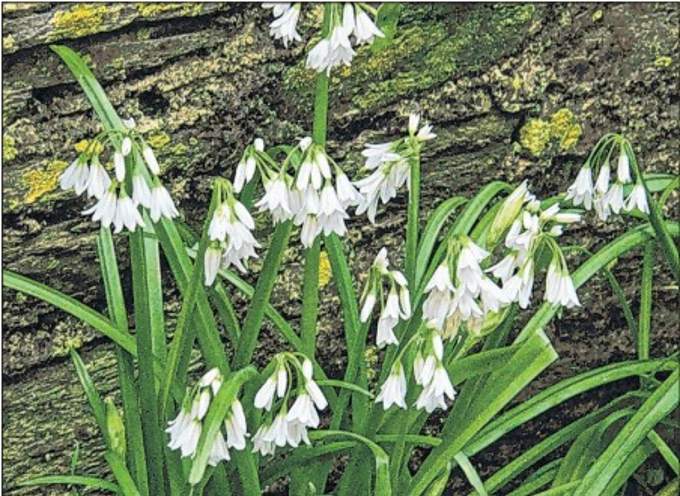
As usual, all the three-cornered leeks in and around St Hugh’s Churchyard are coming into bloom now with their long triangular stems topped with white bell-shaped flowers.
As well as covering the churchyard, they are also growing at the foot of the stone wall out on the road.
Although nice to look at, this is one plant you do not want to introduce into your garden as it will spread like wildfire.
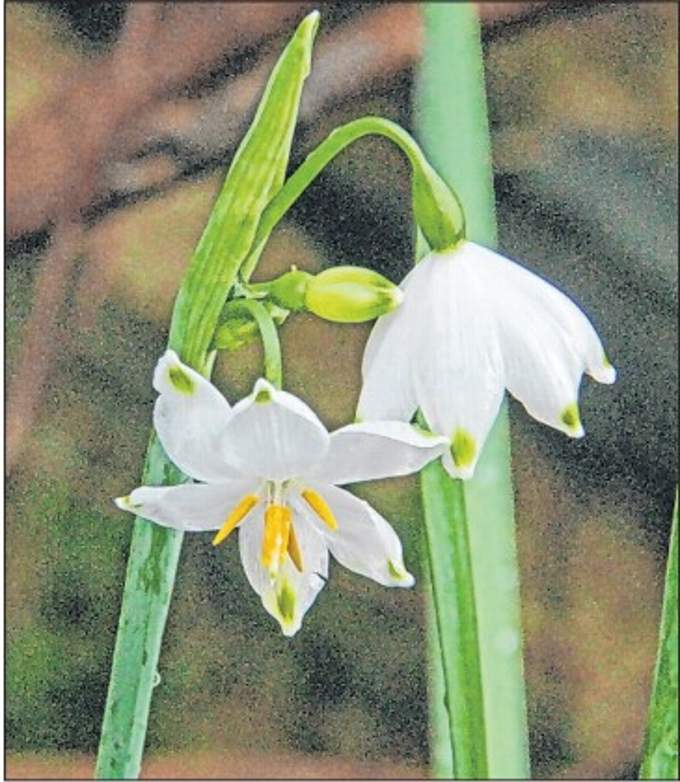
A spring snowflake plant outside a garden wall was showing several flowers on long, bright green stems.
These have six white petals that are tipped with green patches and with orange antlers in the centre.
There is also a summer snowflake that blooms during April to June and as well as growing in gardens they can be seen in damp woods and meadows. Most of the stone walls around the village have tufts of maidenhair spleenwort growing in the joints and cracks in the stones. This little graceful fern must be one of our smallest as its fronds are usually no more than 10cm long.
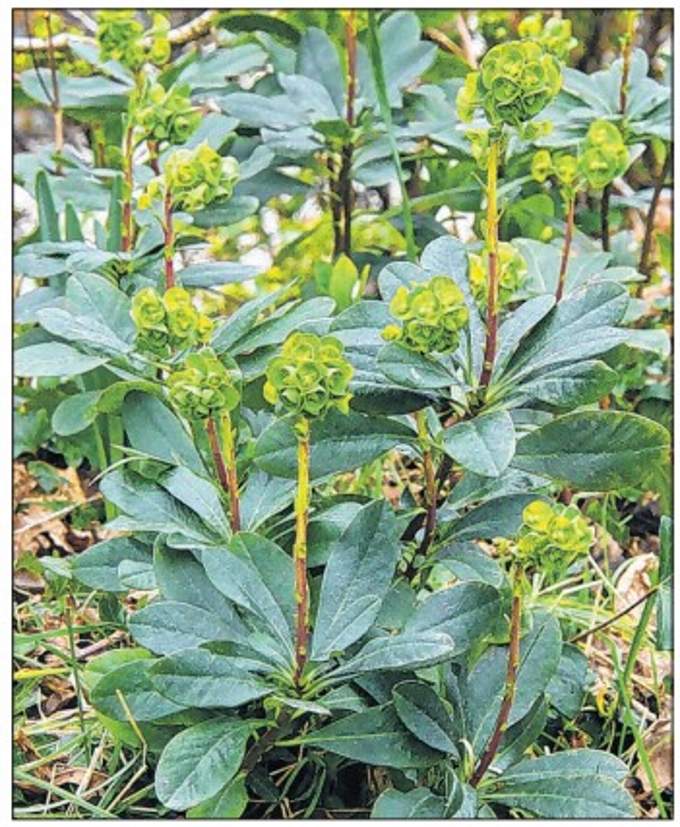
Along the top of one garden hedge were several euphorbia plants with their almost spoon-shaped leaves and whorls of tiny yellow/green flowers.
There are still hundreds of snowdrops out in flower around the village, in gardens, on the hedges and in the churchyard and cemetery.
Joining them now are loads of daffodils of all varieties and colours, although I have not yet seen my favourites – the wild ones – but they should be seen soon.