
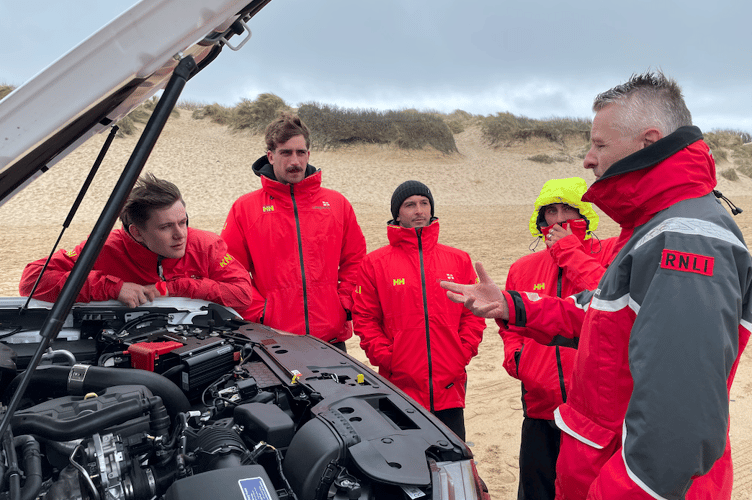
THE RNLI lifeguard service marked its 25th anniversary at Fistral Beach with a training exercise ahead of the new season.
Lifeguards were put through their paces using rescue equipment and their all-terrain vehicles, as well as performing rescue demonstrations on Tuesday (March 24).
RNLI lifeguards in the region have saved 1,098 lives since 2001 and aided 167,592 people through rescues, interventions and delivering casualty care. They have also responded to 185,954 incidents and carried out more than 22 million preventative actions.
The charity took action in 2001 when stark figures showed 200 lives were lost on UK beaches. Lifesaving clubs were already patrolling, but not on the scale required. The RNLI wanted to provide a solution and established a co-ordinated rescue service.

The RNLI worked with lifesaving clubs and beach owners to pilot 15 lifeguarded beaches in the south west, which included Crantock, Fistral, South Fistral, Towan, Great Western, Porth, Mawgan Porth, Tolcarne, Watergate, Tregonhawke, Freathy, Sharrow, Tregantle, Greenhill and Weymouth.
Twenty lives were saved in the first year, which led to an official service being formed, and the service has since expanded to reach over 90 lifeguarded beaches in the region and 245 nationally.
Safety literature information and warning signs were also developed for beaches so visitors knew what dangers they may encounter and how to keep themselves safe.
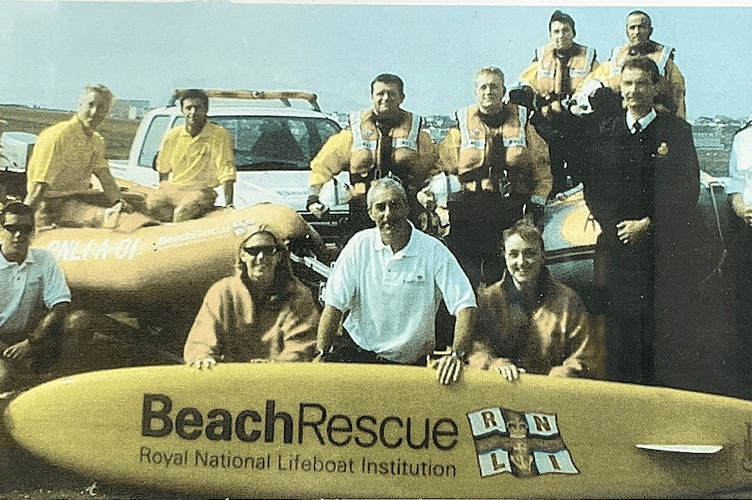
The RNLI’s lifeguard service has grown year on year through working closely with partners, and now there are over 245 beaches across the UK and Channel Islands being patrolled, meaning it’s the largest lifeguard service provider in the UK.
Peter Dawes, RNLI lifeguard general manager, said: “Thanks to RNLI lifeguards our beaches are safer places, so we can enjoy our time at the coast and return home safely at the end of the day. Around 95 per cent of a lifeguard’s work is prevention.
“They keep beachgoers safe by educating them about water safety and spotting the dangers before accidents happen.
“RNLI lifeguards past and present have kept millions of beach visitors safe over the past 25 years and will continue to do so for years to come.”
Lewis Timson, the lead lifeguard supervisor in Newquay, was part of the first RNLI lifeguards to be on beaches in 2001 when he was 18 years-old. He had previously been a part of a local surf school which would operate lifeguarding patrols alongside teaching surf lessons.
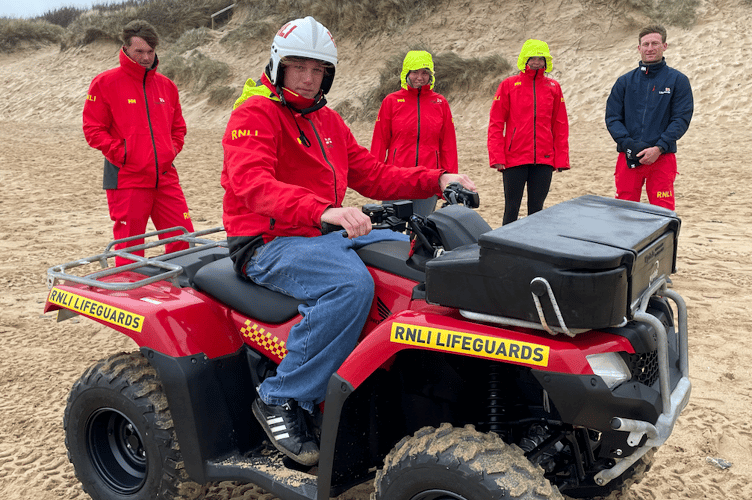
Mr Timson said: “The RNLI already had a strong, 180-year history of providing a front-line emergency lifesaving service and were able to bring the knowledge and expertise over from the lifeboat service to the lifeguards. The equipment and the training from the RNLI really set the gold standard. As soon as I was working for the RNLI, I knew it was what I wanted to do.
“The fundamentals are the same 25 years on. We still need well trained, capable, skilled lifeguards on our beaches. But there has definitely been a shift with how we keep people safe. This has developed alongside the amount of people we now get visiting our beaches and going in the water. Lifeguarding now is such a proactive service, being proactive is the standard and the new ‘normal’.’
RNLI lifeguards are trained to respond to any situation they may face from beach safety and prevention to rescuing those in difficulty and delivering vital casualty care.
Holidaymaker Mark Ferrer who was saved by RNLI lifeguards whilst swimming at Praa Sands on April 2, 2025, attended the training at Fistral Beach to mark the charity’s 25th anniversary.
He was pulled from the water in near gale‑force conditions after being spotted struggling 200 metres offshore.
Mr Ferrer was fighting against the current and being pushed toward the rocks. The RNLI lifeguard team launched an immediate response despite low evening sun and powerful swell making visibility almost impossible.
Senior lifeguard Matt Trewhella entered the sea in only his shorts, paddling a rescue board through powerful swell and strong currents. He located Mr Ferrer, barely responsive, around 200 metres offshore. Mr Ferrer was struggling to keep his head above water and was being pushed steadily westward toward the rocks and cliff at Sydney Cove.
Lead lifeguard supervisor Adam Harris launched into the surf with a second rescue board after recognising the danger, while lifeguards Dave Revell and Elliot McCluskey sprinted back to the hut for rescue tubes and fins. The four lifeguards worked together battling dumping waves to stabilise Mr Ferrer and manoeuvre him away from the rocks.
They succeeded in bringing him safely to shore after around 15 minutes in the water.
RNLI lifeguards Nelly Gallichan, Paul Richards and Hamish Curtis-Cullen immediately took over casualty care on the beach.
Mr Ferrer had swallowed a lot of water and was suffering from mild hypothermia as well as shock from the ordeal. Oxygen therapy and close monitoring continued until paramedics arrived and transported him for further treatment.
He went on to make a full recovery.
Mr Ferrer said: “Thank you doesn’t really cover it.
“I’m very fortunate there are people out there who are prepared to put their lives in danger and put themselves in harm’s way, even though they don’t know me, have never met me and that’s not lost on me at all. I won’t ever forget it.
“I’m fortunate they happened to be there on a training day and were having a debrief at the end of the day before going home, so there were many things that revolved around that group of lifeguards and are the only reason how I’m here. I know that’s the truth. Thank you isn’t enough but just so they know I appreciate what they did.”
RNLI lead supervisor Adam Harris said: “I’m incredibly proud of the team of nine lifeguards who, although not on active duty, showed incredible courage and teamwork to save the life of Mr Ferrer. If we were not there, I fear there would have been a completely different outcome.”
Comments
This article has no comments yet. Be the first to leave a comment.