

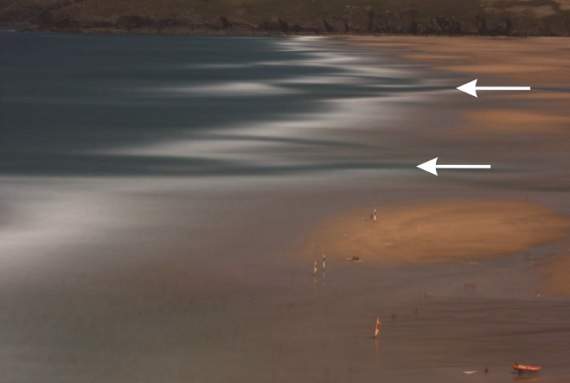
A potential link between breaking waves and the life-threatening dangers posed by rip currents has been revealed in new research involving the Universities of Plymouth and Southampton.



.jpeg?width=209&height=140&crop=209:145,smart&quality=75)
Hazardous rip currents are features on many beaches worldwide, and are thought to account for 68 per cent of rescue events involving the Royal National Lifeboat Institution’s beach lifeguards in the UK.
The study, which also involved researchers from Macquarie University (Sydney, Australia) and Deltares (Netherlands), used a combination of video imagery and in-situ rip current measurement at Perranporth Beach in Cornwall, which is well known for experiencing dangerous rips.
The researchers found that when waves break across the end of a rip channel, it in effect closes the channel and stops the currents from travelling far offshore. Crucially, however, they found that the absence of breaking waves across the channel promotes the formation of a much more hazardous rip current that can extend far offshore.
The research, published in Marine Geology, provides a better understanding why some surf zone conditions are more hazardous to bathers than others and could result in more lives being saved.
This is the latest research into rip currents involving the University of Plymouth, with previous work having focused on combining GPS drifter data with information recorded using current meters and water level sensors.
Comments
We've recently changed our login process. If you have an account for commenting, you will need to re-register on the login window.
This article has no comments yet. Be the first to leave a comment.