

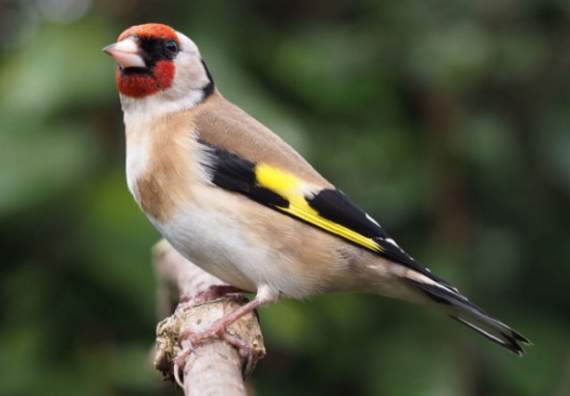
The latest results from the RSPB’s Big Garden Birdwatch have revealed a golden year for the goldfinch along with a number of other small birds after a surge in sightings in gardens across the country.
This year, more than 420,000 people across the country took part counting 6.7 million birds. Just over 7,000 took part in Cornwall.
The event held over the last weekend in January revealed an increase in sightings of smaller birds, such as goldfinch, long-tailed tit and coal tit that can usually be seen visiting gardens and outside spaces in mixed flocks.
Recorded sightings of the brightly coloured, sociable finch rose by 11% on 2017 figures and its bright red face was seen in more than two-thirds of gardens.




Other small birds that are thought to have benefited from the mild January weather include long-tailed tit (+16%), coal tit (+15%), and blue tit (+5%).
It also proved to be a good year for the greenfinch after a 5% rise in sightings, a welcome sign for a species that has undergone a 60% decline in sightings since the first survey in 1979.
Tony Whitehead, spokesperson for RSPB in the South West said: “We’d like to say a huge thank you to everyone in Cornwall who took part in our 2018 Big Garden Birdwatch. By donating an hour for nature, you have provided invaluable data about the health of the feathered friends that make living in Cornwall so wonderful.
“And your top five results are in: In fifth place, the beautiful goldfinch had a wonderful year in Cornwall, it was recorded in higher numbers on average in the county and seen in more Cornish gardens. In fourth place, the colourful blue tit, and third place the chirpy chaffinch, also had a bumper Cornish year with an increase in the number of gardens they were seen in and higher species numbers on average. Just missing out on the star prize, the cheeky starling nabbed second place, even though it was seen in fewer Cornish gardens and in lower numbers on average. But the UK’s overall winner, the house sparrow, stole the show in Cornwall this year. Although it was sighted in fewer gardens compared to 2017, the average number of this species recorded did increase across the county.”
Comments
This article has no comments yet. Be the first to leave a comment.