


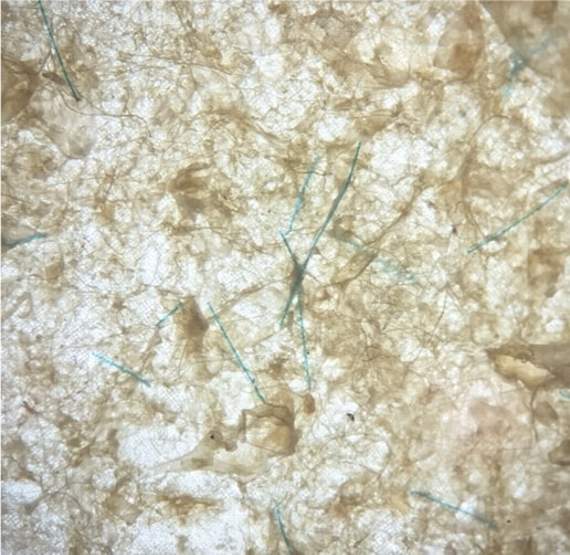
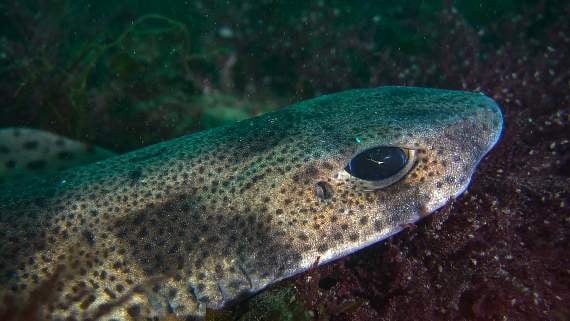
A STUDY carried out in Cornwall found fibres from clothing and microplastics in the guts of sharks.
University of Exeter scientists studied four species of demersal (seabed-dwelling) shark.
Of the 46 sharks examined, 67% contained microplastics and other man-made fibres.
A total of 379 particles were found and – though the impact on the sharks’ health is unknown – the researchers say it highlights the “pervasive nature of plastic pollution”.




’Our study presents the first evidence of microplastics and man-made fibre contaminants in a range of native shark species,’ said lead author Kristian Parton, of the Centre for Ecology and Conservation at Exeter’s Penryn Campus in Cornwall.
’We were surprised to find not only microplastics but also particles such as synthetic cellulose, which is most commonly found in textiles (including disposable hygiene items like facemasks) and clothing.
’When clothes are washed, or items are discarded as litter, tiny fibres are released and these often flow into water sources and out to sea.
’Once in the sea, microfibres can either float or sink to the bottom, which is where these sharks live.
’The fibres could then be ingested via the sharks’ food, which is mostly crustaceans, or directly through the sediment on the seabed.
’In terms of the other types of microplastics we found, many of these may have come from fishing lines or nets.’
The research team, which included scientists from Greenpeace Research Laboratories, examined the stomachs and digestive tracts of four species: small-spotted catshark, starry smooth-hound, spiny dogfish and bull huss.
These species can be found at varying depths from 5-900m, but usually live and feed near the sea floor.
Though the study is based on a modest sample size, the findings suggest larger sharks contained more particles. No differences were found based on sex or species.
The study was conducted in Cornwall, UK, using sharks caught as “bycatch” (by accident) in a demersal hake fishery, fishing in and around the North-East Atlantic and Celtic Sea.
Study co-author Professor Tamara Galloway, of Exeter’s Global Systems Institute, said: ’We were not expecting to find microfibres from textiles in so many of our native shark species.
’Our study highlights how important it is to think before we throw things away.’
The paper, published in the journal Scientific Reports, is entitled: “Investigating the presence of microplastics in demersal sharks of the northeast Atlantic.”