

For his latest Nature Watch column, writer and photographer Ray Roberts takes a look at the beautiful plants - dismissed by some as weeds - to be found in the arable fields after harvesting:
NOW that most of the corn fields have been harvested, I made a point of walking around the fields that are covered in stubble and have rights-of-ways across them to see what wildflowers have taken advantage of the direct sunlight and are bursting into bloom.
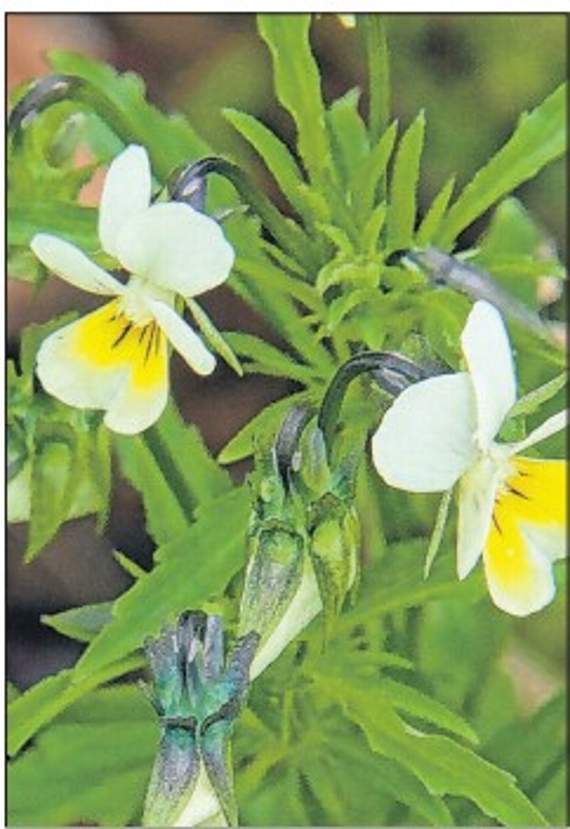
First of all I found what I consider to be the delightful flower of these fields, the field pansy – Viola arvensis.
They have small, white blooms, about six to 10mm wide, with a splash of yellow on the lower petals.

.jpg?width=209&height=140&crop=209:145,smart&quality=75)
.jpg?width=209&height=140&crop=209:145,smart&quality=75)

However, these beautiful flowers have been dubbed weeds by farmers simply because they inhabit arable land.
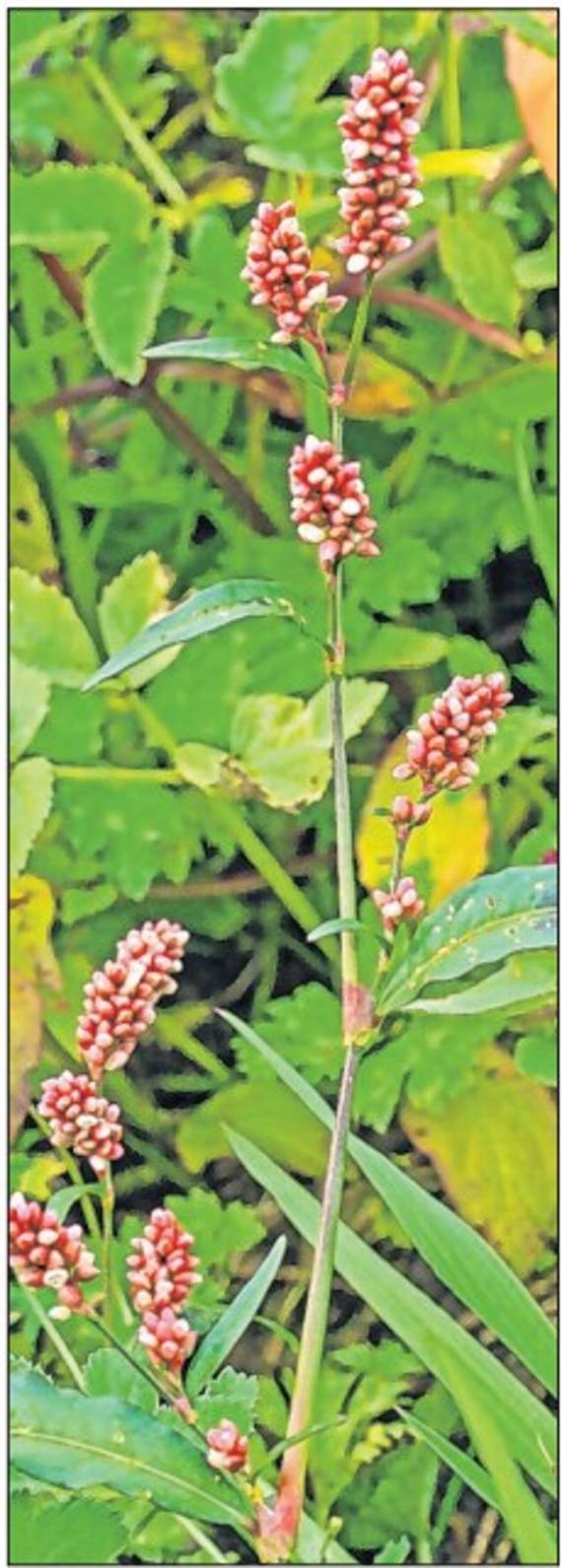
I spotted lots of redshank or red stalk – Polygonum persicaria – growing among the stubble with their pink spikes of flowers on the top of their sprawling stems that eventually turn red.
The narrow, almost oval leaves carry a dark central mark that was, supposedly, caused when the Devil pinched the leaves, leaving his thumbmark, to make them useless as food.
Crofters in the Shetlands, however, found redshank useful in another way as the roots contain a yellow dye.
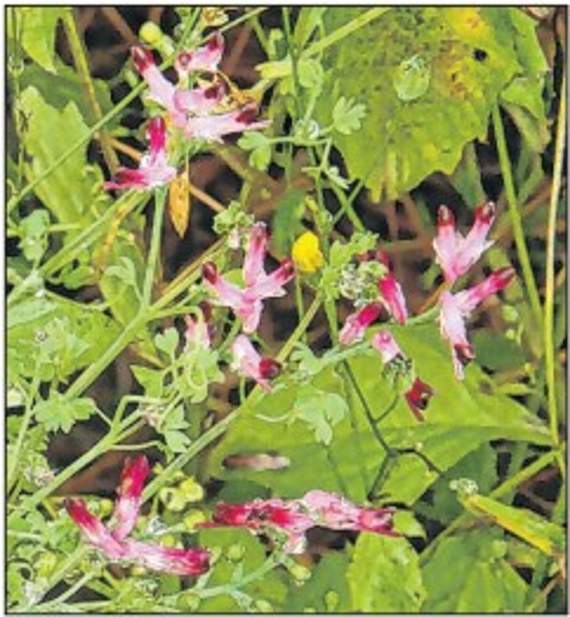
A pinkish-flowered plant that was growing among the stubble and along the bottom of the hedgerow was common fumitory – Fumaria officinalis – with its untidy scrambling stems that can reach half a metre in height.
Like the red shank, common fumitory loves arable land, especially after it is disturbed.
It also grows on barren waste ground but will not grow very tall, tending to spread outwards rather than up.
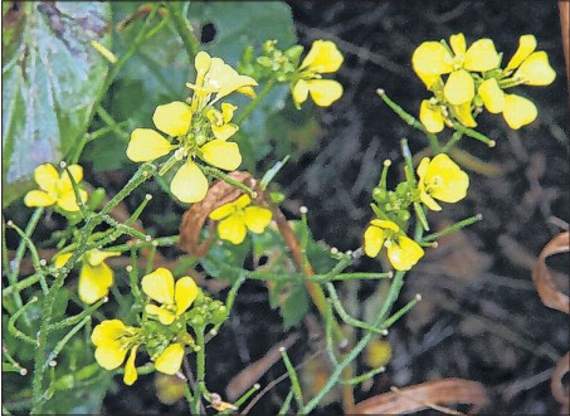
Wild turnip – Brassica rapa – has yellow four-petalled flowers that eventually turn into seed pods. Once again, this is another plant that loves arable land.
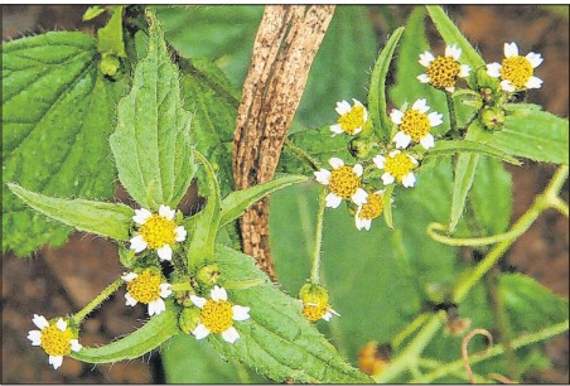
A flower that I cannot remember seeing before was growing near the hedge of a cornfield. It was a gallant soldier – Galinsoga parviflora – that looked very much like an oxeye daisy with a yellow inner disc, but its five white petals look as if they have been cropped very short, making the flower only 4-6mm wide.
It appears that gallant soldier was brought to the Royal Botanic Gardens at Kew from the Andes but escaped from there during the 1860s. Of course, from London it spread across the country – especially, it seems, down into our part of the world.
Looking through a gate way into a cornfield that was waiting to be harvested I spotted a couple of corn marigolds – Chrysanthemum segetum – that were growing beside the gate.
These yellow-flowered plants are sometimes known as Gold and grow on wasteland and around the edges of arable land. However, although they have beautiful scented blooms they are regarded as a nuisance to farmers.
In fact, back in the 12th century, Henry II issued a decree ordering their destruction because, not only did it starve and choke growing corn, the plants made harvesting with scythes difficult. Its seeds can remain in the ground for several years until they are dis turbed and brought to the surface where they will germinate and flower again.