
The Cornish Times is your weekly local newspaper, covering the South East of Cornwall.
It is published every Friday, which means that when staff start work each Friday morning they have an entirely new newspaper to fill - and a lot of work to get through between then and 5pm on the following Thursday, which is about the time the paper leaves Liskeard to be printed.
There are several departments involved in the running of The Cornish Times, which is now owned by the Tindle Newspaper Group and was founded in 1857. These departments include editorial, where the reporters work and the news is gathered and edited; production, where the news and advertisements link up on the appropriate pages; advertising, where staff contact local businesses and arrange their advertsements; reception, where all the calls into the building are taken and customers dealt with; and accounts, where all the money matters are organised.
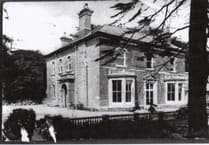
Computers now play a great role in the lives of all the staff who work in the newspaper, which is based at Great Place, Bay Tree Hill, Liskeard. They are used in each department - especially in production where printers once had to go through the time-consuming process of making up all the pages from hot metal. Now everything is done 'on screen'.
.jpg?width=209&height=140&crop=209:145,smart&quality=75)

The Cornish Times covers an area from Saltash and Torpoint in the east to Fowey and Lostwithiel in the west, and from Looe in the south almost to Launceston in the north. It covers five main towns - Liskeard, Callington, Looe, Saltash and Torpoint. However, there are a host of other villages and hamlets which fall into its area, from Minions to Darite, from Polruan to St Keyne, from North Hill to Warleggan, and from Nomansland to Luckett.
The news which comes into the office from all these outlying villages is placed into the paper's Community News section, and organised by one of the reporters. This news is sent in by a well established network of local correspondents who write in on such matters as church services, coffee mornings, fund-raising occasions and flower festivals - in fact on all the events, both large and small, which make up village life. This news arrives through the post, by telephone, by fax and by e-mail.
The general news reporters are responsible for covering main events everywhere in the newspaper's area, and in the towns.
They regularly cover town and district council meetings, and have to keep an eye on what is happening at court, or at inquests etc. Daily and weekly calls are made to the police, the firemen, the ambulance service and the Coastguard to discover if anything worth noting, or following up, has happened locally. They also have to write the paper's regular features, such as 'Village Views', the very important Schools Page, 'Pub of the Week' and 'Have your Say', which is based around a topical question. For example at the beginning of the year the reporters went out into the streets, with a photographer, to ask the general public about their Millennium wishes.
The reporters have to liaise with a number of photographers who work on a freelance basis - to arrange photographs which add greater depth to a story, or are so eye-catching that they will help to sell the newspaper, especially if placed on the front page in colour. These photographers often find themselves visiting a number of schools in the district, for varying reasons. It may be to take a picture of the nursery class, or a winning cross country runner or top football side, or because a special event has been held, such as a non-uniform day for charity, or an Easter bonnet competition.
Also based in the editorial department is the sports editor, who concentrates on all the sporting news and results - dealing with cricket, hockey, football, basketball, athletics, bowls, darts, and a host of other sports. Even included in the sporting columns are euchre and pigeon racing. During the middle of last month local people who ran in the London marathon proved to be a topical story, while the opening matches of the new cricket season in Cornwall are now taking up a lot of space.
The managing editor and the editor work in this office as well. They are responsible for deciding which stories and photographs go on which page, and which news item is most suited for the front page lead.
If something very startling happens at the last minute, such as a bank robbery in the middle of Liskeard, or the discovery of a Second World War bomb which brings Saltash to a halt, then the call really may go out 'Hold the Front Page' - and everything has to be changed around.
This means a great deal of quick work, not only in the editorial department, but also in production, where the final draft of the front page will finally be printed out.
The Cornish Times is not actually printed in Liskeard although many, many decades ago it was. It is now taken to the Western Morning News building in Plymouth on a Thursday evening to be printed, available for distribution to newsagents throughout South East Cornwall. Papers should be on shelves, ready for early rising customers to buy first thing each Friday morning.
Although the editorial department fills the newspaper with stories – which range from Women's Institute, weddings, and Young Farmers meetings to murder trials – The Cornish Times would also not exist without the work put in by the advertising department. Advertising also covers a wide range of subjects. Within the pages of The Cornish Times customers can advertise their car, their boat, their washing machine and household items galore for sale. When buying or selling their home the paper's Property pages are a must, providing a wealth of information. This is the same as the motor pages, for those interested in buying that new car, or seeking a garage specialising in their make of vehicle, will find it offers a wealth of information. Editorial features on the motoring pages also explain the newest cars on the market, or the motor shows which are coming up throughout the world.
New and established businesses in South East Cornwall can also be given special advertising features, on a page of their own, which allows them to spread the news far and wide about their shop or products or services.
The paper is also an excellent advertising vehicle for anyone wishing to publicise an event, such as a concert, or a summer fayre, or a musical show.
The staff in the advertising department are in constant touch with local businesses, ensuring that the advertisements companies want are drawn up to their requirements, and placed in the right edition. Together with those in the production department they do their utmost to make the resulting advertisements as noticeable as possible.
The accounts department deal with a host of financial matters, from paying the staff and working out tax matters, to sending out invoices and paying bills. In other words they ensure that all the money-matters are dealt with quickly and correctly.
However, it is in the reception department that customers first see the 'face' of The Cornish Times, or hear a friendly voice on the other end of the telephone. The staff working in this department put in-coming callers, or callers to the office, in touch with the right people, whether it is advertising which is wanted, or a news reporter. From then on it is up to the other staff to make sure that the customers' needs are looked after.
Although all the departments have differing jobs to tackle they are each, in their own way, vital to the running of the newspaper. Without contributions from each of them The Cornish Times would not appear in the newsagents as it does, each and every Friday morning without fail.
The chairman of Tindle Newspapers is Sir Ray Tindle who, in his message on page two of this supplement, said that Local Newspaper Week is a moment when the industry can 'pause, look back briefly, then get down to this week's paper'.
He said that: 'After 52 years in local newspapers I can say that a 'paper is only as good as its staff'.'
He added that he sent all readers and advertisers his thanks.