

Ray Roberts brings us this week’s Nature Watch from the banks of the River Tiddy and a field close to home....
Walking through a path field last week, well, to be accurate I was walking around in the hedge creep of the field instead of walking diagonally across the field through the knee-high barley to the next stile. I see no reason to walk across crops and the hedges are more interesting to me. I have yet to meet a farmer who disagrees with my chosen route through his path fields.
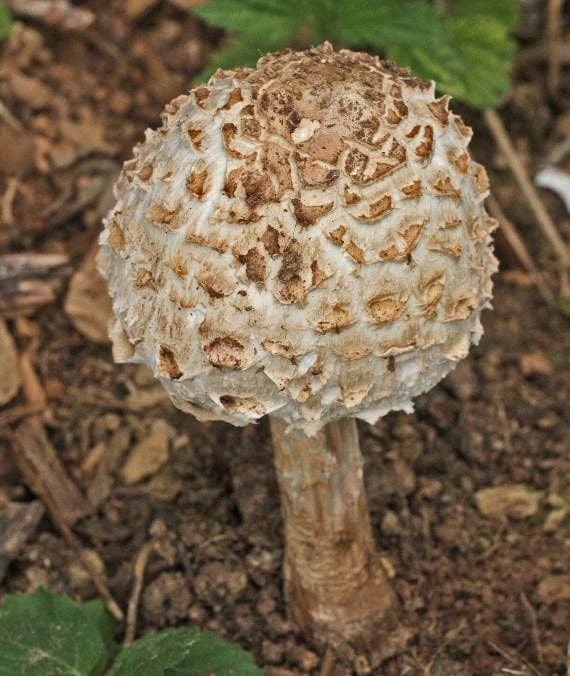
Anyway, I was surprised to find a couple of early parasol mushrooms – Lepiota procera – beside the hedge with a pale buff/white cap, covered with brown scales. Underneath the cap the gills are white and the long stem has a loose ring that can be moved up and down. As the mushroom matures its cap flattens and can reach eight inches (20cms) across causing the scales to become less obvious. They can be seen in groups from late summer to autumn, usually on grassland.
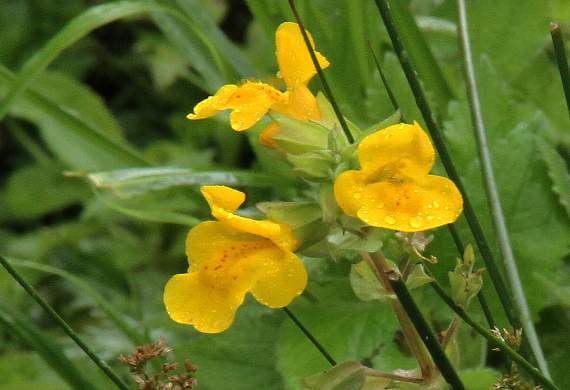
Later, whilst walking beside the River Tiddy I saw some monkey flowers – Mimulus guttatus – growing near the water. Brought over from Unalaska Island, off the coast of Alaska, in the early 1800s as a garden plant that soon escaped into the wild countryside and became established in wet places such as near rivers and streams. The name Mimulus means ‘little actor’ as the folded petals makes the yellow flowers look a bit like a grinning face – a monkeys face maybe?




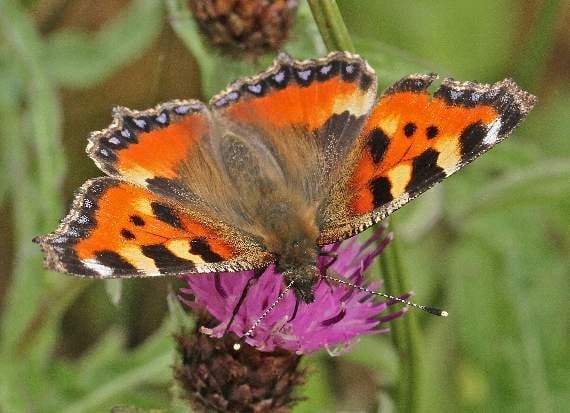
A golden ringed dragonfly caught my eye as it flitted to and fro, occasionally hovering and when it settled on some dying foxglove flowers, I could see it was a male and he allowed me to photograph him. This dragonfly has one of the longest bodies of any British insect, up to 80mm, and usually confines its patrolling to the river banks but occasionally it ventures ‘inland’ to seek some insects for food. A lovely small tortoiseshell butterfly was keeping it company and I photographed the butterfly feeding on the nectar of a knapweed flower. This species is easily recognised by its mainly orange wings with a line of blue spots around the edges.
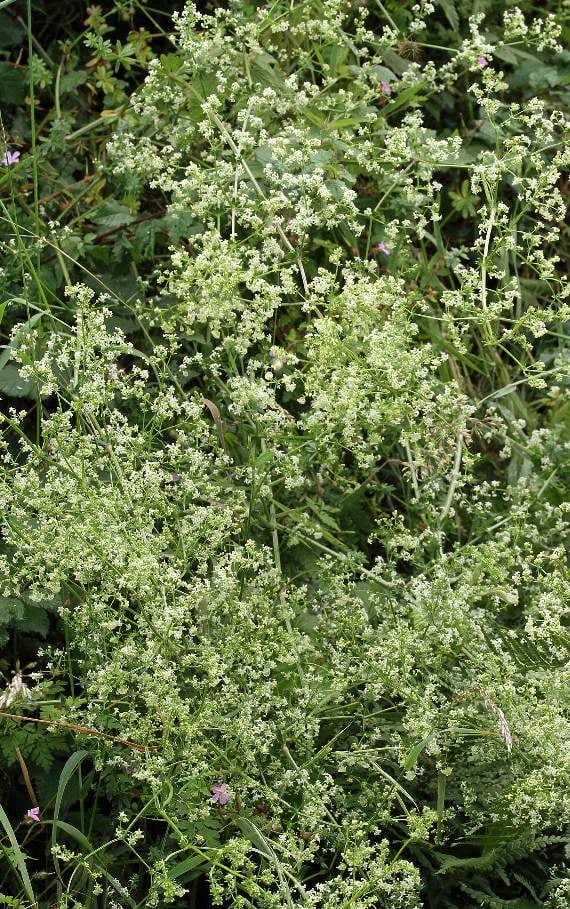
There are a lot of patches of bedstraw – Galium mollugo – on the hedges around Quethiock, some of them are quite large – a couple of metres wide and their tiny white flowers are pollinated by flies. The foliage and flowers were once used to stuff mattresses and although there is hardly any scent whilst it is growing, when dried at takes on the aroma of freshly cut hay. It is also possible to make a red dye from its roots, so it must have been a very useful plant in the past.
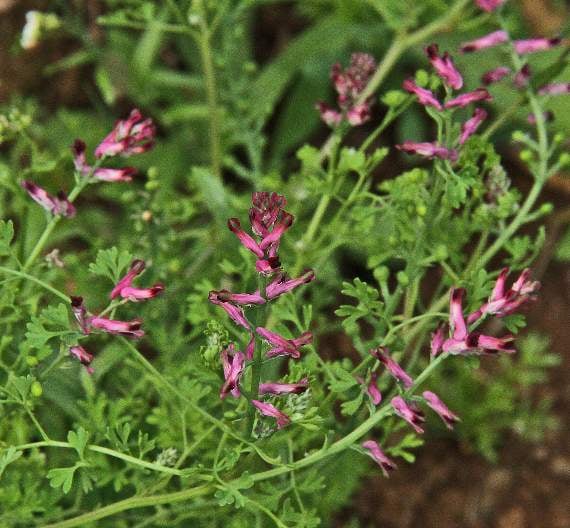
Common fumitory – Fumaria officinalis – has lots of strangely tubular pinkish/red flowers about 10mm in length on long spikes. These plants can be seen growing beside hedges on cultivated ground, usually in corn fields and there is a cousin, Cornish fumitory – Fumaria occidentalis – with white flowers that only grows here in Cornwall. So far, in my travels I have never found it, but will keep looking.