

Love Lamb Week is an industry-wide initiative that started back in 2015 to promote and highlight the passion and dedication farmers give day after day to ensure we have the tastiest lamb on our plates.
Over the years LLW has highlighted different aspects of sheep farming, and this year it is focusing on the sustainability of UK sheep production and the role it plays in maintaining our unique landscape.
Did you know that 97% of the water sheep drink is water that falls from the sky? And did you also know that 70% of our sheep live where crops struggle to grow, on hills and mountain sides?
English sheep farming also helps to create many thousands of hectares of wildflowers, in turn helping to protect habitats for insects and aiding the recovery of our bee population.


As such, the UK is one of the most sustainable places in the world for producing lamb – one of a range of great reasons to celebrate this delicious and versatile home grown product!
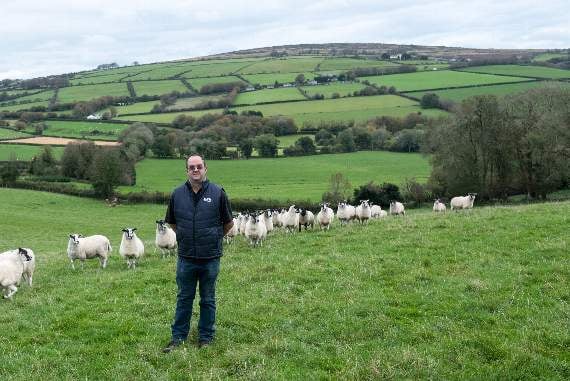
Adrian Coombe at Dupath Farm near Callington is an NFU ‘net zero’ member, meaning his farm is doing all it can to reduce carbon footprint and is on the way to becoming net zero.
At Dupath, which is a mixed farm producing sheep, beef cattle, cereals and potatoes, the Coombes have employed a variety of techniques to improve the health of the soil and livestock and the efficiency of operations, bringing benefits for the environment and better outcomes for the farm.
Rotational grazing, preventative animal health measures, reducing energy consumption, and a minimal tillage system, which helps keep carbon and water locked in the ground, are all part of the picture of a more sustainable farming approach.
And sheep farming is one of the most sustainable of all, particularly in the UK, and in Cornwall, where climate and conditions lend themselves to producing delicious lamb to world-class standards, as Adrian explains:
“In this area we have high rainfall. We can’t grow other crops very well but we grow grass extremely well.
“Sheep and lambs thrive on grass and are on it pretty much all year round. Grazing grass builds organic matter in the soil and that holds carbon. And 97% of the water used by sheep falls from the sky.”
Lamb scores highly in terms of benefits for human health too, says Adrian.
“It’s full of lots of essential vitamins and minerals that support good health and wellbeing, and helps the immune system stay healthy. It’s one of the most sustainable choices – and its tastes delicious!”
The National Sheep Association (NSA) says that Love Lamb Week, coming as it does in September, encourages the domestic consumption of UK lamb at its peak season of availability.
The NSA is now encouraging the nation’s sheep farmers to get involved by promoting lamb and by encouraging their local communities to do so too.
Communications Officer Katie James says: “During what is expected to be another positive week of the Love Lamb campaign, NSA would like to see local farming communities working together to encourage the consumption of lamb.
“There are so many excellent resources being produced by our UK levy boards to support this, now is a great time for farmers to reach out to independent retailers, farm shops, butchers, restaurants and pubs to discuss how they can work together to share the key messages of the campaign encouraging consumption of a delicious and nutritious meat that is produced sustainably using environmentally friendly farming methods. If each farmer can ask their local establishment, ‘What are you doing for Love Lamb Week this year?’ the reach of the campaign could be grown even further.”Find out more from Adrian Coombe on sustainable farming practices and how Cornwall is producing world-class lamb in the coming edition of The Cornish Times - out on Wednesday!