

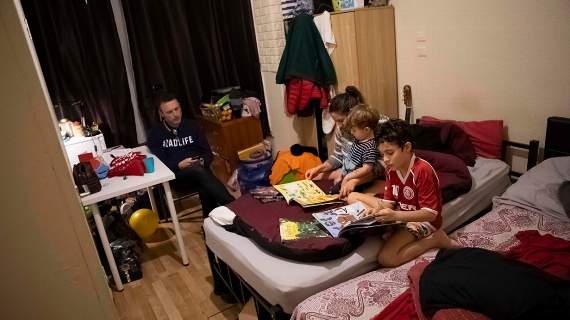
A NEW report published today by Shelter reveals that more than 7,000 people in the South West are homeless and face spending Christmas in “grim or dangerous” living conditions - and that 856 of these are in Cornwall.
Rising homelessness was already a problem in the region, say the organisation, but it argues that the economic chaos caused by Covid-19 risks turbo-charging the crisis.
The charity’s analysis of government data shows the number of people in temporary accommodation in the South West jumped by 610 (9%) in the first three months after the pandemic struck.
Shelter says the true number of people experiencing homelessness is undoubtedly higher, as many people will be undocumented by local councils because they are sleeping rough or sofa-surfing.
.jpeg?width=209&height=140&crop=209:145,smart&quality=75)



Shelter’s Homeless and Forgotten report examines the lives blighted by the housing emergency and lack of social homes, which is leaving thousands stuck in unstable temporary accommodation with nowhere else to go. Temporary accommodation provided by councils can range from a self-contained flat to an emergency B&B room with shared facilities. Across the South West 1,620 households are currently placed into emergency B&Bs and hostels, where poor conditions and gross overcrowding are rife.
Polly Neate, chief executive of Shelter, said: “Over 7,000 people are homeless and stuck in temporary accommodation in the South West. This should shame us all. With this deadly virus on the loose, 2020 has taught us the value of a safe home like never before. But too many are going without, because of the chronic lack of social homes.
“Many people will spend Christmas in grim, dangerous places, cut off from loved ones and faced with a daily struggle to eat or keep clean. As the country continues to reel from the financial shockwaves caused by the pandemic, our services will do all they can to support those battling homelessness. This year has been unbelievably tough, but with the public’s generous support we will do our best to give hope and help to everyone who needs us.”
Of the counties and cities included in the figures (Bristol, Gloucester, Torbay, Bournemouth, Christchurch and Poole, Swindon, Plymouth, Dorset, Cornwall, Exeter and Stroud), Cornwall had the second highest number of people living in temporary accommodation: Bristol had the highest.
To expose the harsh reality of life without a safe home in the pandemic, Shelter conducted 21 in-depth interviews with homeless families and individuals trapped in temporary accommodation across the country. The key themes which emerged from the investigation were:
• Feelings of isolation: over half the people interviewed were placed in temporary accommodation out of area, away from jobs, schools and support networks. Several people spoke about feeling lonely, abandoned and forgotten.
• Not being able to stay safe: nearly everyone living in shared accommodation said it was impossible to maintain social distancing. Three people reported sharing basic facilities with people clearly displaying Covid-19 symptoms, resulting in intense fear.
• Struggling to eat properly: over a third of those interviewed said they struggled to prepare food and eat properly during lockdown because of inadequate cooking facilities, with some reporting losing weight or suffering health problems as a result.
• Difficulties keeping clean: many people found it difficult to wash themselves and do laundry due to unhygienic or inadequate washing facilities. A situation made worse as launderettes and public buildings closed because of the lockdown measures.
• Impact on mental wellbeing: 20 out of 21 people said their own, or their partner’s, mental health had been negatively affected by living in temporary accommodation.
In response to its alarming findings, Shelter is urging the public to support its frontline advisers as they work tirelessly to help growing numbers of people to find, or keep hold of, a home.
To donate to Shelter’s urgent winter appeal and give hope to people facing homelessness, please visit www.shelter.org.uk/donate. Just £10 could answer a call to Shelter’s national emergency helpline, allowing a trained adviser to give expert advice a