
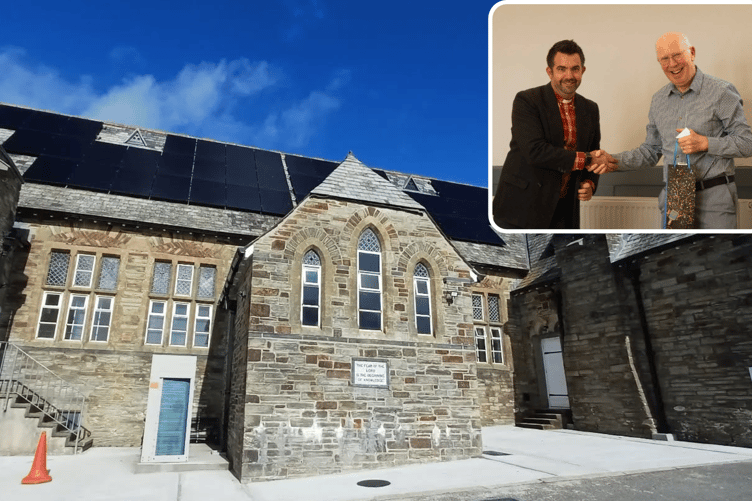
A HISTORIC Liskeard church centre has officially reopened following a £760,000 transformation which has turned a damp and deteriorating building into a warm, net-zero carbon community facility.
St Martin’s Church Centre welcomed the public back on Saturday, September 26, after a 12-month refurbishment designed to secure the future of the 160-year-old building.
The grand reopening ceremony included addresses from the Revd Mark Wade, vicar of Liskeard and St Keyne, Liskeard Mayor David Braithwaite, and Mike Sturgess and Bronwen Davy, who were part of the church team overseeing the project.
The centre was officially reopened with a prayer and blessing from Bishop James Treasure, Bishop of St Germans.
The extensive renovation has transformed the building, which had suffered significant damp, mould and water ingress, raising concerns about its long-term future.
Mike Sturgess, churchwarden and treasurer at St Martin’s, said the completion marked a major milestone after almost five years of planning.
“We started the planning for this project in December 2021, so it’s brilliant to see this critical phase of the hall renovation completed,” he said.
“The work has turned a tired, cold and damp building into a warm, welcoming, net-zero carbon facility for the church and community alike.
“As one of just two net-zero demonstrator projects in Truro Diocese, our job now is to showcase this work as an example of how to make a Grade II-listed building energy efficient.”
The refurbishment included completely reroofing the building, installing insulation between the rafters and replacing the old plasterboard ceilings with insulated alternatives.
Rainwater goods were repaired or replaced, drainage was improved and other areas allowing water to penetrate the building were addressed.
The centre has also undergone a major energy overhaul, with 60 solar panels providing 30kWh of capacity, alongside 40kWh of battery storage.
The former gas heating system has been replaced by a commercial air source heat pump, which powers 30 new radiators, while internal secondary double glazing has further improved insulation.
Fire safety measures have also been upgraded, with a new alarm system and fireproofing to the plant room. Around 30 per cent of the original Delabole roof slates have been reused, helping preserve the building’s heritage.
Wildlife has also been considered, with bat entrances incorporated into the roof, alongside four external bat boxes and four swift nesting boxes.
The £760,000 project was made possible through grants, church reserves, fundraising and donations, including a £251,255 grant from the National Lottery Heritage Fund and support from the Church of England’s Net Zero Carbon team.
The refurbished centre will now act as a demonstrator project, showcasing how historic buildings can be made more sustainable while continuing to serve their communities.
Mr Sturgess said the church hoped other organisations would learn from the project and encouraged anyone interested in similar improvements to get in touch.
The hall and meeting rooms remain available for community use and hire, with the church hoping the renewed facility will provide a welcoming space for generations to come.
He said the transformation represented a significant investment in the future of the church and the wider community, while demonstrating how traditional buildings can meet modern environmental standards.
The church is now looking forward to welcoming more groups, visitors and residents into the refurbished centre.
Comments
We've recently changed our login process. If you have an account for commenting, you will need to re-register on the login window.
This article has no comments yet. Be the first to leave a comment.