

Hedgerow foods that can be foraged and signs of autumn’s arrival on a parish walk with photographer Ray Roberts....
I came across a patch of fat hen – Chenopodium album – growing on a grassy bank on one of the parish roads. The tallest of these was about a metre high with broad green leaves at the bottom of the stem and long narrow leaves at the top. Its small, rather inconspicuous flowers, in a leafy spike, are light green.
The leaves were used as food from prehistoric times right up to the 19th century, as well as the black shiny seeds that have a high fat content and were eaten with other grain. I read somewhere that the flowering stems of one plant can produce up to 75,000 seeds so one plant could soon take over a large piece of waste ground if left alone.
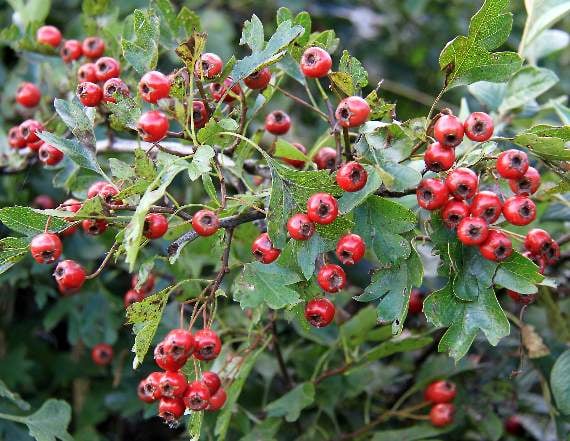
The hawthorn trees are becoming loaded with red haws that attract wild birds, especially members of the thrush family, finches and tits. The haws are also important food for wood mice and other small mammals. They can be used to make wine in the home, but I made some one year and can only say that they did not produce a wine of distinction. Mind you, it might have been my wine making technique.




Blackberries can be seen on the hedges now. These are food for birds and the seeds pass through the birds stomach and are carried some distance before being deposited in the birds droppings where they take root and produce another very prickly bramble. However, blackberries also go well with apples in pies which we all love.
Walking out on a windy day I was surprised to see a number of small carpet moths flitting to and fro among the hedge vegetation. They were quite small, the one I photographed had a wingspan of no more than 13mm and they were flying endlessly from leaf to leaf and just stopping for a brief rest before taking off again.
There are signs that Autumn is not far away as I found a boletus erythropus mushroom growing on the mossy hedge on North Hill that leads out of the village. This one has a brown cap with a red stem and as with all members of the Bolete family it has a spongy underside, instead of gills, that is also coloured red.
A small hoverfly caught my eye as it was resting on the hedgerow. This was a scaeva pyrastri with three distinct creamy markings on a black body. They feed on nectar and can be seen anywhere, especially in gardens where they are welcomed as their larvae feed on aphids.
I noticed there are still plenty of hedge woundwort – Stachys sylvatica – plants out in bloom around the village. The leaves of this plant, although they have a rank smell about them were used from the time of the ancient Greeks, as a poultice to stem wounds and to stop bleeding, hence its name.