
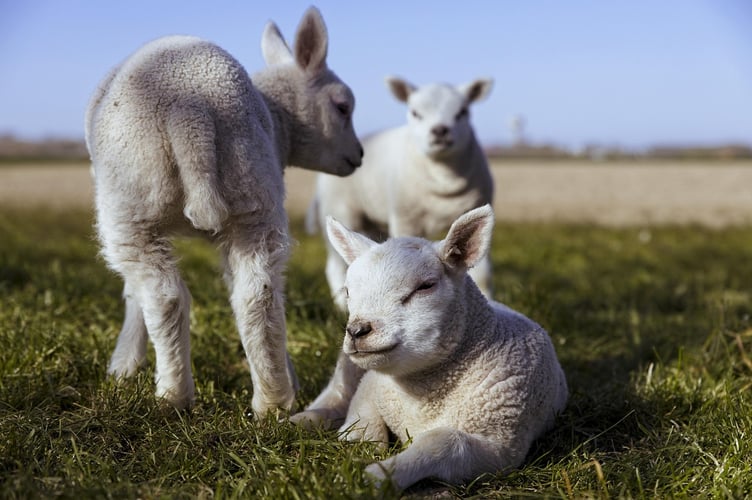
Sheep farmers in the South West are being urged to give greater consideration to the mineral and trace element supplementation of lactating ewes and their lambs during Spring and Summer grazing.
She says some flocks have endured ‘a perfect storm’ of nutritional challenges, and – whilst sheep may seem largely unaffected – the risk of underlying mineral and trace element deficits affecting crucial performance measures such as ewe lactation, lamb growth rates, and future ewe condition cannot be ignored.
“Many sheep farms will have endured unprecedented conditions over recent months, with forage supplies depleted after a dry summer,” she points out. “This may have resulted in lower quality fodder being fed, or greater reliance on grazed fodder crops, for example. In the case of brassicas, which include swedes, turnips, and forage rape, there are specific issues around iodine, vitamin B1 and other trace minerals, including copper, selenium and cobalt, that could present risks.

.jpeg?width=209&height=140&crop=209:145,smart&quality=75)

“We have then seen very heavy rainfall in many areas over the winter months, which will have increased the level of soil nutrient leaching, particularly on lighter soils. This may increase the level of mineral deficiencies seen in early season grazing.”
Dr Bond also outlines the importance of key vitamins, such as vitamin B12 to help support growth rates on pastures that may be deficient in cobalt. She also highlights the importance of vitamin B1 (thiamine), which is of particular relevance where sheep have been grazed on brassicas.
“Brassicas can cause shifts in the rumen bacteria environment which may affect the natural production of thiamine by the rumen,” she explains. “Furthermore, certain brassica crops can lead to the production of thiaminase which can destroy thiamine, leading to a deficiency. Vitamin B1 deficiency causes a condition called Cerebrocortical Necrosis (CCN) with common symptoms including blindness, head pressing and stargazing, something most farmers will have seen at some point.”
Brassicas also contain glucosinolates, which are converted by hydrolysis into goitrogens when in the rumen,” she explains. “Goitrogens interfere with iodine absorption, which commonly results in the disruption of thyroid function. This is a cause of the condition goitre in sheep, which shows as a swelling of the thyroid gland.”
With market prices forecast to remain strong for the foreseeable future, Dr Bond adds that adequate nutritional supplementation should be seen as much as a sound longer term investment as a short-term fix.
“Ensuring that the flock avoids the effects of mineral and trace element deficiencies should help to prevent in-season health and performance problems,” she says, “but will also give lambs the best chance of reaching their full potential as quickly as possible. Equally importantly, it will impact positively on the condition of ewes, who should ideally not be losing more than 0.5 body condition score during their lactation.”
Comments
We've recently changed our login process. If you have an account for commenting, you will need to re-register on the login window.
This article has no comments yet. Be the first to leave a comment.