
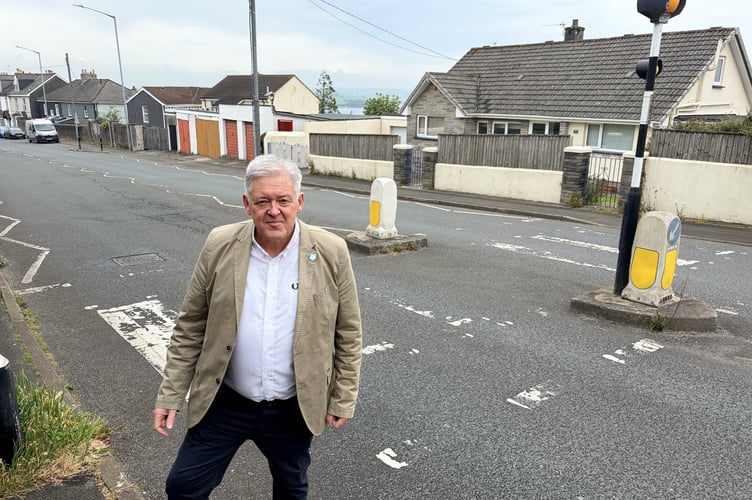
A CORNWALL Council official has defended their handling of deteriorating road markings across the county after a councillor warned it is “only a matter of time” before someone is seriously injured because of faded lines and crossings.
The Reform UK councillor says markings in parts of his ward have deteriorated so badly they are now “virtually invisible” at night and during poor weather conditions.
He highlighted a zebra crossing on North Road in Saltash which he claims has “almost completely disappeared”, as well as long-running concerns in Berry Park, where residents have reported repeated near misses linked to faded markings and dangerous parking.



“We should not be waiting for a serious accident before action is taken,” said Cllr Johnson. “A resident raised concerns last September after repeated near misses, yet the markings are still not properly restored. In some locations, I would describe the situation as being at crisis point.”
The motion calls for a comprehensive review of Cornwall’s inspection, maintenance and renewal programme for road markings, alongside a new risk-based system prioritising urgent repairs.
Under the proposals, dangerous defects posing an immediate risk would be dealt with within hours, while high-risk problems would be targeted within days. Particular attention would be given to pedestrian crossings, school safety zones, junctions, cycle routes and areas affected by illegal parking caused by unclear markings.
The motion also criticises what it describes as “contradictory assessments” between highways and enforcement teams over faded yellow lines at Berry Park despite repeated complaints and reports of near misses.
“This is not simply about appearance,” Cllr Johnson added. “Faded markings can cause driver confusion, increase collision risks and make enforcement almost impossible. Residents deserve roads that are clearly marked, properly maintained and safe to use.”
Responding to the motion ahead of Tuesday’s meeting, Cornwall Council’s head of infrastructure and resilience, Matt Philips, acknowledged concerns over deteriorating markings but said the authority had already begun increasing investment in repairs.
“The renewal of yellow line road markings remains an important activity, as clear and well-maintained lines are essential to ensure parking restrictions are visible, legally enforceable, and consistently complied with,” he said.
However, Mr Philips said yellow line repainting had at times taken “a lower priority” compared with more urgent highway safety work involving higher-risk defects.
“In the 2026/27 financial year, funding for yellow line renewal has increased significantly from £40,000 to £225,000, representing a substantial year-on-year uplift and a clear commitment to addressing the concerns raised,” he said.
Despite the increased funding, he warned the council still faced an estimated £2-million backlog in yellow line renewal work.
Mr Philips also defended the council’s decision to prioritise white lining and reflective road studs, with investment in those areas increasing to £1.25-million over the past two financial years.
“These white lining assets are considered higher risk than yellow lining and prioritising them has supported better road safety outcomes alongside wider network resilience,” he said.
He added: “The council recognises the concerns raised within the motion and can confirm that meaningful action is already under way.”
Comments
This article has no comments yet. Be the first to leave a comment.