

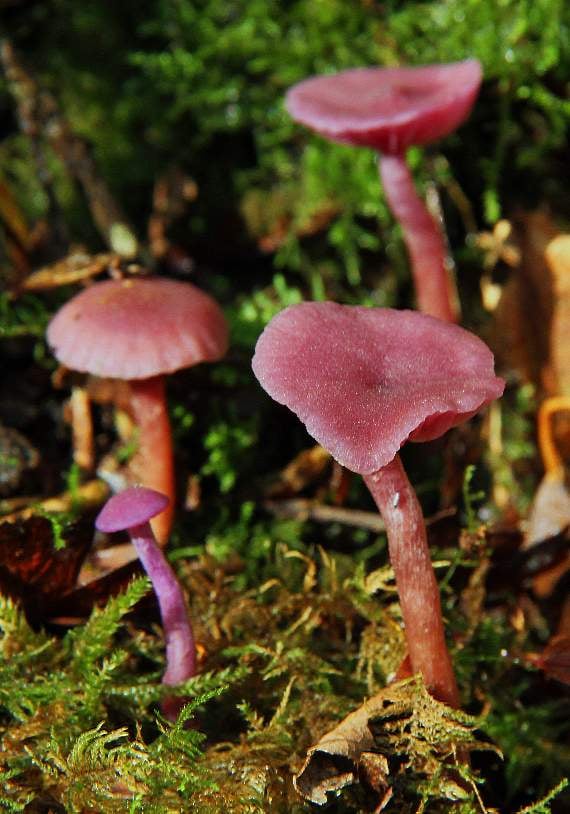
Colour-changing mushrooms are one of the autumnal wonders on this week’s Nature Watch walk with Ray Roberts......
I took a three-mile circular walk from the village into Trehunist and then down Sandy Lane to Hepwell Bridge, over the River Tiddy, and then up the steep hill to Quethiock. It took me a couple of hours in the light drizzle.
I always approach the bridge quietly, without tapping my walking stick on the ground, in the hope that there might be some small fish in the river as someone had placed a row of large stones from bank to bank which acts as a kind of dam causing the water to deepen. No fish in sight though, they were probably sheltering from the drizzle beneath the bridge to save them putting their macs on. But I though the scene deserved a photograph anyway.
There is a species of small mushrooms called Laccaria, more commonly known as Deceivers, as they are coloured pink, orange or purple and during wet weather all of their colours stand out but when their caps dry out and lose their brightness it is quite difficult to tell which is which.

.jpg?width=209&height=140&crop=209:145,smart&quality=75)
.jpg?width=209&height=140&crop=209:145,smart&quality=75)

The most colourful, in my opinion, is the amethyst deceiver which I found growing on the moss-covered hedge. They have purple caps, stems and gills and can be found from late summer to early winter growing on moss beneath deciduous trees.
Black bryony – Tamus communis - plants have produced their red berries on their long climbing stems that look like strings of beads on the hedgerows. The name Black refers to the colour of its roots which, during the Middle Ages were boiled and used as a purgative. It is also said the berries were preserved in gin and used as a remedy for chilblains. Usually the long heart shaped leaves turn brown and fall off when the fruits appear, but I found a string of yellow autumnal leaves still on the vine, near the village.
Over at Treweese Cross there were a couple of winter heliotrope – Petasites fragrans – flowers beside the road where there was a large group of the plants growing along the foot of the hedge. Unfortunately, the recent visit of the hedge trimmer had spoilt most of them.
These plants are garden escapees and have large leaves that can reach nearly 20cm across, with their flowering stems having a number of pink-lilac blooms, which smell strongly and beautifully of almonds. But if you plant some in your garden be prepared for a large spread of them in the years to come as their rhizomes like to travel.
Winter heliotrope was brought originally from the Mediterranean region and believe it or not, is a member of the Daisy and Dandelion family.
I didn’t try and make an accurate count, but buzzing around our white flowered castor oil plant were more than a dozen wasps, bees and large flies. As far as I could tell, according to their face markings, the wasps were of the German variety, which are just as numerous as the common wasps that have anchor shaped face markings.