

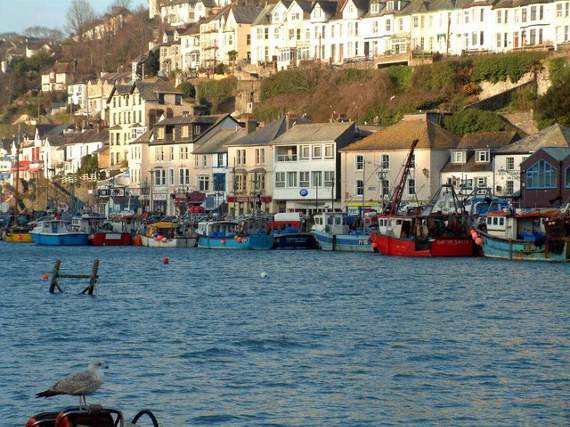
Cornwall Council has joined South East Cornwall’s MP Sheryll Murray and fishing industry leaders in calling on government to address a growing crisis in the sector.
Complicated new export rules, a lack of clarity about fishing quotas, and an increase in red tape are all obstacles, says the Council, and Mrs Murray has warned that vessels “will go to the wall and have no sector left unless urgent help is given”.
Post-Brexit export arrangements have meant a dramatic increase in the amount of paperwork needed before Cornish seafood can be exported into the EU.
Shipments are being delayed by up to 96 hours or even cancelled as a result, say industry leaders, putting significant pressure on an already struggling sector.

“These changes are affecting all aspects of Cornwall’s fishing industry but are being felt most acutely by our shellfish producers,” said a Council spokesperson.
“In addition, new rules on export hygiene certificates (EHCs) – a requirement before any produce can be exported to the EU – threaten to place additional financial pressures on the industry and Cornwall Council.”
The council says it cannot continue to bear the costs of administering EHCs beyond March 2021, when initial DEFRA funding is due to run out.
Cornwall Council cabinet member for economy, Tim Dwelly, said: “The challenges faced by Cornwall’s fishing industry are deeply concerning. The current deal with the EU has left the sector with limited gains but mounting red tape and costs.” MP Sheryll Murray has requested that Government calls a debate to discuss the current situation facing the sector.
In Parliamentary Questions to Leader of the House Jacob Rees-Mogg last week, she said: “Far from being in a position where we will have an expanded fishing sector in five years’ time, there is a real danger of vessels going to the wall now and having no sector left unless urgent financial help is given.”
Mr Rees-Mogg said that the difficulties being faced by fishermen “were not taken lightly by Government” and that “the Government is focused on supporting the fishing fleet to see how it can thrive now that we are out of the European Union”.
“We will see our fishermen benefiting from increased quotas throughout the annual negotiations with the EU and other coastal states, starting with an immediate 15% uplift this year,” he said.
“Throughout the adjustment period, the UK Government will do everything we can to help to rebuild the industry. The Prime Minister has committed £100 million in funding for the fishing industry, and that is in addition to the £23 million recentlyannounced to help with some of the earliest problems that have arisen.”
In a separate question to senior Conservative Michael Gove, Mrs Murray joined Great Grimsby MP Lia Nici in asking what steps the Government was taking to ensure goods can continue to flow freely between the UK and the EU. Mr Gove replied that “there were still some bureaucratic obstacles that we need to negotiate and navigate”.
A seafoods export working group had been set up , he said, and was meeting twice weekly, and the Government was “engaging with France”.
According to latest figures from the Marine Management Organisation, the value of fish landed in Cornwall and Isles of Scilly in 2019 was £47.5 million. Newlyn, the largest port, had landings of £32.1m, Mevagissey accounted for £2.7m and Looe £2m.