
DISTRAUGHT families are alleging a “systemic scandal” at Cornwall Council concerning their late loved ones’ care, which has led to some Cornish residents paying over £100,000 for treatment they believe should have been provided free by the NHS.
A grieving Looe resident, whose late parents both received complex care, received a bill for £80,000 out of the blue, which he claims was without explanation or documentation.
Tim Tully said: “I contacted the council asking for the reason for this charge and was informed that it was for outstanding care home fees from 2006 for my parents. I wrote to the council asking for an explanation, but, still to this day, I have had no evidence presented to me to substantiate this ‘charge’, so I began to reach out to anyone I could think of to try to get some help to sort this problem out.”
One of those people is Pauline Hardinges, also of Looe, who won a £30,000 refund from Cornwall and Isles of Scilly Primary Care Trust (now known as NHS Cornwall and Isles of Scilly Integrated Care Board – ICB) in 2009 when the NHS body refused to fund 24-hour care for her mother, who was suffered from Alzheimer’s.



She defied a gagging order to announce the victory in order to help others in a similar situation.
Mrs Hardinges spent months fighting red tape before getting the payout to cover the bills she’d paid for 95-year-old Dorothy’s care. Health chiefs ruled Dorothy’s needs were “social” not medical and Mrs Hardinges was forced to use her life savings to pay for a nursing home until the money was reimbursed.
She now gives advice to others who believe family members’ nursing care needs – usually their elderly parents – should be covered by NHS Continuing Healthcare (CHC) but is wrongly labelled as social care, meaning the costs have to be shouldered by families themselves.
Funding under CHC is provided by the NHS to cover long-term complex health needs. Assessments for CHC funding are carried out by the ICB.
Where the ICB has assessed that a service user does not meet the criteria for CHC funding, Cornwall Council has a statutory duty to ensure that care needs are met.
CHC is not means tested and should be available to any adult with serious, ongoing health issues. As reported in Private Eye just last week: “The CHC system is notoriously difficult to negotiate and rejects 75 per cent of applicants, with huge differences from one ICB to the next.”
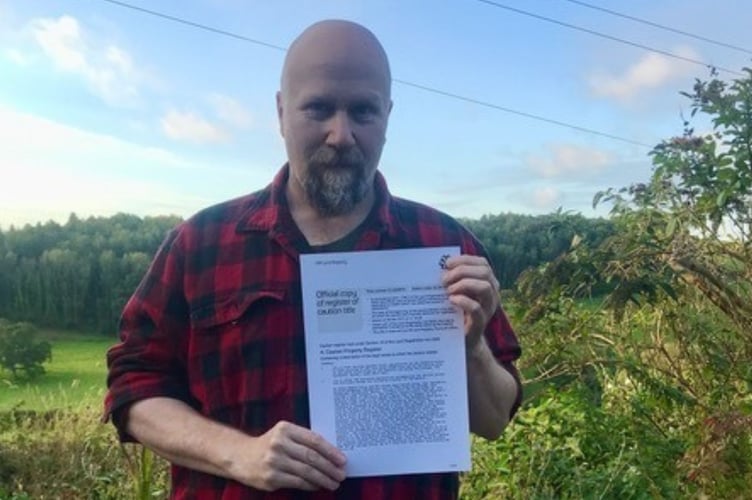
Mr Tully said: “Cornwall Council has been charging vulnerable families for care that should have been funded by the NHS under the CHC scheme. In my own case, the council imposed a property charge of £80,000 on our home without any contract, consultation or legal authority.
“They delivered nursing care they are legally prohibited from providing under the laws and legislation in place, misrepresented it as social care and then tried to recover costs. Nursing care is often wrongly labelled as social care, shifting costs onto families.”
Mr Tully says he has documents from a care home stating they were giving nursing care to his parents, as well as proof the proper CHC assessments weren’t carried out by the authorities.
He added: “Despite submitting detailed evidence to three court cases so far, the council has continued to obstruct transparency. All three cases are going to appeal.”
He has now been told by the council he is unable to seek to re-litigate the matters.
“Cornwall Council’s actions reveal a consistent pattern of obstruction. Families are paying care fees, then subjected to property cautions. This isn’t just about one household – others across Cornwall are facing the same treatment. Families are being penalised and homes are at risk.
“We believe this is a systemic scandal that deserves public scrutiny. Cornwall Council is harming the very people it is meant to protect. We’re wandering around in a no man’s land not knowing how to proceed with this.”
Cornwall Council refutes any accusations it has done anything unlawful, breached legislation or that there is a “systemic scandal”.
Ray Verbruggen, of East Looe, paid nearly £70,000 for his late mother-in-law’s care while she was in a nursing home. “Six months would have been a fair price to pay, but during the last six months of her life she really did need extra care. We wrote to the council about it but didn’t hear anything.”
A spokesperson for Cornwall Council said: “Funding under NHS Continuing Healthcare (CHC) is provided by the NHS to cover long-term complex health needs.
“Assessments for CHC funding are carried out by the NHS Cornwall and Isles of Scilly Integrated Care Board (ICB). Cornwall Council does not determine eligibility for CHC funding.
“Where the ICB has assessed that a service user does not meet the criteria for CHC funding, Cornwall Council has a statutory duty to ensure that care needs are met. We would then carry out an assessment for the service user under the Care Act 2014.
“Social care services are chargeable and financial assistance is available to eligible service users following an assessment of their income and assets.
“Any outstanding care fees would be owed by the service user’s estate upon their death. Family members are never obliged to make any contribution towards the cost of their relative’s care.
“A service user has a right to appeal if they consider the assessment is incorrect. If an individual is unsatisfied with the outcome of an appeal the case can be referred to the Local Government Social Care Ombudsman for an independent assessment.
“We cannot comment on the circumstances of individual cases.”
A spokesperson for NHS Cornwall and Isles of Scilly Integrated Care Board said: “Our continuing healthcare teams understand that applying for continuing healthcare funding comes at a very difficult time in people’s lives and work hard to reduce the impact on people and their families as they work through the process.
“Eligibility and assessments for NHS continuing healthcare and NHS-funded nursing care follow a national framework and guidance.
“People who have been assessed as not being eligible can follow an appeals process which includes a local resolution team and a national independent review panel. Links to national guidance and information on how to appeal are included on the NHS Cornwall and Isles of Scilly website.”
Comments
This article has no comments yet. Be the first to leave a comment.