

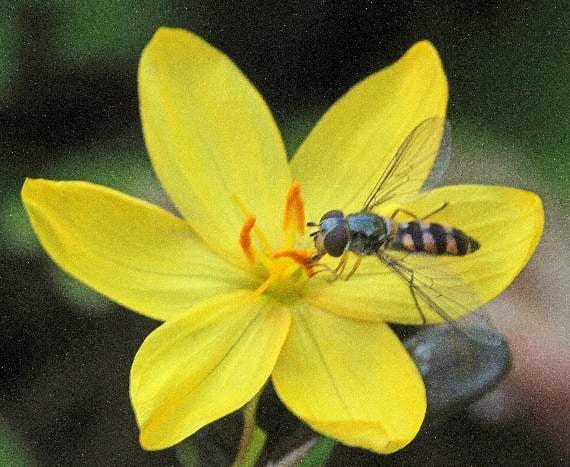
Walking around the Quethiock’s narrow roads as I do almost every day, I never fail to find something interesting almost as soon as I leave the village. The first photograph I took on my last walk in the sun was of a tiny hover fly feeding on a small yellow flower. I have no idea what this flower was, probably a garden escapee, but it was probably no more that 20mm wide so the fly must have been around 8mm long.
There are well over two hundred different species of hover flies in the country and the most common ones that we see on the hedgerows and in the garden are the wasp look-alike with their yellow and black stripes. Although they cannot sting, they certainly live up to their name as they can hover motionless for minutes whilst they consider their next landing spot. Their wasp-like body colour is a built in defence probably acquired over millions of years, against birds that will not eat wasps or bees because of their sting.
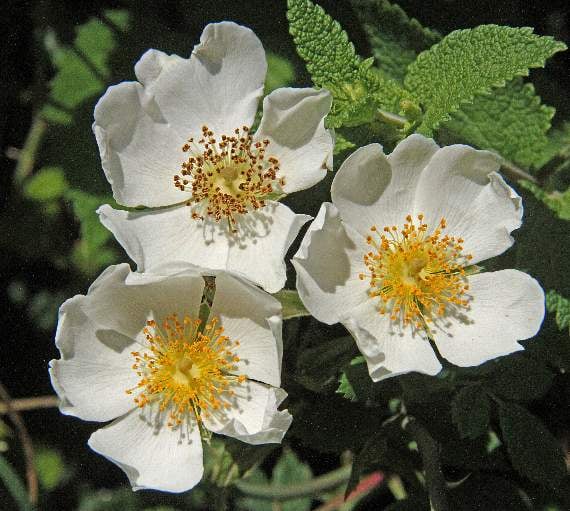
I saw lots of white field roses – Rosa arvensis – but, as with the pink dog roses, if you pick a few to carry home their petals will drop off before you walk very far. In fact they look beautiful on the hedge and it is always a pity when someone tries to pick a bunch.
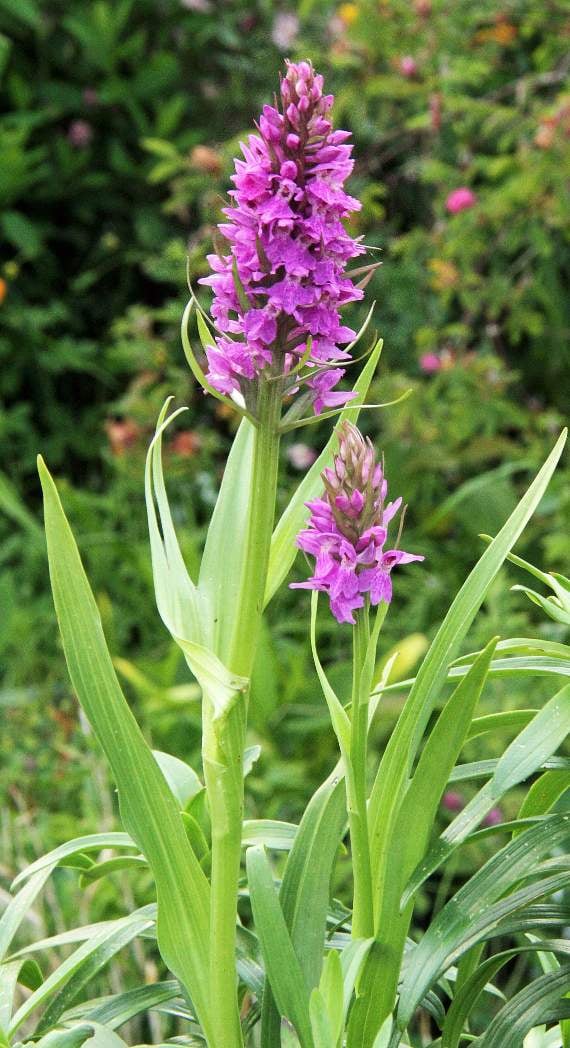
On a grassy bank right beside the road were several southern marsh orchids out in bloom. These orchids will grow on chalky soil that is not necessarily damp or marshy despite their name, but for some reason they only inhabit the southern half of Britain, or just England actually. They bloom from May to the end of July.



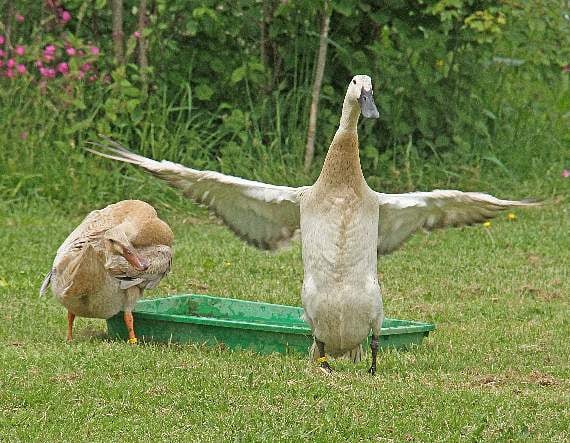
Looking over the gate into a small meadow near some buildings I could see a couple of runner ducks performing their open wing – let’s get some air underneath them – daily exercise! The larger one of the two seemed to take no notice of its friend and once it opened its wings it made the smaller one bend its long neck down so it wouldn’t get hit and I am sure I heard it shout “Hey, mind my head”. I can’t say for certain but I don’t think this species of ducks can fly – but they can’t half run!
What can one say about the beautiful foxglove – Digitalis purpurea. A plant that can reach well over a metre high with its reddish/pink flowers and highly poisonous leaves that contain the drug, digitalis, and were once used, believe it or not, in the treatment of some heart complaints. Very occasionally a white flowered foxglove will appear on a hedgerow, on grassy banks and along the edges of woodland.
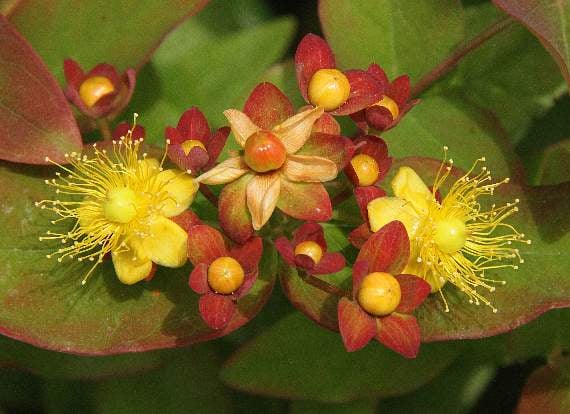
A small shrub that comes into bloom at this time of the year is tutsan – Hypericum androsaemum – with its beautiful yellow flowers. Tutsan leaves have genuine antiseptic qualities and in days gone by, leaves were laid onto flesh wounds to help them heal.