

A walk in the back lanes of Liskeard provides lots of chances to stop and observe for Nature photographer Ray Roberts...
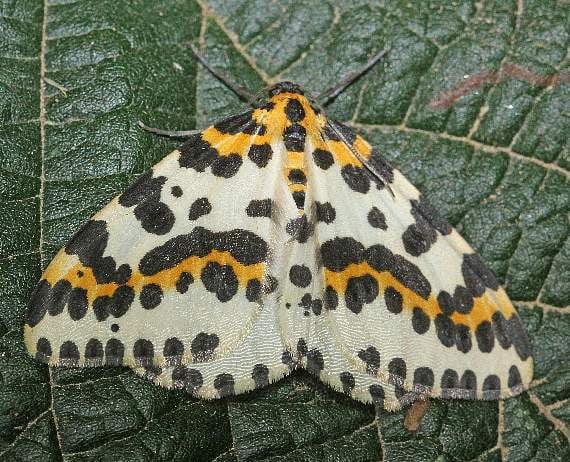
It was shopping day and I rode into Liskeard with my wife so I could have a look around whilst she was in the store. I made my way down Sun Girt lane and the first thing I photographed was a magpie moth. It had settled on a large leaf and was quite content to remain there whilst I took several pictures. Although the magpie can be seen during the day it is nearly always stationary and stays that way for some time, in fact I don’t think I have ever seen one on the wing and it is not usually classed as a day flying moth.
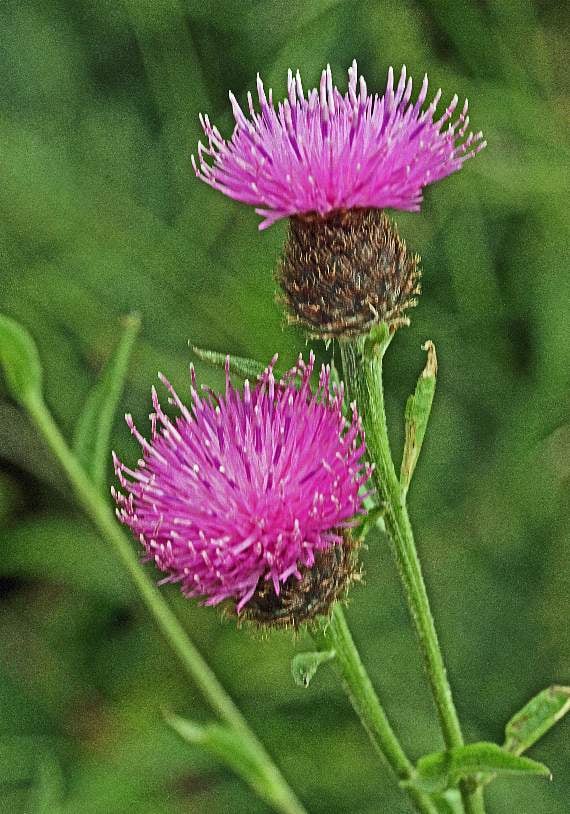
Common knapweed or hardheads – Centaurea nigra – was growing on the hedges with their purple flowers sprouting from their hard black heads. The plants grow on any grassland, railway embankments and can even be seen on the cliffs down at Seaton, so they enjoy a bit of sun.
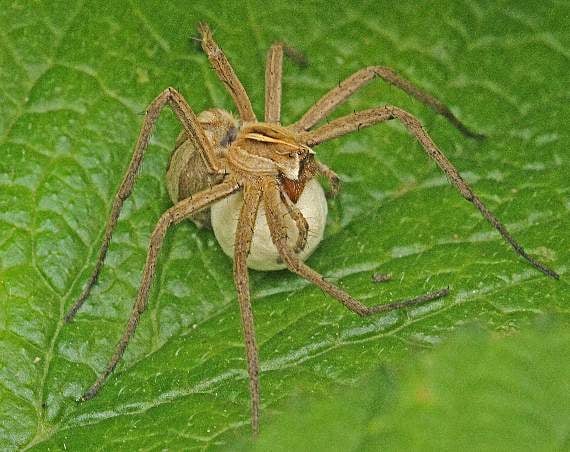
On a taller part of the hedgerow I managed to spot a nursery web spider carrying a sac containing its eggs. When she finds a suitable place among the vegetation, she builds a tent where the eggs can hatch. The young spiders can live whilst being watched over by the parent that sits beside the tent and feeds on any small insect that comes within reach.


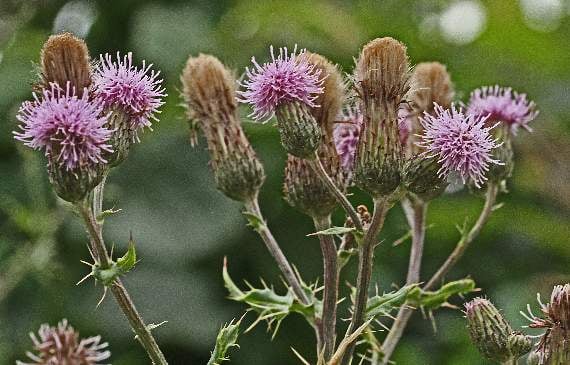
Down the bottom of the lane there was some creeping thistle – Cirsium arvense – that has purple flower heads. In fact they are very similar to common knapweed blooms buts the thistle’s leaves are very prickly. This is another one of those plants that is much hated by farmers and gardeners alike as they spread rapidly and can soon cover a large area of ground.
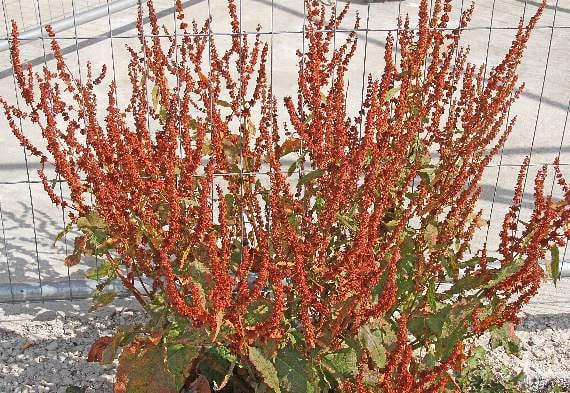
I eventually worked my way up to the Cattle Market and wondered what was actually happening to this large area of ground. Weeds are sprouting up everywhere and I took a photograph of a large flowering dock which I think was sheep sorrel – Rumex acetosella – and its flowers had all turned red. Not a bad sight to look at as it brightened up the car park.
Once again, my wife put me and my Canon SLR to shame when she came home with a great picture of not one, but two gatekeeper butterflies. And, once again, taken on her mobile phone. I suppose that if I fitted my cell phone onto a tripod to take pictures it might look a bit silly.
Gatekeepers also have a couple of other names, the Hedge brown, which indicates its favourite habitat, and the Small meadow brown, as they are closely related to the Meadow brown butterfly. The single black spots on the orange part of the forewings resembles eyes are there to confuse their enemies as they are usually the attacking point for birds on the lookout for a meal, but when a bird gets its beak on the eye the butterfly escapes albeit with a ragged wing.