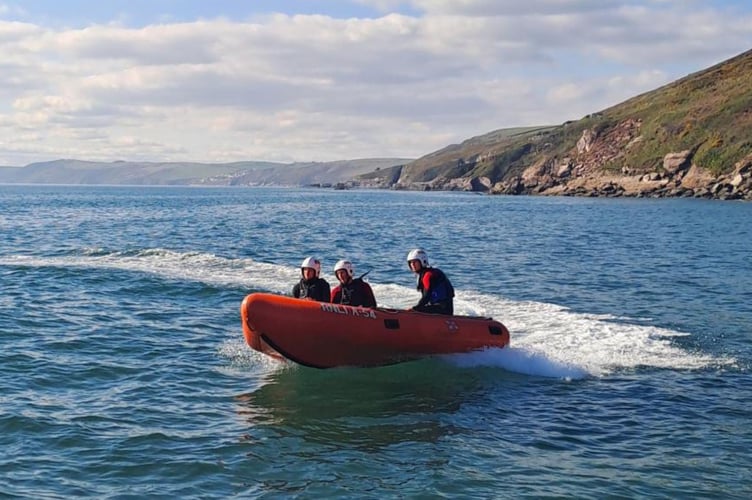
RNLI lifeguards and volunteer crews from Looe RNLI were involved in a major multi-agency rescue after multiple swimmers were caught in powerful rip currents off Tregantle Beach in Whitsand Bay.
With warm sunshine and unusually calm spring conditions drawing large crowds to the South East Cornwall coastline on Wednesday (April 8), lifeguards were already warning of rapidly developing surf hazards as beach activity surged across the area. RNLI lifeguards had been operating daily patrols at nearby Tregonhawke Beach throughout the holiday period.
The incident escalated late in the afternoon when RNLI lead lifeguard supervisor Charlie Gillett, positioned at Sharrow Beach lifeguard unit to monitor conditions, spotted four swimmers in difficulty in the Longsands area, one of whom was clearly in immediate distress.
Recognising the seriousness of the situation, lifeguards at Tregonhawke were immediately tasked to respond. Lifeguards Tristan Gillett and Terry Dungay launched the inshore rescue boat (IRB) and began a 2.5-mile transit to the casualties as conditions remained challenging along the shoreline.




As the rescue unfolded, RNLI teams raised the alarm with Falmouth Coastguard Maritime Rescue Coordination Centre, prompting a request for additional support. At 4.35pm, Looe RNLI volunteer crews launched both their Atlantic and D class inshore lifeboats to assist.
However, the fast-moving situation was already being tackled on the water by the lifeguard IRB, which reached the swimmers first. All four casualties were successfully recovered and brought safely back to shore before the lifeboats arrived on scene. In one case, a stronger swimmer assisted another adult who was struggling in the rip current, helping prevent a potentially more serious outcome.
Once all casualties were confirmed safe and initial checks completed, the Coastguard stood down both lifeboats and volunteer crews, who returned to station.
Looe RNLI lifeboat operations manager Clive Palfrey praised the response and coordination between teams.
“The lifeguards made exactly the right call in requesting the D class lifeboat, which is ideally suited to surf zone rescues,” he said. “In incidents like this, having backup on the way allows lifeguards to focus entirely on the people in front of them.”
The rescue came during an exceptionally busy start to the Easter period for Tregonhawke lifeguards, who dealt with 13 incidents between April 3-8, including one rescue, eight assists, and 114 near misses, many linked to swimmers caught in emerging rip currents as crowds increased.
RNLI officials say the figures highlight how quickly conditions can change, even on bright and seemingly calm days.
RNLI lead lifeguard supervisor Charlie Gillett warned rip currents are often hard to detect but extremely dangerous.
“They can appear as a channel of churning, broken water,” he said. “Even strong swimmers can be caught out, so always speak to lifeguards before going into the sea.”
The RNLI is reminding the public of key safety advice: do not swim against a rip current, wade if possible, swim parallel to the shore to escape it, and always signal for help by raising an arm and shouting.
Visitors are also urged to use lifeguarded beaches where possible and remain between red and yellow flags.
Comments
This article has no comments yet. Be the first to leave a comment.