

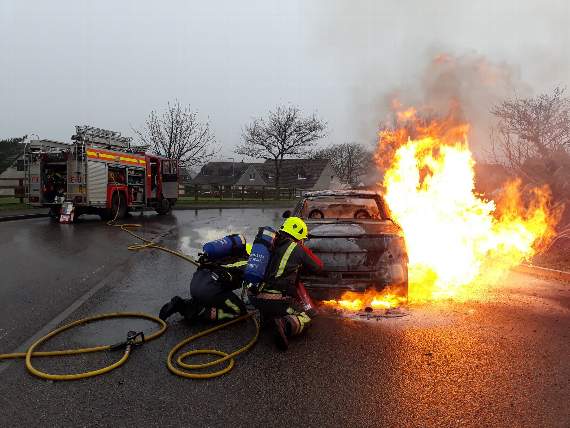
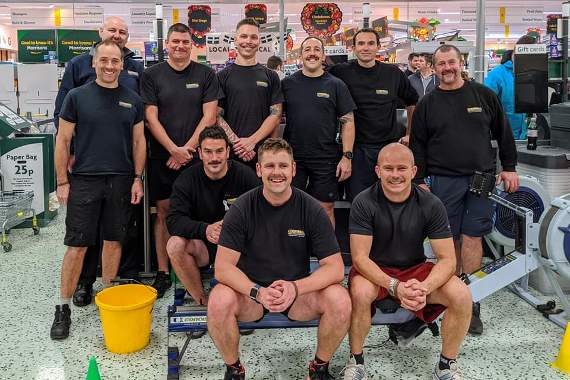
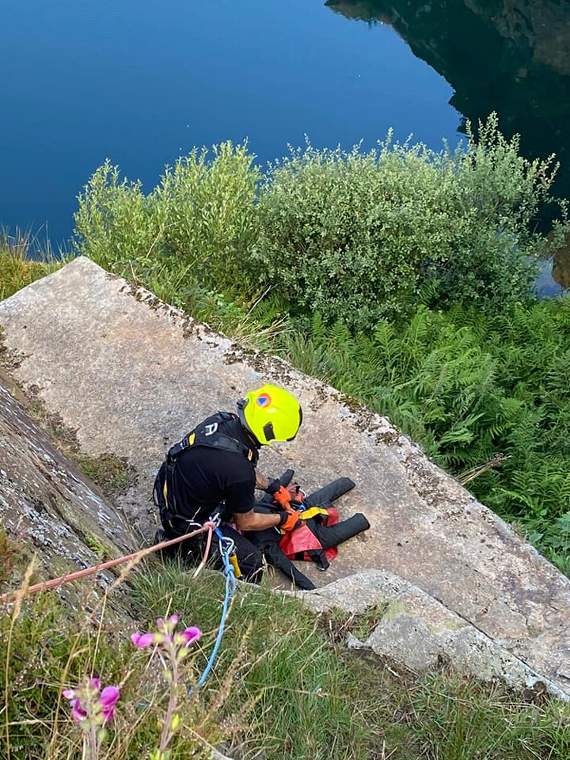
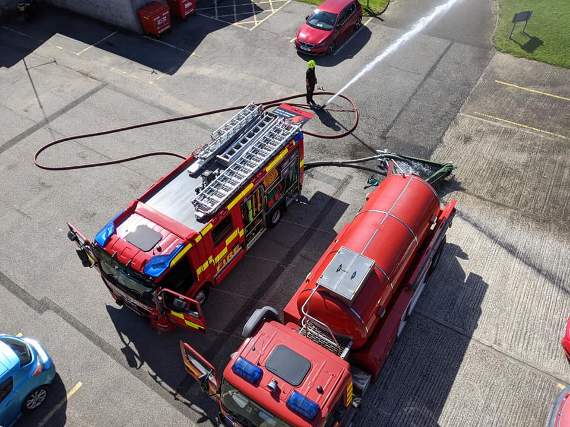
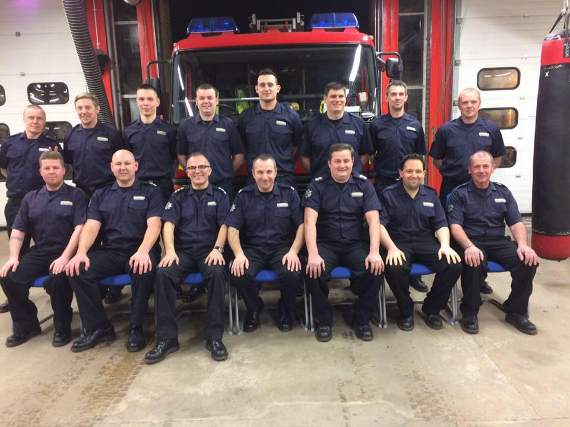
HAVE you considered joining your local fire station as an on-call firefighter?
Currently almost all of the community fire stations in the East of Cornwall are looking to recruit officers.
Chief fire officer for Cornwall Kathryn Billing herself started out as an on-call firefighter, so she knows how rewarding and fulfilling the job can be.
She said: “If you’re looking for a role where there’s something different every single day, it’s great.



“You will get the opportunity to test yourself and learn some fantastic new skills in things such as driving, first aid and teamwork.
“It’s an opportunity to do something that will make you feel proud.”
At Liskeard, training is done on a Thursday night and you could expect to be called out to emergencies around three or four times a week, with typical average pay somewhere around £550 a month.
Retiring station manager Danny explains that the initial, intensive period of training is a fortnight long, but training is then ongoing, with lots of opportunity to progress in the role.
It’s essential that applicants live a maximum of five minutes from the fire station and are fit, healthy and competent.
At present, there are two contracts offered for firefighters: on-call cover of 90, or 120 hours a week.
But a lot of work is being done to improve upon both the pay and the conditions for on-call crew, and this includes new, more flexible contracts that are set to come in, offering 42 hours, 60 hours or 84 hours of cover, says chief fire officer Kathryn Billing.
“We’re looking to recruit a more diverse workforce,” she said.
“It could be that for a parent who’s at home during the day, the shorter hours of cover could fit in around the school times and one day of the weekend.”
Mark Goldsmith describes some of the challenges facing the stations.
“We will receive a couple of thousand applications for each whole time role, but on-call is a completely different ball game,” he said. “In South East Cornwall we do struggle to recruit on-call staff.”
Added to that is the COVID situation, which has posed a problem for driver training.
Mark said: “It takes around three years to get someone fully trained up in all aspects of firefighting. And our driver training for the last 18 months has taken a real hit.”
Another aspect to recruitment is the point of view of the employer, who also has to be prepared to commit to supporting their employee as an on-call firefighter.
Mark explained: “Since the financial crisis we have found that employers are more reluctant to let people go. They might have cut staff down to the bone.”
It’s hoped that the combination of the easing of restrictions and the more flexible contracts will help to improve this situation – making the important and valuable role of on-call firefighter more suitable and attractive to potential recruits, their families and employers alike.