
STORM Goretti recently battered Cornwall, causing significant disruption across the Duchy, with the western region in particular bearing the heaviest damage.
In response, Cornwall Council declared a state of emergency, establishing a 24-hour coordination hub at County Hall to synchronise emergency and local services.
To prioritise safety, schools were closed and residents were advised to work from home. The initial response focused on safeguarding vulnerable community members and clearing over 1,250 fallen trees blocking roads. In South East Cornwall alone, 75 incidents were recorded. Andrew George, MP for St Ives, asked Westminster for support for the clean-up and to restore services, but sadly to no avail.
Cormac teams were redeployed to the hardest-hit western areas to reopen main routes. However, clearing work involving power lines required specialised coordination with the National Grid to isolate live wires. Officials also warned residents that clearing trees requires professional equipment, as snagged boughs can "spring" unpredictably and cause injury.


.jpeg?width=209&height=140&crop=209:145,smart&quality=75)
One week later, power and water have been restored to all areas, though many residents remain without broadband or mobile signal. These recovery efforts followed an already demanding period for Cormac staff, who had been working double shifts to manage a freezing Christmas period and subsequent flooding caused by above average rainfall over the last three months.
The scale of the havoc has prompted Liberal Democrat councillors to reaffirm their commitment to climate change planning. They emphasise that Cornwall must invest in more resilient infrastructure to protect communities from increasingly volatile weather patterns.
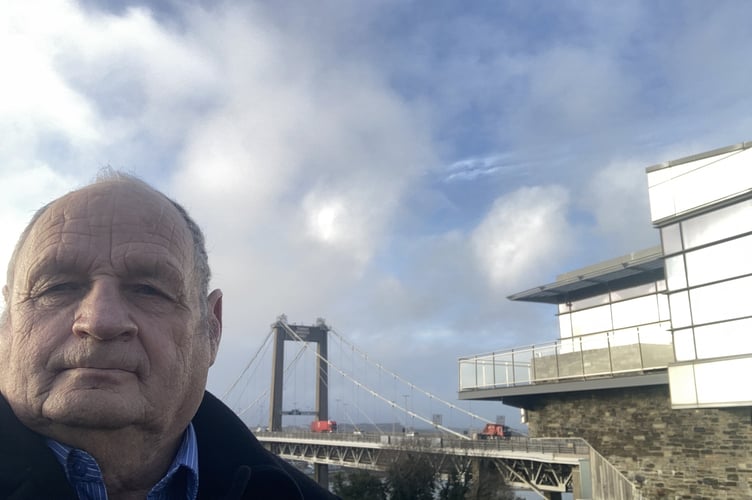
Last week at the Tamar Bridge and Ferry Joint Committee in Plymouth, I proposed a freeze on all fee increases until the Chief Officer, Philip Robinson, identifies significant cost reductions
I am due to meet him soon to highlight specific economies. Crucially our budget faces intense pressure from Westminster’s National Insurance hikes and stubborn inflation.
While MPs vociferously opposed higher Tag Admin fees, they alone have the power to revise the Tamar Bridge Acts and lobby government for support.
I also proposed that “The Joint Chairs, in consultation with the Portfolio Holders from both Councils, urgently arrange a meeting with Anna Gelderd MP, Fred Thomas MP, Luke Pollard MP and Ben Maguire MP, and Leaders of both Councils, to look at what support Central Government can give to Tamar Bridge and Ferries, to reduce costs so that toll or fee increases are avoided, and to work towards the abolition of Tolls, for the benefit of the economy and residents of both Plymouth and SE Cornwall”.
Crucially, I believe central Government should fund peripheral activities, like road redesigns and consultations, via the Highways Agency or Peninsula Transport. Historically, we have shouldered these costs alone. I supported a further motion asking Westminster for £499,999 to help offset some of our costs.
I will continue supporting our Liberal Democrat campaign to Abolish the Tolls, it must be the ambition to rid the economy, residents and visitors of this burden, as Westminster must fund these vital parts of national infrastructure, especially now that Devonport dockyard is becoming more important for our defence.
Comments
This article has no comments yet. Be the first to leave a comment.