
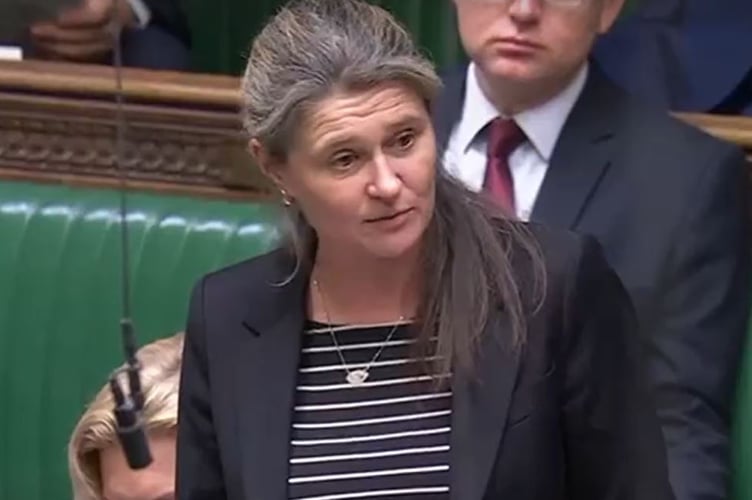
LAST week, I secured an adjournment debate in the House of Commons on “Extreme Climate and Weather Events: National Resilience.” An adjournment debate is half an hour at the end of the day when all other business has finished. They are normally really quiet, but this one was brimming with MPs from the southwest.
Storm Goretti was a wake‑up call, exposing vulnerabilities that could affect any part of the UK as extreme weather becomes more frequent and intense. We need to adapt better to a changing climate and strengthen the systems that keep us safe.
Cornwall has always lived on the edge. We’re surrounded by sea on three sides, separated from England by the Tamar, and reliant on one precarious rail line to reach the rest of the country. This geography has made us independent, resilient and proud, but it’s also placed us at the sharp edge of climate change.
Despite copious rainfall, summers bring months of a hosepipe ban, and 2025 set a record as the warmest year yet, with four of the five hottest years since 1884 occurring in the past five years. This winter brought the Duchy’s highest rainfall since records began in 1836, and we were struck by Storms Goretti, Ingrid and Chandra in quick succession.



This weather has emphasised the urgent need to improve our resilience on a national and local level. The Climate Change Committee’s response to the UK’s third National Adaptation Plan made clear that we need to do more, more quickly.
On the EFRA Committee, our inquiry into climate and weather resilience shows that farming is hugely affected by extreme weather, impacting our food security and prices. British farm businesses lost £800-million in 2025 due to crop failures, and three of the five worst harvests on record have occurred since 2020. Beyond farming, the Environment Agency estimates that 6.3-million homes and businesses are at flood risk, yet one in 13 homes built in the past decade has been constructed in high‑risk areas. I’m glad work is being done across government, particularly on the water industry and flooding preparedness.
Storm Goretti revealed vulnerabilities that must now be addressed. A big lesson is the need to improve the communications infrastructure, especially in rural areas. Unlike water and electricity providers, telecoms companies are not subject to strong resilience duties, and most mobile masts lack backup power. Yet telecoms are essential infrastructure, and the civil contingencies framework must reflect that. We also need clearer parish‑level emergency planning, better identification and support for vulnerable residents, and community hubs with backup power and communications.
Transport resilience also matters. Recent storms damaged the Dawlish line again, and during Goretti, I was unable to reach my son 300 miles away. While improvements have been made, a long‑term strategic plan for South West Rail remains urgent.
I welcome the suggestion from this government that Cornwall could be a pilot area for new storm resilience measures, and I hope the lessons learned here will help prepare communities across the UK for the climate challenges ahead.
Comments
This article has no comments yet. Be the first to leave a comment.