

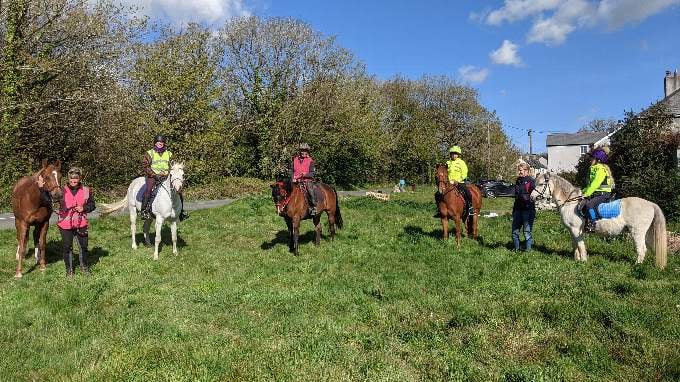
SOUTH West equestrians and their horses are being subjected to alarming levels of stress and risk according to a new study that was funded by the Department for Transport (DfT) and commissioned by The British Horse Society (BHS).
The study was conducted by Dr Dee Pollard and is believed to be the biggest ever equestrian safety survey involving 904 South West participants (over 7,000 nationally) with ages ranging from 18 to 77 and with an average of 35 years’ equine experience.
Only 4% of equestrians in the South West said they never felt stressed/anxious when using roads while 39% did so more than half the time. By far, the main contributors to this stress/anxiety were considered to be the behaviour of other road users (89%) and the characteristics of the road (65%). In order to place the perception of risk equestrians felt when using roads into context, they were asked to express the level of risk they associated with other equestrian activities, ranging from routine handling and care to high-speed activities in open spaces.
Riding, carriage driving and in-hand activities on roads were considered considerably more high risk in relation to all other activities, including eventing or cross-country jumping, which was considered more of a moderate rather than high-risk activity!




It was encouraging that 98% of South West equestrians reported using safety measures such as wearing high visibility clothing and riding helmets when using roads. However, only 21% reported using a camera. 78% said they had experienced an incident while using roads with their horse (the majority experiencing more than two) that they did not officially report, with only 32% having previously reported to the police and/or the BHS.
Fifty South West equestrians (6%) said they had been involved in a road incident in the previous year that resulted in injury to either a person or an animal. By far the majority of these incidents (66%) occurred when they were riding or handling a horse as opposed to using other forms of transport such as driving, walking, cycling or riding a motorbike.
The worry that equestrians in the South West face is not only affecting their enjoyment but it is also negatively impacting the amount of exercise horses and their riders and handlers are getting. The majority of South West equestrians agreed that exercise was important to maintain their horse’s mental and physical health. Most felt they could not exercise their horse adequately without using roads; 60% felt that having to use or cross certain roads limited their ability to exercise with their horses; and between 60-67% thought that they would exercise their horses more frequently and cover greater distances if they felt safer when using roads.