

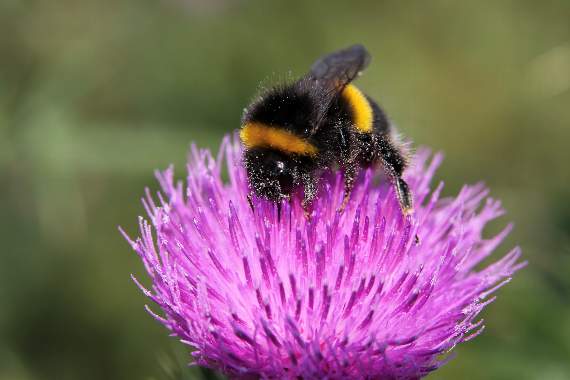

Following recent controversy over the Government allowing use of pesticides believed to be harmful to bees, gardening and wildlife experts have issued guidance on the correct ways to look after these vital pollinators and which are the best flowers to plant for them this spring.
Sean McMenemy, of wildlife supplies website Ark Wildlife, says that the UK Government recently approved emergency use of neonicotinoid, a pesticide that studies show causes a decline in bee reproduction, and which was banned by the EU two years ago. He says that this pesticide impacts in particular on queen bees, who play a crucial role in reproduction. Indeed, a study published in the Nature Ecology & Evolution journal found that the starting of new bee colonies declines by 26% after queen bees are exposed to the pesticide.
However, we can all play our part in helping bees. Spring is such an important time for queen bees - it is when they come out of hibernation and begin to build future colonies, which is crucial for the local ecosystem for the coming year. In order to start a colony, queen bees use nectar and pollen from flowers to feed both themselves and their offspring. If the right flowers aren’t available this spring, the potential for queen bees to hatch thousands of new bees could be eliminated.
Sean McMenemy reports there’s already been a 172% increase in visitors looking for bee products in his online shop, compared to in February 2020, perhaps because of people taking more notice of nature in their gardens during the COVID-19 lockdown.




Top tips for helping bees
Bees play a pivotal role as go-betweens in nature’s life cycle, pollinating the plants we eat and encouraging our environment to naturally flourish.
But what can be done at home as individuals or as a family to become more bee-friendly? Even if you’ve only got a small garden, a balcony, a patio or a tiny pot on the window ledge you can help out bees, as using natural plant life to help foster bee population in our cities can make a real difference.
The best flowers you can plant for bees approaching spring and summer time include:
1. Early flowering bulbs such as narcissi, muscari and fritillaria in early spring.
2. Purple flowers like lavender, buddleja and catmint, as bees can see purple more clearly than other colours.
3. Herbs like thyme and rosemary.
4. Irises, tulips and foxgloves in the spring.
5. Bluebells, dandelions and forget-me-nots in the spring.
6. Bluebells, dandelions and forget-me-nots in the spring.
We can also help bees in other ways. Even with a small outside space you can help create a home for bees, either by buying a ready-made cavity-nesting bee habitat or building one yourself using a wooden box, bamboo canes and hollow plant stems.
Ensuring that your outdoor space has shady patches where bees can stay cool, and access to a water source, can help too.
And here are some charities you can donate to which do excellent work in conserving the bee population:
1. The Bee Friendly Trust are particularly focused on creating urban habitats for bees
2. The Wildlife Trusts are involved in a number of projects that protect bees
3. Give Bees a Chance aims to boost public awareness of the importance of bees
4. The Bumblebee Conservation Trust is a UK charity whose mission is to increase the number and distribution of bumblebees. The trust works “for a future where bumblebees are more numerous and valued in society”.For more about Ark Wildlife see https://www.arkwildlife.co.uk/