

A Cornish MP who voted against the Government’s plan to enter into a second national lockdown has explained his decision.
Derek Thomas, MP for St Ives, was the only one of Cornwall’s six Conservative MPs to go against the Government in a vote over the lockdown
And he was one of just 32 Tory MPs who voted against the plans for a second coronavirus lockdown which the Prime Minister said was needed to control the spread of the virus.
The MP said that he wanted to see the Government continue to operate a regional system of tiered restrictions based on the rates of infection in local areas.




Speaking after the vote Mr Thomas said: “It is the lockdown itself I don’t believe in, I don’t believe it is the appropriate thing for Cornwall and the Isles of Scilly.
“The Government was right to have three tiers and, in fact, they could have gone for four tiers. I don’t know that we gave enough time to be able to see if that worked, we didn’t look properly at whether it did work.
“I got elected to represent my constituents in Cornwall and the Isles of Scilly and I just can’t square that circle in my mind. We have done a good job in keeping coronavirus at bay and significant time and money has been spent keeping people safe.
“Lockdown is not the right thing for parts of the country that are not seeing cases rise.”
Mr Thomas said he was concerned about the impact that a second lockdown could have on people and on small businesses which he said were “vulnerable”.
And he suggested that the increase in cases being seen in the UK was due to people being allowed to travel around the country freely.
He added: “When there was talk three or four weeks ago about a circuit break I argued strongly with the Health Secretary Matt Hancock and the Prime Minister to strengthen the travel restrictions in law. I was assured then that there would be no lockdown.
“We will never know but I think it would have been better for businesses and people in Cornwall if the restrictions were a bit more robust about letting people travel around the country.”
Mr Thomas said there were “too many curious aspects of this lockdown where restrictive measures are not based on evidence”, citing outdoor sport, gyms, collective worship and shops, where he said all have taken great effort to be covid-safe.
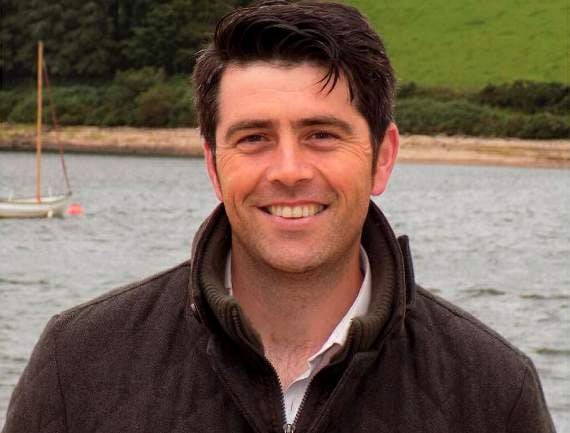
Meanwhile North Cornwall MP Scott Mann explained why he DID vote with the Government in favour of the lockdown.
“I have spent the last few days seriously considering whether a second lockdown is in the best interests of North Cornwall and I can honestly say this is one of the most difficult decisions I have had to make as your Member of Parliament,” he said.
“From the start of this pandemic, I have been clear that our public health must take priority, but as you know, things are not always as clear cut as a simple yes or no decision. Locking down for a second time will have serious implications for our businesses, individual’s employment, and families – and there is only so much that the state can do to help. It will also take a toll on our community by restricting social activities and keeping us apart. The mental health of North Cornwall is at the forefront of my mind, as I am aware that many of you have contacted me and are struggling. If you think you might need mental health support or want confidential advice on how to get support, please do get in touch with me and I will help in any way I can.
“I have supported and continue to support a regional approach to Covid-19. The regional approach has only been in place for 25 days, and with the two-week lag in predictive data becoming actual data, it is difficult to determine if the higher-tiered approach is driving down the reproductive (r rate) of the virus below 1. I also believe that population density is the main contributing factor in transmission and therefore that making comparisons between cities and rural areas and trying to suggest they will behave in a similar way isn’t a fair or accurate comparison.
“However, that being said, the data that is available at the time of writing shows that the trajectory of infections is rising and this is obviously of great concern. The conclusion I have reached is that even if the scientists’ projections are overestimated, there are still going to be large numbers of people in hospital around the country in the coming 4 weeks – and sadly this rise in hospital cases will lead to a rise in deaths. I am aware that much of this information is based on predicted data which has many variables, but the signs are that the country needs to take stronger measures. After factoring this in, speaking with colleagues in Government, and with local NHS leaders, I feel that I must vote in favour of the second lockdown.
“When deciding whether to lockdown a second time I had to consider the ability of Cornwall’s health services to cope with a surge in cases, and our ability to share the burden with other parts of the country. Due to our geographic and rural location, we have a heavier reliance on our own local health infrastructure compared to other parts of the UK. Any potential rise in cases or fatalities weighs heavily on me.
“The second lockdown does not have my unconditional support. As I mentioned in my statement on Monday, I required a road map out of this lockdown to be set out, and a package of economic support for North Cornwall’s working people and businesses to be put forward before I would consider voting in favour. These points have now been addressed by the Government and I have made this clear to the Secretary of State for Health and the Scientific Advisors.
“I believe in the regional approach and I have also sought assurances that there will be another vote in Parliament on these measures at the beginning of December. If North Cornwall’s cases have stabilised and they are trending downwards, I would like to see us returned to the tier system before Christmas
“I would also urge constituents to remember that Cornwall had two million visitors over the summer from across the country and beyond and our case numbers stayed amongst the lowest in the country. I am confident that so long as we adhere to the restrictions, wash our hands regularly, and social distance where possible, we will be able to keep the transmission rate low – just as we have in the past.”