
EACH week, hundreds of planning applications come before Cornwall Council’s planning department, seeking to win approval for various plans right across the Duchy.
These plans can comprise of a number of different reasonings– ranging from permission to replace windows or listed building consent ranging up to large house building developments or changing of use of a building, for instance, from an office to a café, or flats.
Within this large and often complex system, there are a number of formats from which planning advice and approval can be sought.
These range from full applications where all the details which comprise a proposed development or work to a building are submitted, to outline applications, where further details are yet to be confirmed, for example, an outline application with reserved matters for appearance may not confirm the final proposed development but rather seek permission in principle.


An example of this is one for an outline permission for 20 dwellings on land with reserved matters for appearance and scale; the reserved matters would require further permission later for their inclusion.
Other types of applications include pre-application advice requests, where would-be developers submit often outline proposals to a local authority to ascertain whether it is likely to gain support or not prior to submitting a planning application.
The vast majority of applications are decided by planning officers employed by a local authority under ‘delegated powers’, meaning they do so on behalf of their employer, however, some applications are ‘called in’ by local councillors to be discussed at an area’s strategic planning committee meeting, meaning the final decision rests with a committee of councillors.
Garage extension proposals
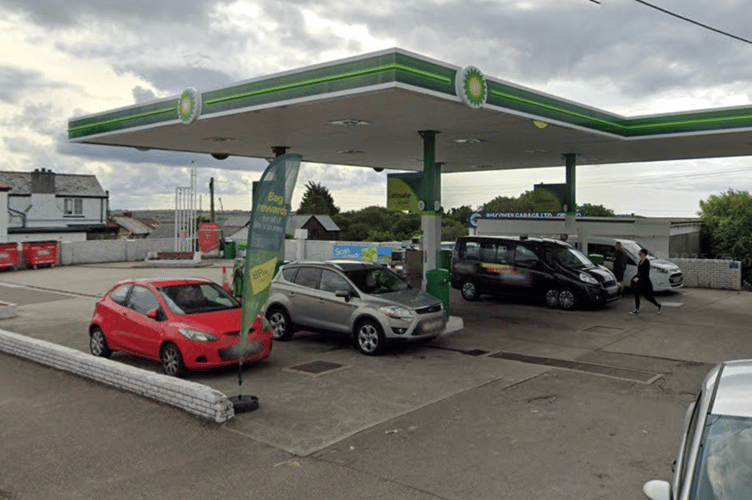
A GARAGE near St Austell could be set for a brand new look after proposals for its redevelopment were submitted to Cornwall Council.
The operators of Biscovey Garage, located on St Austell Road, St Blazey Gate, Par are seeking permission to add an additional shop floor area, extra storage space, a new entrance and the replacement of old shutters to the garage to be blocked up with recessed windows.
At present, there is a small retail outlet adjoined by two shuttered garage bays, and according to the submitted plans, it is the present garage space which would form the basis of the extended retail outlet.
In documents accompanying the application, the applicant, Mr Manickavasagar Kirupananthan of KT Investments Ltd, which trades as Biscovey Service Station detailed his plans, adding that if it goes ahead, it anticipates recruiting the equivalent to an extra member of staff to operate the amenity, which would be open between 6am and 11pm, seven days a week.
If the proposals are approved, it would see the service station create additional shop floor space and extra storage space, enabling it to expand the retail offering from the site, which is presently a BP branded garage and a Premier branded shop.
The applicant told Cornwall Council: “The proposed development is to extend into the existing garage space for additional shop floor area and extra storage space. New entrance proposed with improved access.
“Replacement of old shutters to the garage to be blocked up with recessed windows, additional required air conditioners added to the roof. New signage to be added across the old garage facade to match existing signage.”
The plans are viewable using reference PA26/07540.
Refusal for pub flat plan
AN APPLICATION for the conversion of a long-closed pub near Saltash has been refused by Cornwall Council.
The Crooked Spaniard’s Inn, also known as the Spaniard’s Inn, is located in Cargreen, near Saltash.
It has not been used as a public house since 2008, with the upper floor ‘managers accommodation’ understood to have been used as a holiday let in recent years. In the plans, the floor space previously the site of the public house would have become a residential unit while the holiday let would have remained above.
However, the latest proposals to change the use of the building was refused by Cornwall Council on the grounds that insufficient evidence was submitted to prove it had no future as a public house, in addition to coastal flooding risks.
The applicant told Cornwall Council: “The proposals include the change of use and conversion of the former public house at ground floor to a single dwelling. This comprises a large two-bedroom apartment.
“The existing three bed managers accommodation at first floor level will remain in the same layout, but will be separate from the ground floor and will thus remain in a C3 Use as a self-contained apartment.
The closed public house has been the subject of several proposals relating to its redevelopment.
In the documents submitted as part of the application, it was stated that one of the reasons that, in the view of the applicant, it would not be viable as a public house was the costs of renovating the kitchen.
This argument was dismissed by the council’s planning officer, who stated: “The applicant also suggests that the costs of reinstating the kitchen and undertaking internal refurbishment (estimated at approximately £145,528) render reopening unfeasible.
“However, investment requirements of this nature are not uncommon for rural public houses that have been closed for some time and, in themselves, do not demonstrate that a premises is incapable of viable operation.
“In the absence of a viability appraisal assessing profitability, turnover projections, operational models, and potential market demand, it remains entirely possible that the public house could be viable under alternative ownership or management. However, a full viability report has not been provided to evidence the claims made, nor has it been demonstrated that there are other adequate facilities or services exist in similarly accessible locations.”
Refusing the application, the council’s planning department stated: “Despite a significant time of closure, in the absence of a robust marketing campaign and either a viability report or alternative adequate facilities or services in similarly accessible locations, the change of use of The Spaniards Inn to a residential use would result in the loss of a valuable community facility within a well populated rural village location, which could, if re-opened, contribute to the social and economic wellbeing of the local community.
“Insufficient evidence has been provided to demonstrate that there is no need or demand for the facility or that it could not be economically viable such that a commercial future should be abandoned, while there are further insufficient alternative facilities available in the vicinity.
“The proposed change of use would introduce a more vulnerable residential use in an area at known risk of coastal change, where future publicly funded coastal defences are not planned under the current Shoreline Management Plan.
“In the absence of a Coastal Vulnerability Assessment, it has not been demonstrated that the development would be safe for its lifetime or would avoid creating pressure for new or maintained coastal defences. In the absence of this required assessment, the Local Planning Authority and Coastal Protection Authority cannot fully evaluate the impacts or ensure the development would not result in unsustainable coastal risk.”
Find out about planning applications that affect you by visiting the Public Notice Portal.
- Keep up to date with the latest planning applications and other statutory notices (such as alcohol licensing and probates) that affect where you live by visiting our online Public Notice Portal – be the first to know by visiting www.publicnoticeportal.uk/cornish-times-series.
Comments
We've recently changed our login process. If you have an account for commenting, you will need to re-register on the login window.
This article has no comments yet. Be the first to leave a comment.