
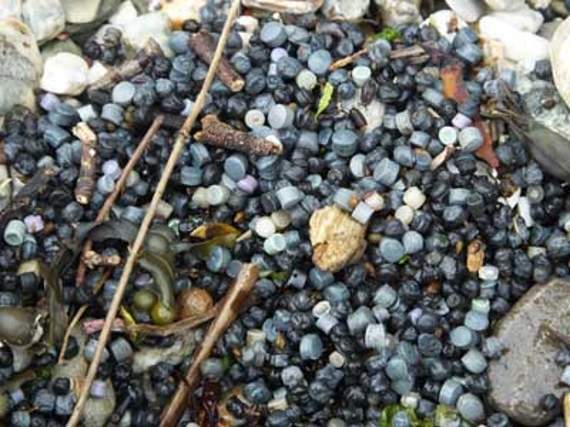
THOUSANDS of tiny plastic pellets washing up on Cornish beaches are part of a global problem posing a threat to marine wildlife – and it could be affecting the food we eat.
In recent weeks, batches of the mainly grey and black ‘nurdles’ have been coming in on beaches both on the North Cornwall coast and in Whitsand Bay.
It is thought that these pellets are very new, as their colour and cylindrical shape indicate that they have not been worn down at all, said Claire Wallerstein, of Rame Peninsula Beach Care (RPBC).
‘The nurdles are the raw material used to make virtually all our plastic items and may have been lost in a shipping spill,’ said Claire.



‘As they are so tiny – an eggcup holds over 500 – it is next to impossible to clean them up from beaches. They can disperse over vast distances.’
After RPBC made an attempt to remove, count and categorise every piece of plastic in a 25-metre-wide cove in Whitsand Bay last year, the final count included 401,230 of the micro-sized pellets.
Toxins
Nurdles pose a double threat to wildlife, says Claire. They look a lot like fish eggs, and so are eaten by many marine creatures. They also attract toxins in high concentrations from the surrounding seawater.
‘Many dangerous but environmentally-persistent chemicals, such as DDT and PCBs, which were banned decades ago, readily attach themselves to the surface of the nurdles,’ she said.
The threat could well be passed up the food chain to human beings, said researcher at the University of Exeter Dr Matthew Cole.
‘Consumption of plastic can cause direct harm to animals, and there is a serious concern that such plastics could pass along the food chain – potentially affecting the food we ourselves eat too,’ he said.
A growing number of UK plastics companies are signing up to a voluntary industry code of conduct called Operation Clean Sweep. This means pledging to put in place simple measures, such as mesh covers to stop plastic pellets being lost down drains. However, only a minority of firms have so far joined.
Sarah Archer from Fidra, a Scottish-based environmental charity that runs The Great Nurdle Hunt, said: ‘It’s good to see some companies taking steps to prevent nurdle loss.
‘However, with global plastic production increasing dramatically – up from five million tonnes per year in the 1950s to around 300 million tonnes per year now – the number of pellets produced and transported is growing fast. Spills of fresh nurdles, like the recent one in Cornwall, show this problem is far from being solved.’