

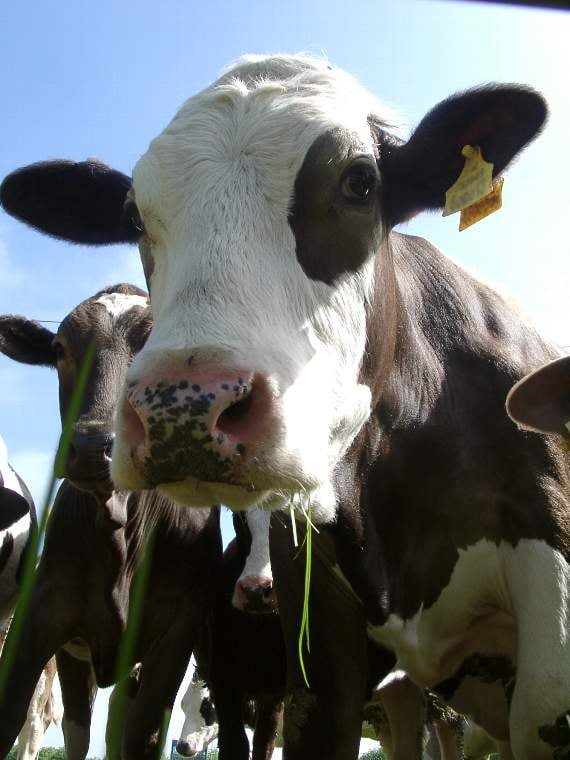
Eating red meat may not be as bad for the environment as you think - so long as you choose wisely and know where your beef has come from.
Did you know that British beef production has a carbon footprint two and a half times lower than the global average?
UK farmers often feel they are facing a battle to break down myths about producing and eating beef.
The situation is complex, says the National Farmers Union (NFU), and with sustainability a high priority in this country, choosing red meat produced at home, and ideally locally, has positive benefits for both the consumer and the planet.
.jpg?width=209&height=140&crop=209:145,smart&quality=75)



In the UK, almost all of our beef is produced using predominantly forage-based diets, with very little soya involved, meaning that beef production here is not a driver of deforestation in other parts of the world.
Meanwhile, the NFU tells us that much of British farmland is well-suited to grass, and could not be used to grow other crops. Grazing livestock turns grass into nutrient-rich beef and lamb - and the fields and hedgerows that form the farmland are important habitats for many species of animal and insect.
The British farming industry has the ambition to reach net zero greenhouse gas emissions by 2040 - and it is bringing in various measures to reach this goal, including improving sheep and cattle health to reduce methane emissions, actively managing pastures so as to create carbon sinks, and improving efficiency.
For a longer read on this topic in more detail look for the farming pages in this week’s edition of The Cornish Times.