
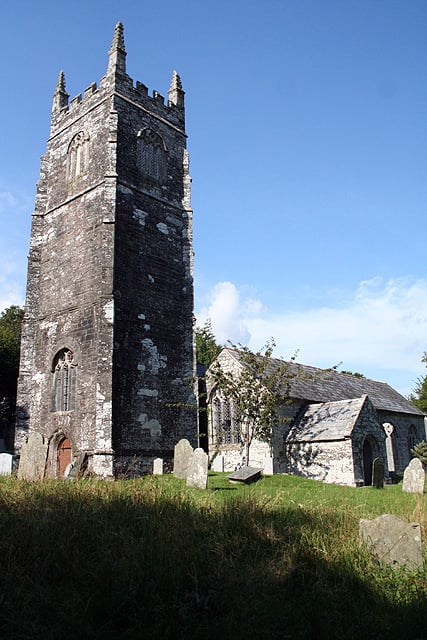
A NEW network of churches will offer the solace and sanctuary of Cornwall’s holy sites to many more locals and visitors.
“Celtic Quiet Places” is the brainchild of retired parish priest the Reverend Canon Pat Robson.
So far, 71 churches from all over Cornwall have signed up to be part of the project, and a website detailing their locations and opening times is set to go live in March. From large churches in towns, to isolated chapels set in dramatic backdrop on the windy moor, they all have something in common: their doors will be open to invite anyone in, whether it be to pause and take a moment to step away from life’s troubles, or to seek out and enjoy the unique history and ancestry that each of these places has to offer.
Ancient Celtic Christian sites such as the tiny St Clether Holy Well chapel, near the banks of the River Inney, and the remains of the holy well at Madron, will also be featured on the website.
.jpg?width=209&height=140&crop=209:145,smart&quality=75)

Pat has taken her inspiration from the Christian students who travelled hundreds of miles from their homes in the very early centuries AD. These young and passionate saints threw off the trappings of the established Roman church of the time, travelling light, and teaching that God was there for you in the meadow or at the stream, found in the beating of a bird’s wing just as much as in the gilded cup held by the high priest.
Some were forced to leave their homes as refugees as the Anglo Saxons moved into Britain, while saints such as Samsom and Petroc left behind positions of wealth and royalty to take a different path.
“The story of the Celtic saints in Cornwall is a story still to be told. In Celtic times we were a landbridge for the students leaving Wales to go to Brittany, and wherever people stopped it became a holy place,” Pat explains. “You can’t go very far without finding a Celtic place.”
For Pat, this explains why Cornwall has not promoted its Celtic sites in the same way as Lindisfarne or Iona.
“We haven’t got the one single place, the whole of the county is holy, almost every road that the celtic saints walked on, every village they stopped in, has something significant. It’s so familiar to us that we haven’t given it a second thought.”
Pat hopes that the Celtic Quiet Places scheme will change this, bringing the beauty of our churches and their deep connection with past to many new people. A benefit of the project, she hopes, will be to bring the footfall of visitors, acting to protect the smaller parishes whose members may fear the loss of their church.
But above all else, the Celtic Quiet Places will offer refuge and peace.
“We have a wonderful county with fantastic scenery and welcoming people, but the churches have often been closed and people couldn’t go in – we were missing our opportunity to provide people with a place for peace and quiet,” says Pat. “So many people are stressed, the idea is that they can walk in and spend time, but they need to know where these places are and when they are open.
“Some people are frightened of going into churches, so it’s also about trying to make it accessible as possible.”
The sole requirements for churches that are part of the network are that they be open at the stated times and kept clean, that there is a sign to welcome people, a vase of flowers, perhaps a bench in the churchyard.
There is no need for volunteers to be there, says Pat: “It’s the church itself that will do the work. People feel that the church is putting its arms around them – it’s a sanctuary. Churches have had generations of prayer soaking into the walls, and people know this when they walk in. Who are we to lock that away?”
Comments
This article has no comments yet. Be the first to leave a comment.