
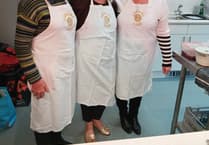
I Thought you might like to know how much I enjoyed Mary Richards' article last week, especially the bit about school cookery lessons. We called it domestic science too, and as the war was on at the time, we spent the first two years at our secondary modern education learning how to store bars of yellow soap, and boiling up whatever small items of household linen our mothers could be persuaded to let us take to school, then ironing them dry with flat-irons. Yes, this is the Second World War, not the first! We did not get down to the actual hands-on cooking until we were 13 and in our last year, as the school was allowed only a small amount of rationed food. I remember cheese straws, sausage and egg (reconstituted) flan, macaroni cheese and a very small Christmas cake, but we could buy whatever we had cooked. Our teacher, Miss Hector, a small, plump Scotswoman, would cost up the ingredients used and divide by the number in the class. It usually worked out at a shilling or so. Naturally the class was girls only, the boys did gardening. Were they allowed to buy the vegetables they grew, I wonder? We had to sew white calico caps and aprons in our needlework classes to wear while cooking, and at the end of each session in the school kitchen we had to scrub the tables we worked at, even tipping them up to scrub underneath! No wonder they were so white. Miss Hector was engaged and, as the war had just ended, would be going out to South Africa to marry, so more of our needlework lessons were taken up making her trousseau. I made a petticoat and French knicker set, with French seams and dainty hand-sew scalloped shell edging on all the hems. I imagine her fiancé must have sent her the material as everything was scarce and still on coupons at the time. Miss Hector had a party trick I have never seen since. She must have had very strong wrists as she could twist an apple into two halves with her bare hands.

AUDREY HYAMS (Mrs) Callington