
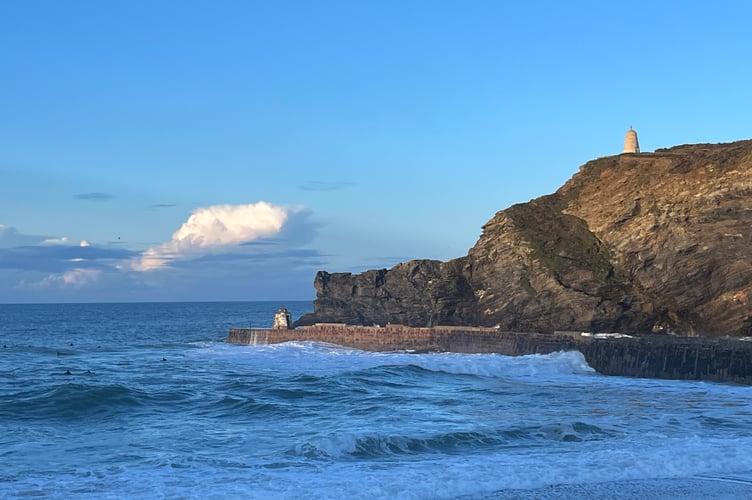
Porthtreth: porth - harbour/cove, treth - Beach
what3words - ///bossy.stick.paramedic
Porthtreth yw gwig ha porth pyskessa war arvor kledh Kernow, ogas dhe dri milder dhyworth Redruth.
Yma dhe Borthtreth treth tewesek, meurgerys gans havysi ha mordardhoryon. Hanow Portreath a veu rekordyes dhe’n kynsa prys yn 1485. An kynsa kai a veu drehevys 1713 dhe du west an treth mes y a veu distruys gans an mor kyns 1749. Possybl yw treweythyow y’n dedhyow ma gweles an seylyow, ha’n tewes golghys dhe-ves gans an mor.

.jpeg?width=209&height=140&crop=209:145,smart&quality=75)

Yth esa dhe Borthtreth lu lestri pyskessa, dhe’n brassa ran rag hern. An porth y’n jydh hedhyw a veu dallethys 1760 awos an diwysyans moon in Kambronn ha Resrudh. Porthtreth a dheuth onan a’n brassa porthow yn Kernow, ow tanvon moon kober dhe Abertawe rag teudhi. An lestri a wre dehweles gans glow kembrek rag an jynnow ethen usys y’n balyow. Bys dhe kans mil tonnas a voon kober o danvonys dhe Gembra pub bledhen.
Portreath is a village and fishing port on the north coast of Cornwall, about three miles from Redruth.
Portreath has a sandy beach, much loved by tourists and surfers. The name Portreath was recorded for the first time in 1485. The first quay (or mole) was built in 1713 on the western side of the beach but was destroyed by the sea before 1749. It’s possible sometimes these days to see the foundations when the sand is washed away by the sea.
Portreath had a fishing fleet, mainly for pilchard. Today’s harbour was begun in 1760 because of the ore industry in Camborne and Redruth. Portreath became one of the more important ports in Cornwall, sending copper ore to Swansea to be smelted. The ships would return with Welsh coal for the steam engines used in the mines. Up to 100,000 tons of copper ore were sent to Wales each year.
An Rosweyth exists to promote the use of the Cornish language. www.speakcornish.com
Comments
We've recently changed our login process. If you have an account for commenting, you will need to re-register on the login window.
This article has no comments yet. Be the first to leave a comment.