
The wild birds that visit our garden provide us with hours of entertainment, and occasionally a couple of blackbirds will go through a pile of dried leaves with their feet and kick them all out onto the path.
Last week I was watching this latest ‘kickabout’ when next door’s cat, Jessie, who comes down every day, strolled over and started poking about in the ground that had been cleared by the birds.
She appeared to be playing with something so I went out to have a look.
It was a mouse that seemed to be content to stay there without moving.




I don’t know if it had been sleeping beneath the pile of leaves or what but it seemed to be in no hurry to go anywhere, even after I had fetched my camera and photographed it.
I covered it up with some leaves and when I looked after lunch it had gone.
If you come across a Stinking Hellebore during this month, it will become obvious why it is so named.
The smell of its leaves attract early flying bees but if you pick a leaf and crush it, the odour emitted will back up its name.
When the seeds are formed, they produce an oil that attracts snails who consume it, and as their heads and necks are sticky, seeds cling to their bodies and are carried away to a new growing place.
The whole plant is poisonous, of course.
I know of several places where this hellebore grows and most of them are among crowded vegetation, but the one I came across last week was on a piece of ground that looked as if it had been cleared of weeds.
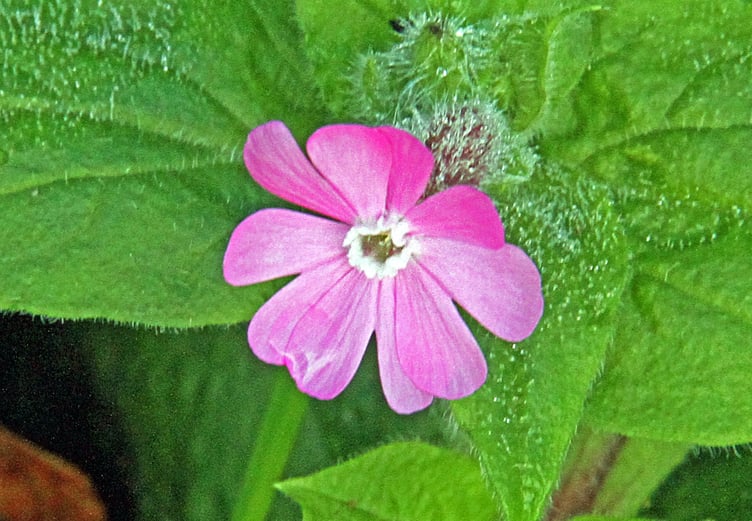
I also found a single Red campion flower and according to most wild flower books Red Campions come into bloom from May to July, but looking carefully into the hedgerows around the village, I found one or two out in flower.
I think Marjorie Blamey was closest when she says May to November as their flowering time in her book The Illustrated Flora of Britain.
I have now established what Summer Snowflakes look like after finding two places in the village where they grow and are out in bloom.
I would have thought that the Spring Snowflake would be the first to flower but I have had no luck finding one.
The Summer Snowflake is really beautiful with large, white petals that each have a green mark on the tip and with orange coloured stamens in the centre.
Also known as Loddon Lily, it appears that they are found naturalised only in Southern England, so we are lucky down here.
On a short walk over towards Trehunsey, I came across what I would call a mutant Snowdrop by itself on the hedge.
Now, I don’t know if it is called a double Snowdrop as I cannot recall ever seeing one, but it was certainly packed with lots of petals.
Comments
This article has no comments yet. Be the first to leave a comment.