

TEST and trace information collected locally from people who have tested positive for the coronavirus shows that work and other visits to Plymouth were partly responsible for a rapid rise in cases of the virus in East Cornwall.
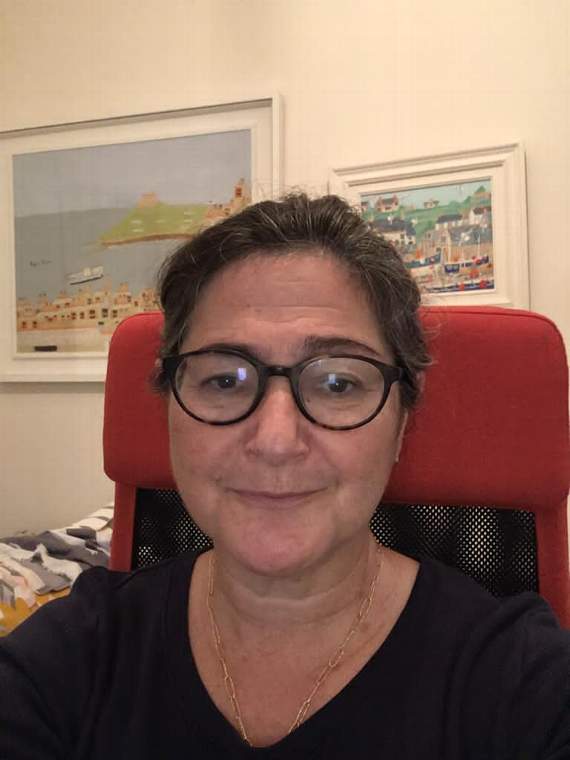
Over the end of October and into November the number of positive cases in the district increased at a faster rate than in the rest of the county, said Dr Ruth Goldstein, Cornwall’s deputy director for Public Health.
Messaging aimed at reinforcing Covid-safe behaviours was put out by various methods including texts, leaflets and posters and social media.
The Cornish Times spoke with Dr Goldstein and Cabinet member for Public Health Sally Hawken, about how local test and trace has enabled a detailed picture of transmission to be drawn, what the information tells us about how the virus is being passed around, and about balancing coronavirus messaging with wellbeing, as well as the impact on wider health issues.




As soon as Cornwall’s Public Health team gets the data relating to positive cases a team of around eight people are engaged in phoning the people who have tested positive to talk through their recent contacts
While the NHS test and trace system is good at identifying who a person has been in contact with in the last 48 hours “we do it a bit more personally” said Dr Goldstein: “we also ask where they work, about their lifestyle, and what their welfare needs are.”
With cases rising, the team are coping with the increased workload, said Dr G and “just about getting to the vast majority of the contacts but not 100%, this is our aspiration.”
When asked if more staff were needed, in this instance said Cllr Hawken it was not a question of having more money for more contact tracers. There are a limited number of Public Health personnel to draw on and training takes time, and as cases rise, everywhere in the country faces the same issue, “but the Public Health team has grown as much as it’s needed to in our area”.
Two weeks ago, said Dr Goldstein , the team were contacting around 80% of people on the list, slightly better than the national system’s figure for Cornwall of 76%, but “not really comparable” as the Cornish team is spending a lot longer on calls, not only asking about immediate contacts in the family, social circle and workplace, but also prompting people who have tested positive to recall as much information as possible about their movements – and also checking if those self-isolating will need help with shopping or other support.
This detailed questioning enables a picture to be built of where transmission is coming from. So for instance the latest rise in cases can be in part attributed to people working in or visiting Plymouth, a “leakage over the border” which Dr Goldstein said had been expected.
“A few weeks ago the cases were very much found among young people – now it’s not so much age, it’s about location,” she said.
“There’s elements of socializing, related to hospitality before the lockdown, and some clusters associated with schools.
“There’s an awful lot of household transmission going on as well, so we are getting four or five people with the same postcode, and it turns out to be members of the same family.”
Once Covid-19 transmission is “in the community” – in other words, not attributable to one confined workplace or other venue – it’s even more vital than ever that people maintain good hygiene and social distancing, says Dr Goldstein.
But hasn’t there always been transmission in the community since the early days of the pandemic, we just didn’t know about it because there was less testing?
“There has always been community transmission but far less,” she replies.
“We were looking at 20-30 cases a week in Cornwall a few months ago, it would have been a lot harder to bump into it.”
The information collected from conversations with people who have tested positive has enabled Public Health to take action to reduce transmission and target messaging specifically to certain behaviours.
So for instance while Cornish workplaces have been extremely good on introducing covid safety measures, said Dr Goldstein, there were things employers could do to encourage safer behaviour amongst employees such as not car sharing, and not socializing in close proximity on work breaks.
While access to testing has improved, and considerably more tests are being done now than in the summer, there is still an issue around people receiving results in a timely way and this is crucial, particularly where contacts may be asymptomatic.
A mobile testing site was just about to move into Liskeard, said Dr Goldstein.
“The issue we are up against now is the speed of the results. We hear that a lot of people are getting results within 12-24 hours. But also some people are still having to wait for up to five days.”
Cllr Hawken added: “This is particularly pertinent for care workers. Care homes absolutely need to have their results turned around quickly.”
How do you balance addressing Covid-19 with other health issues?
“It is a balance and it’s a difficult balance” said Cllr Hawken.
“A lot of the things Public Health care about do feel like they’re being pushed to the side.
“There’s been some pushback from people saying the messaging on Covid is making them anxious or frightened. So in the same week we were talking about the virus measures we were also doing a lot on wellbeing and mental health.”
Ongoing Public Health concerns such as tackling obesity and smoking cessation have an impact on increasing resilience among individuals to the coronavirus.
The Council’s “30 ways in 30 days” campaign is one example of a simple intervention on physical exercise which is hoped will help people both improve wellbeing in the lockdown, and introduce longer-term activity into their lives.
And when it comes to the question of whether other important health issues are being neglected because of the virus , Dr Goldstien has a clear view.
“I don’t want to get bogged down in Covid not being that serious an illness,” she said.
“It’s not that Covid is going to kill us.
“It’s that if we let Covid get out of control, that’s when it puts the pressure on the NHS and when the knock-on effect comes on all our other health provision.”