
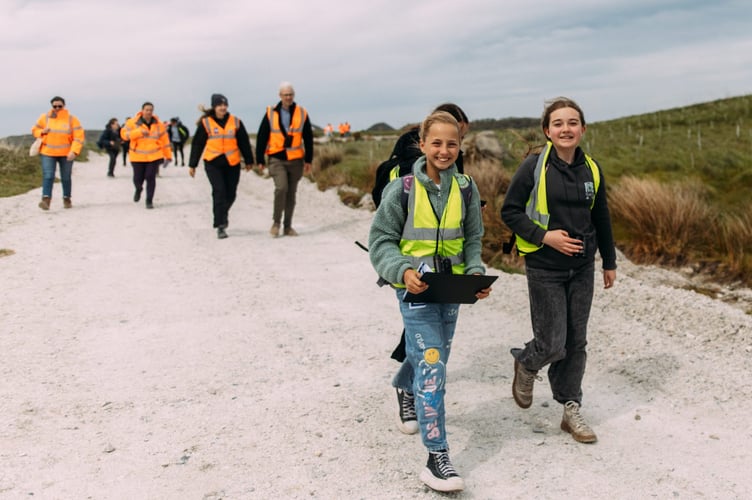
A NATURE restoration site in the Clay Country near St Austell has been officially opened.
The opening of the Dubbers site at Whitemoor by minerals giant Imerys was marked with an ecologist-led nature hike around footpaths newly added for the public.
Representatives of Cornwall Council, the Environment Agency and Cornwall College attended along with pupils from Whitemoor Primary School who returned to the site to check up on the trees they helped to plant there last year.
The schoolchildren were the guests of honour for the official opening walk which covered two miles.



The guided walk, along the new routes, was led by an Imerys team and local ecologist Bob Bosisto.
Dubbers – which is a Cornish word for miner’s pickaxe – was a working china clay pit until the mid-1960s. The site then became a raised mica residue dam, an engineered structure designed to store one of the waste products from the mining and processing of kaolin.
Restoration work began in 2010 and involved creating a soil layer from various waste materials that were mixed with fine sand. Since then, a landscape of heathland, grassland, woodland and scrubland has evolved.
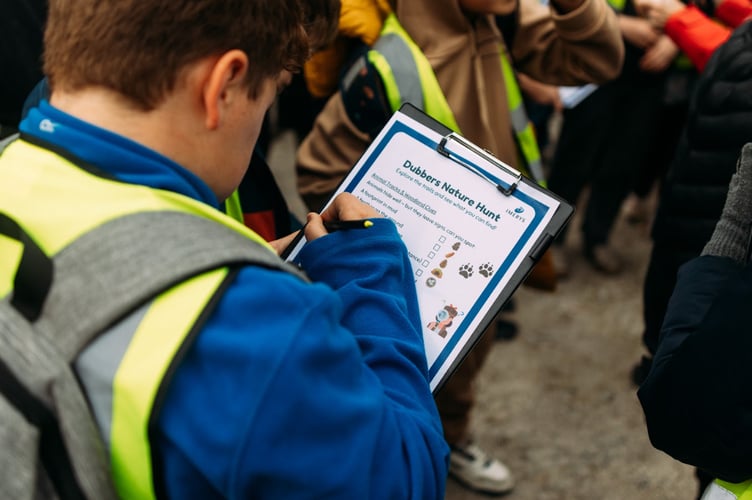
In the winter of 2024, one of the largest tree planting schemes in the South West began with more than 100,000 native trees planted across the site, thanks to a government grant via Defra.
The project aligns with the Cornwall and Isles of Scilly Nature Recovery Strategy by increasing habitat diversity, supporting threatened species and enhancing resilience to climate change.
Birds, mice, bats and various insects are among the creatures using the site alongside “rescued” bees which have been removed from residential areas by the Bees Off charity. Thirty-five hives are now in place with a further 10 planned.
Last year, the restoration team held a public consultation to update people about progress on the site and ask for feedback and ideas for the future. The consultation resulted in a clear message about a need for more footpath access, which has now been acted upon.
Sean Simpson, who manages the Dubbers project, said: “Over the last 15 years, we have watched Dubbers flourish into the biodiverse habitat it is today. I am so proud of what we have achieved, from the amazing array of wildlife to the access for the local community. We look forward to watching the trees grow and establish over the coming years.”
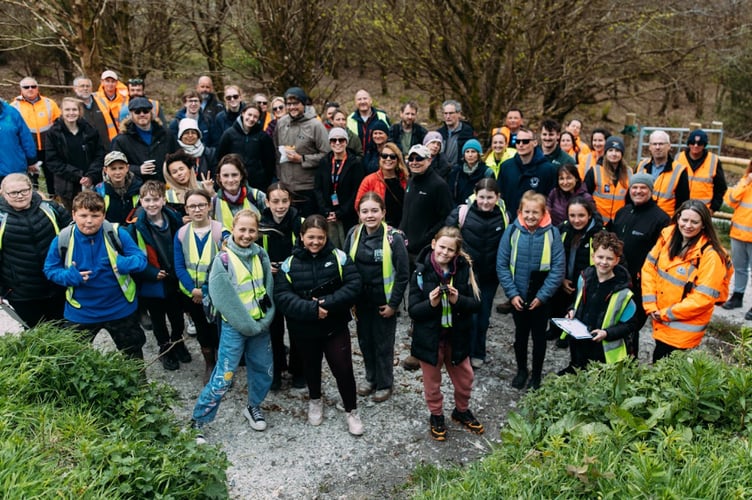
Philippa Hoskin, nature recovery manager for Cornwall Council, said: “Dubbers is a great example of landscape-scale nature recovery. It was fantastic to have a look around and see this project which is supporting Cornwall’s Nature Recovery Strategy and also contributing to the Forest for Cornwall.
“We look forward to seeing how this develops as the trees establish themselves and a new landscape emerges.”
Mark Hewson, Imerys UK hub director, said: “Dubbers is a powerful example of what long-term nature restoration can achieve. Opening these new footpaths is an important step, giving the community the opportunity to access the land, learn about its transformation and see firsthand the positive legacy of restoration work.”
Comments
This article has no comments yet. Be the first to leave a comment.