

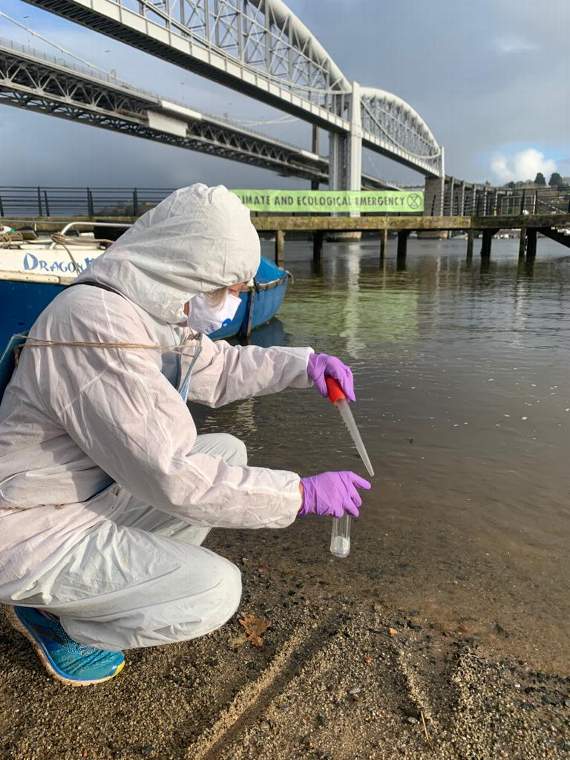
ENVIRONMENTALISTS took to the water to highlight how high rainfall is leading to a “toxic mix” of chemicals and microplastics entering our rivers.
Due to climate change, says Extinction Rebellion, extreme rainfall is becoming more frequent. This leads to overflow of the sewerage systems and this year, says the group, there have been 280 raw sewage spills into the River Tamar. XR claims that raw effluent has spilled into Forder Creek for a total of 716 hours in 2020.
Among the toxins that find their way into the rivers during high rainfall are pharmaceuticals, insecticides, metals, fire retardats, tyre dust and microplastics.
To bring attention to the message on the banks of the River Tamar in Calstock and in Saltash, protestors dressed as water testers in full protection gear, arriving on foot or by boat and canoe carrying placards. A list of the known pollutants found in the Tamar was ceremoniously dumped into a toilet on Brunel Green.

.jpg?width=209&height=140&crop=209:145,smart&quality=75)

The activists want MP Sheryll Murray to back two parliamentary Bills when they return for their second reading in Parliament in the spring: The Climate and Ecological Emergency Bill, and the Sewage (Inland Waters) Bill.
Pollution from sewage discharge, and run-off from roads and poorly managed agriculture is having a huge impact on river quality, says XR, with incidents in 2019 rising to their worst level in five years.
Meanwhile the Environment Agency announced in September that only 14% of English rivers are of good ecological standard, and none meet the legal limits for chemicals.
There has been a lack of progress, says XR, towards the target of 100% healthy waters by 2027, a target brought forward from the original European Union Water Framework Directive priority, to have all waters at ‘good’ status by 2015.
While the pandemic has led to many residents in South East Cornwall taking up watersports and open water swimming, and exploring waterways and local beaches, there is increasing concern that pollution in the Rivers Tamar and Lynher is harming delicate ecosystems.
“Our estuaries, creeks, riverbanks, wetlands, mudflats, and beaches may all look like fantastic places to get acquainted with nature but there is increasing concern that they are becoming too polluted to safely enjoy and the impact of this pollution is harming aquatic ecosystems,” said an XR spokesperson.
“This has far reaching consequences for environmental and human health, wellbeing, and the local economy.
Local tourism business owner, Lizzy Stroud from Railholiday, said:“It is imperative that we have clean water courses. Cornwall relies on the quality of its beaches and rivers to attract visitors, and tourism is a major part of the Cornish economy. I would like to see steps taken to improve our water quality, and would support a 20m buffer zone around all waterways, and thus take advantage of the natural cleansing that flora provides, as well as reducing conflict between farming and the reintroduction of beavers, who offer the best flood defence and water management systems of all.”
The Climate and Ecological Emergency Bill calls on the UK government to restore the variety, abundance and health of the UK’s biodiversity and ecosystems. It requires robust and benchmarked standards to calculate ecosystem health.
Chris Jones, speaking on behalf of the Beaver Trust said, "Beaver Trust supports the CEE Bill as an important step in tackling the climate and ecological emergency.
“The charity believes restoring watercourses to good ecological health should be a priority and in doing so we make our rivers fit for beavers and all other life on which freshwater depends."