
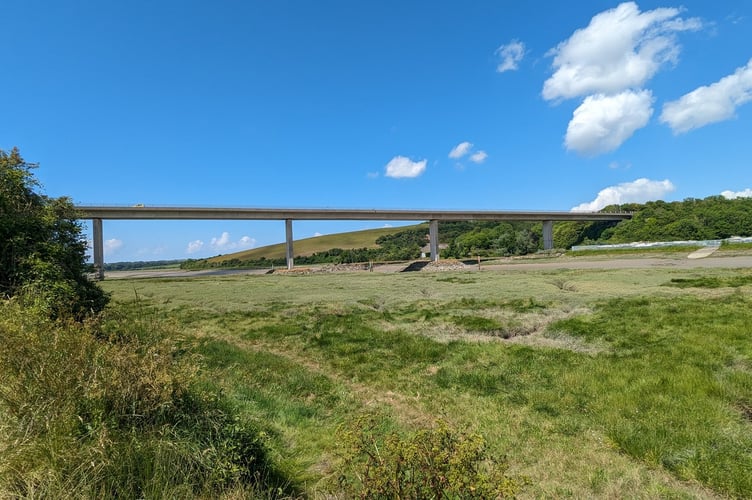
A SCHEDULED programme of works to replace the waterproof protection of an important viaduct will have changes to the initially announced scheme.
Cornwall Council has confirmed details of the works to protect Camel Viaduct, which bypasses Wadebridge, which will take over a year to complete.
Due to concerns over the location of important fibre optic cables, the final completion date is still unconfirmed.
Phase one of the works, focusing on the south side of the viaduct will begin during January and last for 17 weeks. During this phase, there will be two-way traffic lights and the installation of temporary bull barriers to protect the workforce.
-Paddy-Saunders.jpeg?width=209&height=140&crop=209:145,smart&quality=75)


It is anticipated that the traffic lights, which will feature ‘auto-green’ technology to ‘improve traffic flows’ will also see the introduction of a temporary 40 miles per hour speed limit between Tollgate roundabout and Ball roundabout.
Phase two will see the same restrictions in place while work takes place on the north side of the viaduct, excluding the footpath which contains the fibre optic cables and will cover a period of 20 weeks from early September 2026 until February 2027, excluding the Christmas period.
The date for the work in phase three, which involves relocating the fibre optic cables from the northern to the southern footpath to enable the final water proofing works to be completed is not yet confirmed as its start date is subject to consultation and agreement with the owners of the cables.
A spokesperson for Cornwall Council said: “After more than thirty years of constant use and exposure to the elements, an essential maintenance project is now planned for Camel Viaduct. The project involves replacing the bridge’s waterproof protection to ensure its long-term structural integrity and safety. This will help prevent water ingress, which can cause damage to the bridge deck and supporting structures.
“Due to the presence of transatlantic communication cables within the bridge footway, the original method of construction and delivery has been revised. Extensive investigations and trial pits revealed ducting surrounded by concrete. It has been confirmed that the risk of damaging the ducting (which houses the fibre-optic cables) is too great to proceed with the original construction method. These cables are classified as critical infrastructure, and any damage could have significant consequences and disruption.
“The waterproofing will now be carried out in three phases over the next few years, carefully scheduled to avoid busy highway embargo periods. This phased approach will allow us to carry out the works safely and effectively, while minimising disruption to the highway network. Also now included, will be work to enhance the ducting that sits within the footpath, ensuring future access and maintenance can be achieved safely and without risk to the underlying fibre-optic cables.
“The existing road surface, pavements, kerbs, and drainage will be removed to expose the concrete bridge deck beneath. The old waterproofing layer will be stripped away and the deck inspected, cleaned, and repaired where needed. A primer will be applied, followed by a new waterproof membrane, then the road surface, pavements, kerbs and drainage will be re-installed.”

Comments
We've recently changed our login process. If you have an account for commenting, you will need to re-register on the login window.
This article has no comments yet. Be the first to leave a comment.