

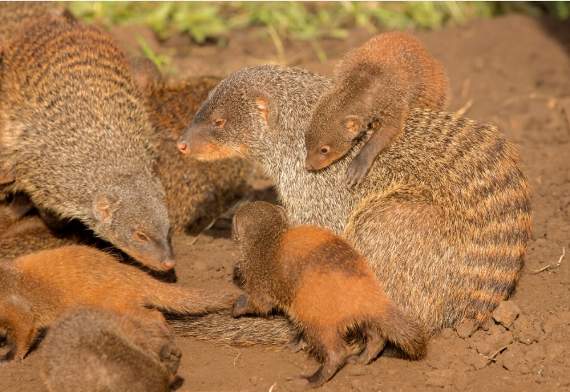
Mammals can protect their unborn young from harmful chemicals in their blood even at the expense of their own survival odds, a study into mongooses conducted by Cornish researchers at the University of Exeter suggests.
.jpg?width=209&height=140&crop=209:145,smart&quality=75)
.jpg?width=209&height=140&crop=209:145,smart&quality=75)


Chemicals causing stress are a normal by-product in all animals but can cause damage to tissues and cells, leading to aging. Current theory predicts that females should show higher levels of damage when they are pregnant.
A five-year study into banded mongooses carried out by Dr Emma Vitikainen and colleagues at the Centre for Ecology and Conservation at the University’s Penryn Campus, found the opposite pattern.
Mothers with the lowest levels of damage when pregnant also had the greatest number of surviving offspring.
The research showed damage to be strongly linked to adult survival in both sexes.
Comments
This article has no comments yet. Be the first to leave a comment.