

Nature photographer Ray Roberts takes us on another of his weekly journeys of discovery in the world around us....
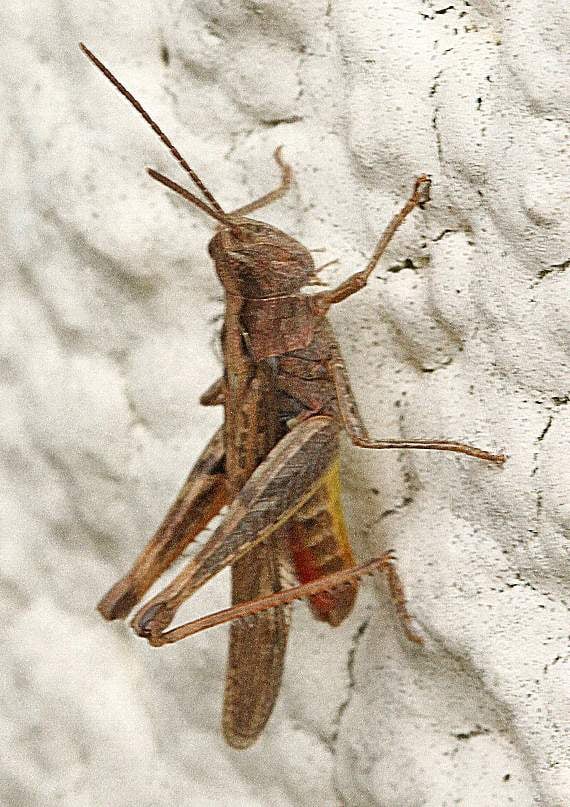
I was leaving for another trek around the countryside and as I walked around to the front of the house the postman arrived and we had a short yarn as he pushed some packets through the letterbox, I spotted a grasshopper on the wall beside the door. It was a rufus grasshopper so I took its picture.
When I arrived back home after about an hour, I could see that the insect was still on the wall, was it sunbathing? But as I walked down the drive a blackbird also had his eye on the grasshopper and I watched as the bird flew straight at the insect and picked it off the wall. The bird then settled on the fence as it gobbled its catch down. That’s life I suppose.
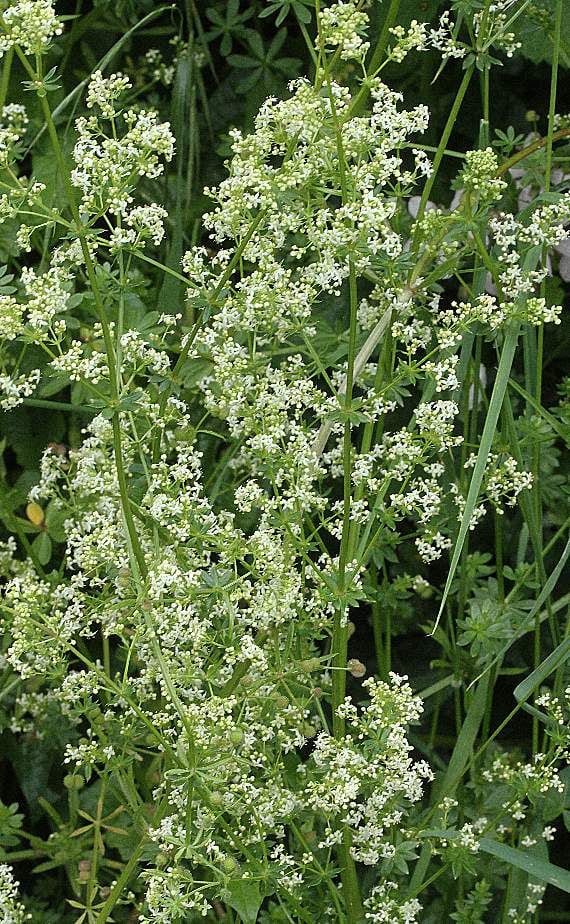
The hedges around the village – and beyond – are covered in huge whorls of common bedstraw – Gallium mollugo - with their tiny four petalled white flowers, no more than 3mm wide, on long, smooth trailing stems. This plant has several relatives and for thousands of years their roots have been used to produce a red dye for yarn.



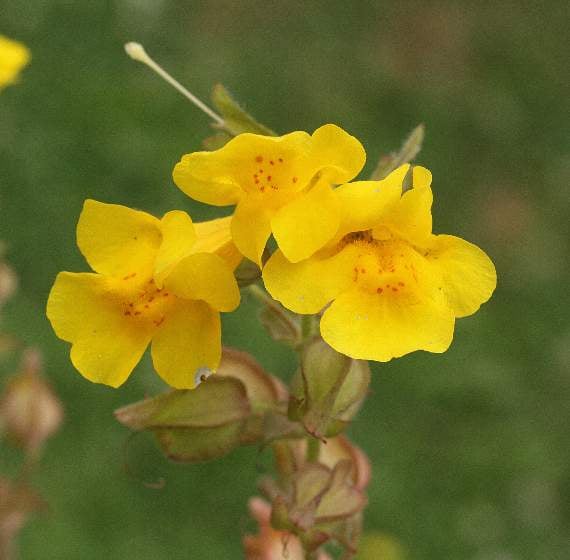
Usually if you want to see some monkey flower – Mimulus guttatus – blooms you have to go near a pond, stream or river as they thrive in damp soil, but I found some on a grassy bank that is nowhere near a waterway. These plants were brought over from an island off the coast of Alaska during the early 1800s, from a place where it usually rained for two thirds of the year, so it is no surprise that they do well on wetland.
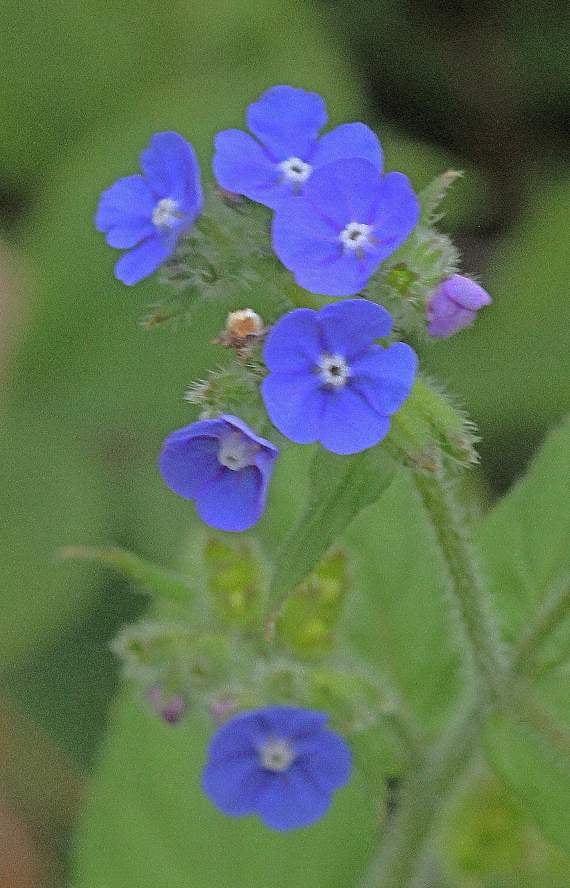
The bright blue flowers of green alkanet – Pentaglottis sempervirens – stand out well on the bottom of our green hedges giving them the nicknames birds-eye and pheasants-eye. As with a lot of our wild flowers the roots of green alkanet were used to make red dye which Egyptian women used on their hair and nails. In fact during the middle ages the plants were cultivated as a source of this dye known as henna.
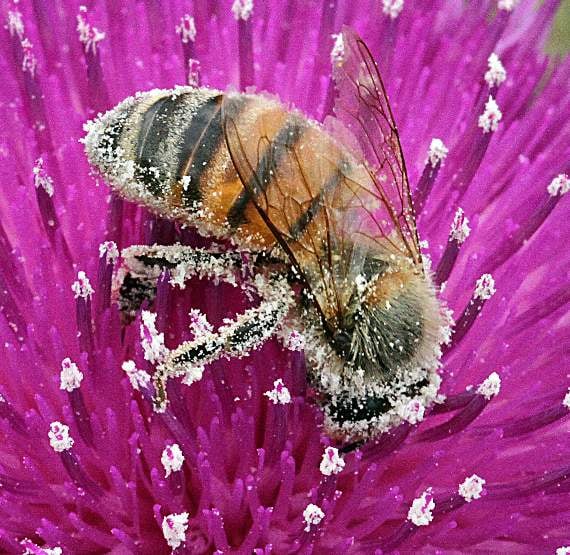
Now the hedges are covered in flowers all the bees are working overtime and I saw one honey bee with its face and legs literally covered in pollen as it worked on a thistle flower. This bee and thousands of similar ones must be perfect pollinators as pollen from one flower was easily passed on to another.
There are lots of butterflies on the wing now and I watched for several minutes as three meadow browns had a dispute over the rights to patrol a length of hedgerow. In the end two of them flew to hedgerows new and the ‘winner’ settled on some vegetation for a rest. I have witnessed many of these arial combats and unlike spitfires in action against messerscmitts, none of the butterflies were actually shot down.