
Motorists who were left fuming in their cars for hours, and residents whose roads suddenly became choc-a-bloc with traffic, have been asking why the Saltash tunnel was closed so long following this week's landslip.
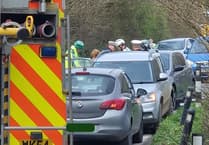
The 30 tonne landslide led to the tunnel being closed for almost 24 hours - from around 7.30pm on Tuesday to 5pm on Wednesday - which meant that commuters to and from Plymouth were snarled up in traffic jams each side of the bridge. On the Cornish side the eight mile congestion stretched back as far as Landrake, while many of those travelling into South East Cornwall to work from Plymouth found themselves late for work.
Local roads also suffered from the build-up of vehicles as drivers sought to avoid the hold-ups - and there were long delays on the Torpoint ferry which was sought as an alternative way of crossing the river. Saltash councillor Eric Lewis said the town had faced complete disarray as a result of the slip, and cited a journey by a friend which led to him taking 20 minutes to complete one mile.
On Thursday morning traffic still had not returned to normal, as the road was reduced to one lane each way. It seems as if the situation will not completely be resolved - and all lanes will not be open - for another six weeks due to stabilising work needed on the bank.

Schoolchildren
Saltash mayor, Mona Tomaszewska, said she was angered that the tunnel had had to be closed for so long, as the landslip had only affected one lane of the road. She was especially concerned for schoolchildren who had been caught up in jams while travelling to school in their buses. She said: 'To close all three lanes was excessive, and I heard people say they could have cleared it up with a broom.' She said she was very aware that many of the drivers were irate about the hold-ups.
The Highways Agency said the slip, which took place outside the tunnel on the Plymouth side, was caused by the destabilisation of a wedge of rock by the softening of clay and recent heavy rainfall. The repairs will be carried out to the embankment.
A spokesman for the Agency said that the road had been closed purely on safety grounds as it had been feared more material may have slipped on to the carriageway. Experts spent some time at the scene on Wednesday morning assessing the extent of the slip, before rectifying work began. Huge boulders were put at the base of the fall as a temporary initial measure.
An Agency structural engineer who attended the scene said the material the tunnel is supported by is the same type of rock, but the tunnel has direct support through its lining, and the structure itself is designed to take such things as heavy rainfall into account.